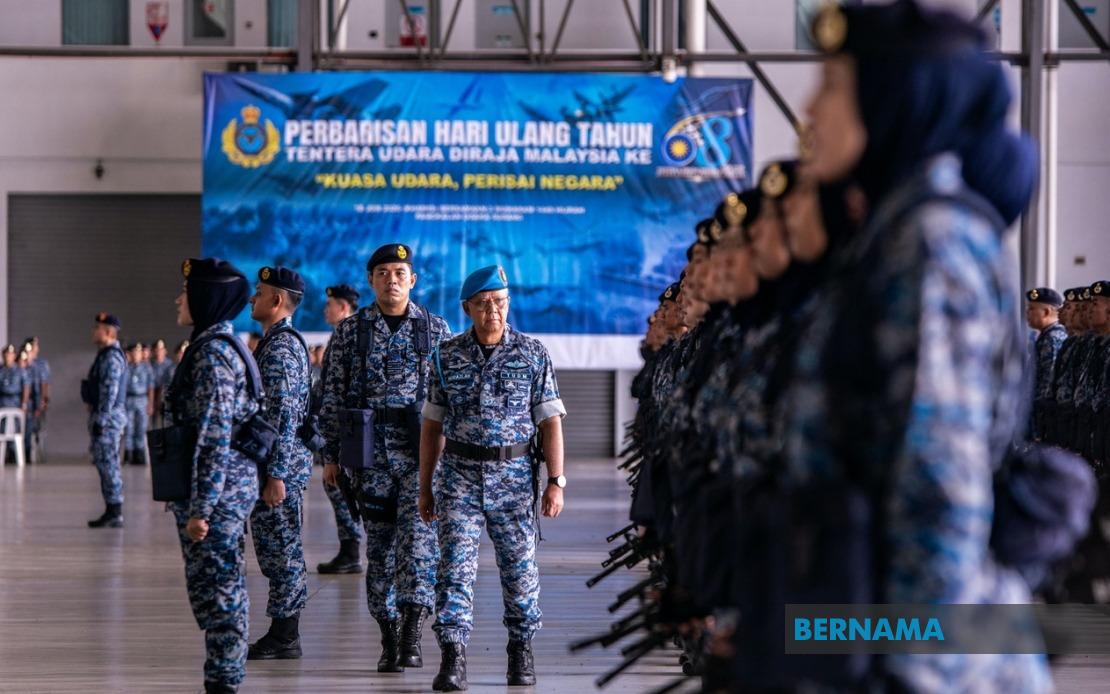
Malaysia is substantially strengthening its air defence posture through a coordinated deployment of sophisticated radar technology at four strategically positioned sites, marking a significant step in the country's long-term military modernisation agenda. The Royal Malaysian Air Force announced the installation programme during its 68th anniversary celebration on June 18, revealing plans to establish air defence radar systems in Bintulu, Sarawak; Bukit Puteri, Terengganu; and Bukit Lunchu, Johor, alongside an air surveillance radar facility on Pulau Layang-Layang in the South China Sea. Chief of Air Force General Tan Sri Muhamad Norazlan Aris described these capabilities as essential infrastructure for detecting threats earlier and addressing gaps in the nation's radar coverage, particularly across commercially and strategically vital airspace sectors.
The radar deployment programme represents the opening phase of the RMAF Capability Development Plan 2055, an ambitious 30-year roadmap designed to ensure Malaysia's military air capabilities evolve in line with emerging technologies and shifting security dynamics. Rather than pursuing sporadic equipment purchases, this structured approach reflects a deliberate commitment to building integrated defence systems that can operate cohesively across the Malaysian archipelago. The four-site strategy demonstrates considered geographic positioning: covering Sarawak's eastern frontier, the peninsula's east coast approaches, the southern maritime zone, and critical offshore territories in the South China Sea where Malaysia maintains significant economic and territorial interests. This distribution pattern suggests planners intend to minimise blind spots across the nation's extensive airspace.
The timing of this announcement carries geopolitical resonance given tensions roiling the Middle East. General Muhamad Norazlan explicitly referenced the ongoing West Asian conflict as a sobering reminder of the importance of maintaining constant operational readiness against unpredictable security threats. Beyond the immediate humanitarian concerns, the air force chief highlighted how disruptions to shipping lanes through the Strait of Hormuz ripple through global energy markets and supply chains, affecting Malaysian consumers and businesses dependent on stable energy prices and reliable logistics networks. This regional instability underscores why Malaysia cannot afford complacency regarding its own air defence preparedness.
Malaysia's geographic position makes this modernisation particularly urgent. The Strait of Malacca and South China Sea serve as indispensable arteries for Malaysian trade, funnelling goods to markets across Asia, Europe, and beyond. These shipping corridors generate substantial economic activity and employment, yet remain vulnerable to various threats ranging from piracy and terrorism to state-level provocations. Enhanced radar coverage provides earlier detection capability, enabling rapid response to airborne anomalies or potentially hostile activities that could disrupt commerce or compromise national security. The Pulau Layang-Layang installation is especially significant given Malaysia's overlapping maritime claims with China and other claimants in the South China Sea, where maintaining situational awareness has become synonymous with protecting sovereignty.
The radar programme also addresses a practical military challenge: the RMAF currently operates across vast distances with finite resources. Modern air defence requires real-time information flow connecting multiple sensor platforms into coherent operational pictures. By systematically filling coverage gaps, the new radars enable air force commanders to make faster, better-informed decisions during crises while also supporting civilian air traffic control operations across Malaysian airspace. The integration of air surveillance and air defence radar capabilities suggests planners intend to create systems capable of tracking both civilian commercial traffic and potential threats, a dual-use capability with obvious peacetime and wartime applications.
Implementing such a network requires not merely purchasing equipment but developing institutional expertise. Malaysian military personnel must receive advanced training in operating, maintaining, and interpreting data from modern radar systems. Beyond hardware, the force needs software specialists, systems engineers, and intelligence analysts capable of translating raw sensor data into actionable information. General Muhamad Norazlan's emphasis on the CAP55 plan suggests the air force recognises that sustainability requires investing in human capital alongside technological systems. This holistic approach distinguishes serious military modernisation from superficial capability acquisitions.
The radar deployment also reflects Malaysia's broader strategic positioning within Southeast Asia. As a major regional economy with significant military responsibilities, Malaysia faces competing demands: maintaining security commitments to ASEAN partners, protecting critical maritime trade routes, managing domestic security challenges, and ensuring defence capabilities do not provoke regional arms race dynamics. The measured, phased approach embodied in CAP55 suggests Malaysian planners are attempting to calibrate capability development that appears defensive rather than threatening, appropriate for a medium-sized regional power without hegemonic aspirations. Installing radars at established military sites rather than provocatively positioning new facilities demonstrates this calibrated approach.
From an economic perspective, the radar programme carries supply chain implications. Malaysia will likely source some systems from international defence manufacturers, creating opportunities for domestic companies to participate as subcontractors or technology transfer partners. Such arrangements can build indigenous defence industry capacity whilst managing costs through competition among potential suppliers. The long timeline of CAP55 extending to 2055 also suggests the air force is making purchasing decisions that balance immediate operational needs against long-term fiscal sustainability.
Regional dynamics make the timing particularly relevant for Malaysian policymakers. China's military modernisation, India's expanding maritime footprint, and renewed strategic competition in Asia-Pacific all argue for Malaysia to maintain credible air defence capabilities. Neighbouring countries including Indonesia, Thailand, and Singapore have pursued comparable modernisation programmes, creating subtle pressure for Malaysia to avoid falling behind in regional military balances. The radar deployment programme allows Malaysia to enhance capabilities without the controversies accompanying larger weapons acquisitions like fighter aircraft or major surface ships.
The ceremony itself, attended by serving and retired air force chiefs and featuring ceremonial components emphasising RMAF's institutional continuity, underscores the force's institutional confidence in this long-term plan. The presentation of service medals to 17 personnel during the anniversary celebration reinforced that capability development depends on retaining experienced personnel and recognising contributions across all ranks. The participation of the Women's Composite Flight in the parade also signalled that modern air defence requires diverse talent and perspectives, reflecting evolving approaches to military workforce development.
Looking forward, the success of this initial phase will likely influence Malaysia's broader defence policy trajectory. If the four radar sites perform effectively and deliver anticipated intelligence benefits, subsequent phases of CAP55 will probably accelerate. Conversely, implementation challenges, budget constraints, or geopolitical shifts could necessitate adjustments. The programme's success also depends on integrating these radars with Malaysia's broader air defence systems, including fighter aircraft, ground-based air defences, and command-and-control infrastructure. Without such integration, even sophisticated radars become isolated tools rather than elements of coherent defence architecture.
Ultimately, Malaysia's radar deployment represents pragmatic recognition that maintaining national security in an increasingly complex region requires sustained investment in capabilities that provide early warning and situational awareness. The four-site programme, whilst not dramatic in scale compared to some regional military projects, demonstrates considered strategic thinking about how to defend Malaysia's interests cost-effectively whilst managing regional sensitivities. For Malaysian businesses and citizens, these installations translate into potentially more secure sea lanes, more reliable air traffic control, and defence against emerging threats to national sovereignty.


%22%2F%3E%3C%2Fpattern%3E%3C%2Fdefs%3E%3Crect%20width%3D%22100%25%22%20height%3D%22100%25%22%20fill%3D%22url(%23ph40buhg)%22%2F%3E%3Crect%20width%3D%22100%25%22%20height%3D%22100%25%22%20fill%3D%22url(%23ph40buhp)%22%2F%3E%3Ctext%20x%3D%2250%25%22%20y%3D%2250%25%22%20text-anchor%3D%22middle%22%20dominant-baseline%3D%22central%22%20fill%3D%22rgba(255%2C255%2C255%2C0.95)%22%20font-family%3D%22Georgia%2C%20'Times%20New%20Roman'%2C%20serif%22%20font-weight%3D%22700%22%20font-size%3D%22320%22%20letter-spacing%3D%22-0.02em%22%3EGRS%3C%2Ftext%3E%3C%2Fsvg%3E)