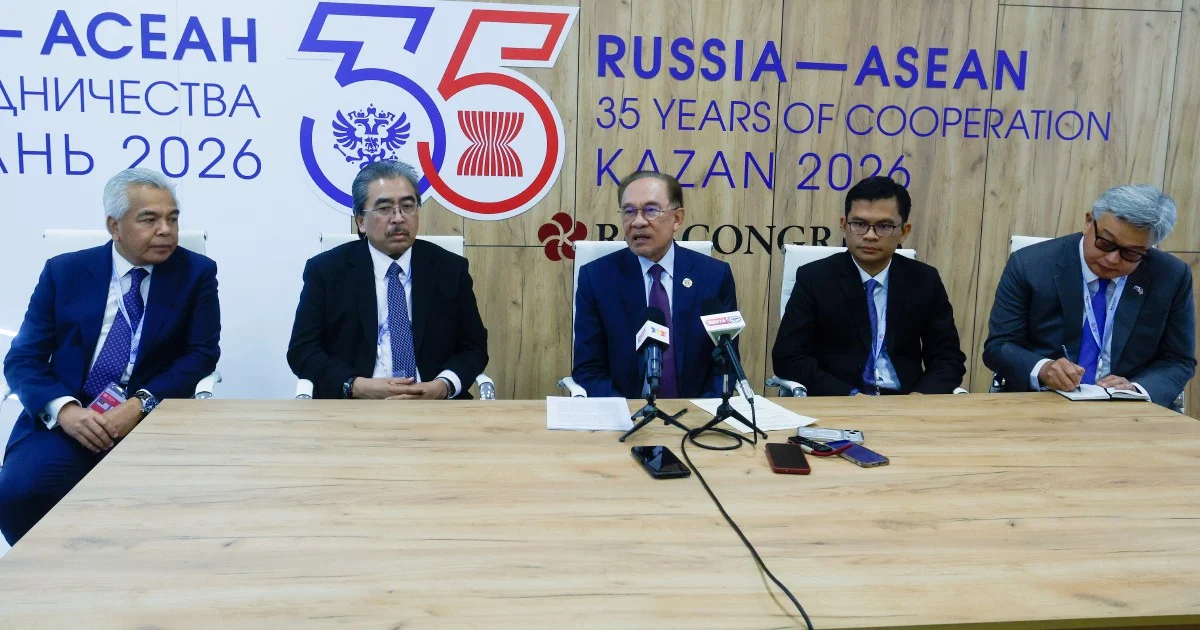
Prime Minister Datuk Seri Anwar Ibrahim has directed government agencies to fast-track the implementation of visa-free travel privileges for Russian tourists, marking a significant shift in Malaysia's approach to attracting visitors from Eastern Europe. The announcement, made during his engagement in Kazan, underscores the administration's commitment to rebuilding tourism revenues and establishing Malaysia as a competitive destination in the post-pandemic travel landscape.
The decision to expedite visa-free arrangements reflects broader strategic thinking within the Malaysian government about reopening pathways to key international markets. Russia has historically represented a valuable source of tourists to Southeast Asia, and the removal of visa requirements would substantially lower barriers to entry, potentially triggering increased bookings from Moscow, St. Petersburg, and other major population centres across the Russian federation.
Malaysia's tourism industry has faced considerable headwinds in recent years, struggling to recover visitor numbers and spending patterns to pre-2020 levels. The sector had been demonstrating gradual improvement, but remains below peak capacity in terms of both arrivals and revenue generation. By targeting affluent Russian tourists, who typically spend substantially during their stays and favour extended holidays in Southeast Asia, the government aims to inject meaningful foreign exchange earnings into the economy while boosting hospitality and service sectors that depend on international tourism.
The visa-free initiative also carries geopolitical dimensions worth considering. Malaysia has traditionally maintained pragmatic, non-aligned foreign policy positions, and the acceleration of Russian tourist arrivals signals maintained diplomatic channels despite global tensions elsewhere. This approach aligns with the nation's historical emphasis on commerce and mutual benefit rather than political alignment, allowing Malaysia to benefit economically while remaining neutral on broader international disputes.
From an operational standpoint, expedited implementation will require coordination across multiple government departments, including immigration, tourism promotion agencies, and law enforcement. The Ministry of Tourism, Arts and Culture will likely need to coordinate promotional campaigns targeting Russian travel agencies and online platforms, while immigration authorities prepare systems to process visa-exempt arrivals efficiently. Such preparations are essential to ensure that accelerated policy becomes tangible on the ground.
The timing of this announcement also reflects Malaysia's positioning within regional tourism competition. Thailand, Vietnam, and Indonesia have all aggressively pursued Russian visitors in recent years, with Thailand particularly benefiting from such tourism flows. By accelerating visa arrangements, Malaysia seeks to level the competitive playing field and capture market share that might otherwise flow to neighbouring destinations offering similar or superior convenience.
Russian tourists have demonstrated strong preferences for Southeast Asian destinations, attracted by tropical climates, cultural experiences, and competitive pricing compared to European and North American alternatives. Malaysia's strategic location on major air routes, coupled with its diverse attractions ranging from urban experiences in Kuala Lumpur to beach destinations in Sabah and Sarawak, positions the country well to capture this demographic once barriers are fully removed.
The economic impact of visa-free travel extends beyond direct tourism spending. Increased visitor arrivals support employment in hotels, restaurants, transportation, entertainment, and retail sectors. Local businesses benefit from expanded customer bases, while cultural exchange opportunities strengthen people-to-people connections between nations. These multiplier effects make tourism one of the more efficient ways to generate broad-based economic benefits across different regions and income levels.
Implementation speed will prove critical to success. Delays in processing visa-exempt entry systems, updating immigration technology, or training frontier staff could undermine the policy's effectiveness. The Prime Minister's specific order for expedited action suggests awareness that rapid execution, rather than bureaucratic timelines, determines real-world impact on arrival numbers and revenue generation.
Malaysia's move also reflects recognition that tourism recovery requires active engagement with traditional and emerging source markets. The Russian market represents both scale and spending power, with middle-class and affluent Russians increasingly seeking international holiday experiences. Unlike some visitor demographics that prioritise budget accommodation and limited spending, Russian tourists typically demonstrate willingness to invest substantially in accommodation, dining, and activities, yielding higher per-capita revenue for the destination.
For the broader Malaysian economy, tourism sector revival carries macroeconomic significance. The industry generates government tax revenue, supports foreign exchange earnings, and employs hundreds of thousands of citizens directly and indirectly. Accelerating visa-free arrangements addresses one significant friction point hindering growth, complementing other tourism promotion efforts and infrastructure investments.
Looking ahead, the success of this initiative will depend on seamless implementation and effective marketing to Russian outbound travellers. Government agencies must ensure that theoretical visa-free status translates into frictionless actual entry experiences, with trained immigration officers and clear communication about requirements and processes. Simultaneously, tourism authorities should capitalise on the policy change through targeted advertising campaigns in Russian-language media and engagement with travel industry stakeholders in Russia.
%22%2F%3E%3C%2Fpattern%3E%3C%2Fdefs%3E%3Crect%20width%3D%22100%25%22%20height%3D%22100%25%22%20fill%3D%22url(%23ph40buhg)%22%2F%3E%3Crect%20width%3D%22100%25%22%20height%3D%22100%25%22%20fill%3D%22url(%23ph40buhp)%22%2F%3E%3Ctext%20x%3D%2250%25%22%20y%3D%2250%25%22%20text-anchor%3D%22middle%22%20dominant-baseline%3D%22central%22%20fill%3D%22rgba(255%2C255%2C255%2C0.95)%22%20font-family%3D%22Georgia%2C%20'Times%20New%20Roman'%2C%20serif%22%20font-weight%3D%22700%22%20font-size%3D%22320%22%20letter-spacing%3D%22-0.02em%22%3EGRS%3C%2Ftext%3E%3C%2Fsvg%3E)