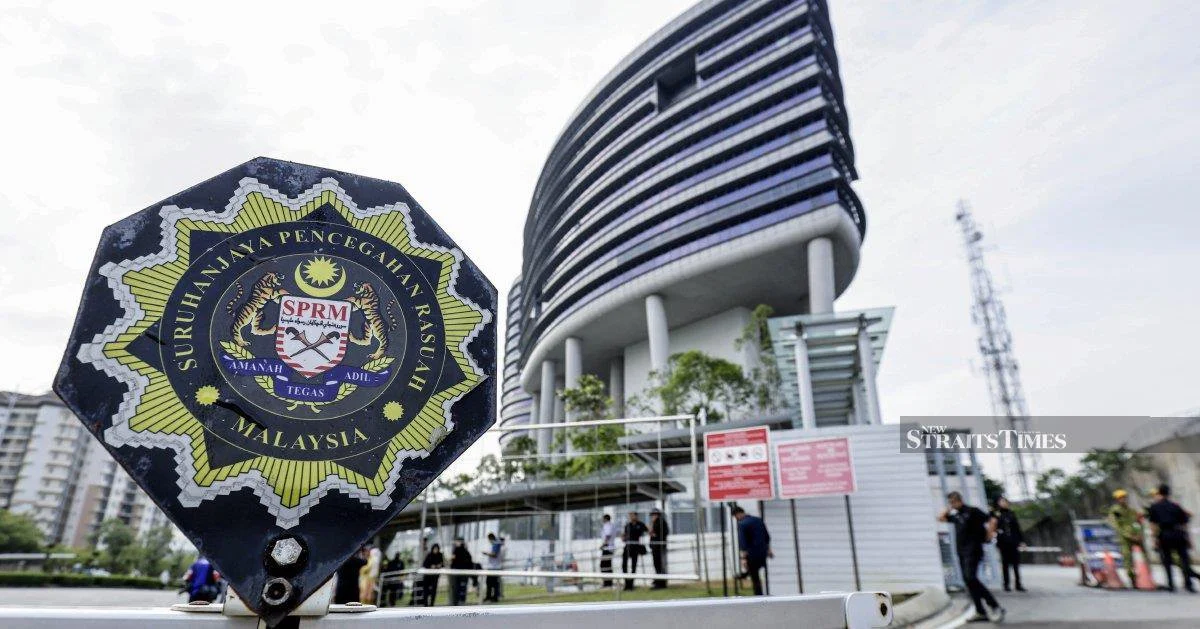
The Malaysian Anti-Corruption Commission has initiated a comprehensive review of structural and operational deficiencies within the Daya Kerjaya 2.0 employment incentive initiative, coinciding with its formal inquiry into what authorities believe constitutes approximately RM9 million in fraudulent activities. This dual approach signals the agency's intent to address not merely the alleged misconduct itself, but the underlying systemic vulnerabilities that permitted such irregularities to occur within the scheme's framework.
The Daya Kerjaya 2.0 programme represents a significant government intervention aimed at stimulating job creation and youth employment across Malaysia's economy. Designed as a competitive funding initiative, the scheme channels resources to businesses willing to hire and train workers, particularly from disadvantaged demographics. The magnitude of suspected losses—running into nine figures—underscores both the financial scale of the initiative and the serious implications of controls failing at critical junctures within its administration.
MACC's decision to investigate governance weaknesses alongside alleged fraud demonstrates a maturing institutional approach to combating corruption. Rather than treating fraud as an isolated criminal matter, the commission recognises that systematic breaches typically indicate deeper problems in oversight architecture. This perspective aligns with international best practices in anti-corruption work, where investigators examine how control gaps, unclear approval hierarchies, and inadequate verification procedures create environments conducive to misconduct. For Malaysian citizens, this signals a commitment to preventive measures rather than purely reactive enforcement.
The governance examination will likely encompass multiple dimensions of the scheme's operation. Documentation procedures for participant claims, verification mechanisms before fund disbursement, post-implementation monitoring to confirm compliance with programme conditions, and the audit trail maintained throughout the process will all come under scrutiny. Malaysian institutions frequently struggle with documentation standardisation and digital verification systems, issues that could well have contributed to the alleged fraud. Understanding these specific weaknesses will be essential for the authorities to implement remedial measures preventing recurrence.
Procedural deficiencies within employment assistance programmes carry particular significance in Malaysia's policy landscape. As the government continues emphasising job creation and skills development to support economic growth and reduce unemployment—especially among younger demographics—public confidence in these initiatives directly affects their effectiveness. When fraud occurs and governance failures are exposed, beneficiary participation rates potentially decline and programme credibility suffers, undermining legitimate attempts to stimulate the labour market. The investigation therefore carries implications extending beyond the immediate fraud matter into broader policy implementation quality.
The RM9 million allegation represents only the quantified portion of suspected fraudulent claims currently under examination. Authorities may discover additional anomalies as their investigation deepens, particularly once systemic weaknesses are identified and historical transactions are reviewed against new criteria. Sophisticated fraud schemes frequently exploit procedural gaps comprehensively, suggesting that initial loss estimates might not capture the full scope of misconduct. Investors in Malaysian public programmes and stakeholders monitoring government spending efficiency will be closely tracking whether final findings support or substantially exceed current figures.
For Malaysian businesses legitimately participating in Daya Kerjaya 2.0, the investigation presents a mixed outcome. On one hand, cleaning up the programme and tightening controls may increase administrative burden and documentation requirements for honest participants. On the other hand, removing fraudulent actors who obtained unfair competitive advantages or whose false claims distorted programme outcomes restores equitable conditions. Understanding this balance—ensuring that enhanced governance does not deter legitimate participation while genuinely preventing misconduct—will challenge administrators designing the tightened framework.
MACC's investigation methodology will significantly influence restoration of public confidence. Transparency regarding findings, clear communication of systemic weaknesses identified, and demonstrated commitment to implementing corrective measures will signal institutional seriousness. Conversely, if investigations conclude without clear articulation of reforms, public scepticism about government programme integrity will persist. Malaysian media and civil society groups monitoring corruption investigations will likely demand detailed public accounting of both the fraud and subsequent institutional improvements.
The investigation also raises broader questions about workforce development spending across Malaysian government initiatives. Multiple agencies administer employment-related programmes targeting different demographics or sectors. If Daya Kerjaya 2.0 experienced significant governance failures, questions naturally arise regarding control effectiveness across the entire ecosystem of labour market intervention schemes. A thorough examination might prompt comprehensive audit of comparable programmes, potentially uncovering similar vulnerabilities elsewhere within government spending. This systematic approach, though labour-intensive, could ultimately strengthen Malaysia's entire apparatus for managing development programmes.
International investors monitoring Malaysia's governance standards will observe how seriously authorities address both the fraud and the underlying structural problems. Institutional capacity to prevent and detect misconduct within public programmes influences foreign investor confidence in market stability and regulatory environments. Demonstrating both investigative capability and commitment to transparent resolution of discovered problems supports Malaysia's competitiveness as a business destination and reinforces its reputation for gradually strengthening institutional frameworks.
As MACC proceeds with its investigation, the agency faces the challenge of balancing accountability for alleged perpetrators with constructive system reform. The investigation's ultimate value extends beyond prosecuting individual wrongdoers to encompassing institutional learning and demonstrable improvement in how Malaysia administers significant public expenditure programmes. For the broader civil service and programme implementation ecosystem, this investigation potentially becomes a teaching moment about the importance of robust governance structures, adequate verification procedures, and continuous monitoring—lessons applicable far beyond the Daya Kerjaya 2.0 scheme itself.


%22%2F%3E%3C%2Fpattern%3E%3C%2Fdefs%3E%3Crect%20width%3D%22100%25%22%20height%3D%22100%25%22%20fill%3D%22url(%23ph40buhg)%22%2F%3E%3Crect%20width%3D%22100%25%22%20height%3D%22100%25%22%20fill%3D%22url(%23ph40buhp)%22%2F%3E%3Ctext%20x%3D%2250%25%22%20y%3D%2250%25%22%20text-anchor%3D%22middle%22%20dominant-baseline%3D%22central%22%20fill%3D%22rgba(255%2C255%2C255%2C0.95)%22%20font-family%3D%22Georgia%2C%20'Times%20New%20Roman'%2C%20serif%22%20font-weight%3D%22700%22%20font-size%3D%22320%22%20letter-spacing%3D%22-0.02em%22%3EGRS%3C%2Ftext%3E%3C%2Fsvg%3E)