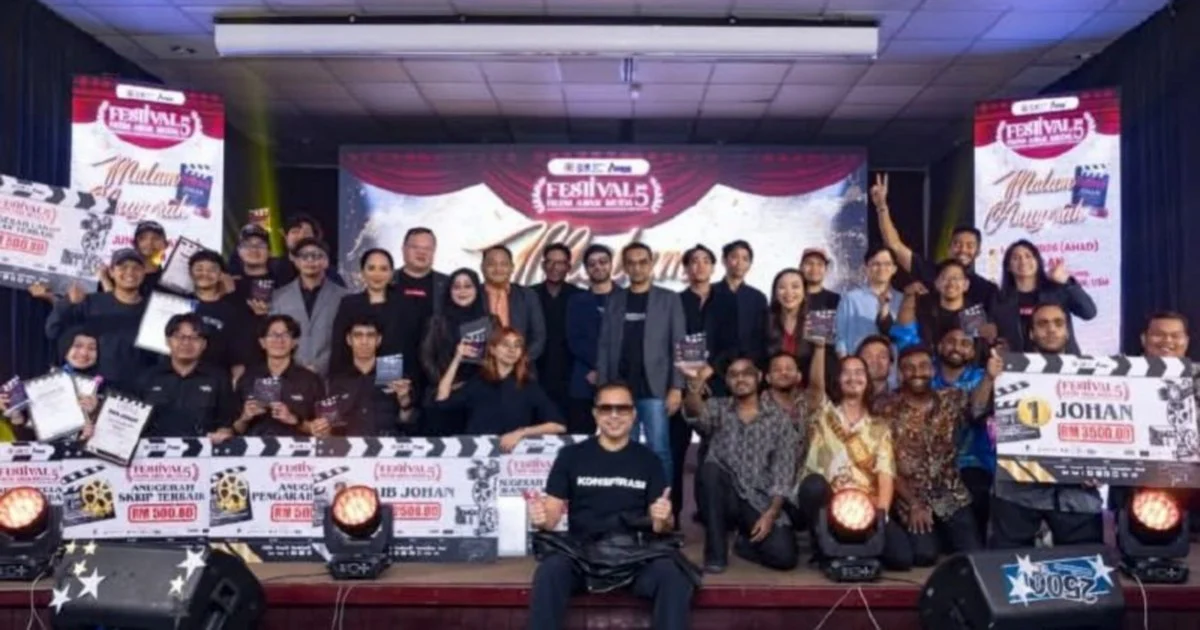
The Malaysian Anti-Corruption Commission has embarked on a fresh approach to combating graft by partnering with Universiti Sains Malaysia to organise the 5th Youth Film Festival in Penang, recognising that creative media offers a powerful vehicle for shaping attitudes among the country's younger generation toward public accountability and ethical behaviour.
This collaborative initiative underscores a broader strategic shift in how anti-corruption agencies across the region are engaging with millennials and Gen Z audiences. Rather than relying solely on traditional enforcement mechanisms and stern warnings, the MACC recognises that storytelling through film resonates far more effectively with audiences who have grown up consuming visual media as their primary source of information and social messaging. By embedding anti-corruption narratives within the festival framework, the commission aims to make integrity and honesty feel like natural, aspirational values rather than externally imposed rules.
The Youth Film Festival serves as an ideal platform for this messaging approach. Film festivals attract engaged, creative young people who are already inclined toward critical thinking and cultural engagement—precisely the demographic most likely to influence their peers and communities. The festival environment creates informal spaces where conversations about ethics and governance can flourish naturally, without the perception of didactic instruction that might alienate younger audiences.
Malaysia's experience with corruption over recent decades has created both urgency and opportunity for preventive initiatives. While high-profile investigations and prosecutions grab headlines, the underlying challenge remains changing cultural attitudes toward integrity at the foundational level. Young people entering universities and subsequently the workforce carry formative values that will shape their professional ethics throughout their careers. Intervening at this critical juncture, before cynicism calcifies into acceptance of corrupt practices, offers substantial long-term benefits for national governance.
The MACC's approach aligns with international best practices observed in other jurisdictions. Transparency International and similar organisations have documented that anti-corruption campaigns incorporating artistic and cultural elements achieve higher engagement rates and better retention of key messages compared to purely regulatory approaches. Visual narratives about the human costs of corruption—the schools that were never built, the families harmed by embezzlement, the opportunities lost to nepotism—create emotional connections that statistics alone cannot achieve.
Universiti Sains Malaysia's role as co-organiser reflects the important responsibility of higher education institutions in nurturing ethical citizenship. Universities function as incubators for future leaders, policymakers, academics, and professionals across all sectors. By hosting and supporting events that foreground integrity, USM signals to its student body that ethical conduct is central to the institution's identity and values. This institutional endorsement carries weight with young people navigating questions about their own professional aspirations and moral boundaries.
The festival's reach extends beyond those who attend in person. In the digital age, festival submissions, reviews, screenings, and discussions generate online conversations that amplify impact across social media platforms frequented by young Malaysians. Film content created specifically to explore anti-corruption themes becomes shareable, remixable, and discussable in ways that traditional MACC communications might not. This organic digital distribution multiplies the campaign's effectiveness beyond the immediate Penang venue.
Regionally, Malaysia's initiative holds lessons for neighbouring countries grappling with similar governance challenges. Indonesia, the Philippines, and Thailand have each experienced corruption scandals that captured international attention. A coordinated regional approach to youth-focused, culture-based anti-corruption messaging could establish a network effect, where ideas and successful strategies circulate among Southeast Asian institutions and inspire wider adoption. The MACC's willingness to experiment with innovative outreach demonstrates leadership within regional governance circles.
However, the success of such initiatives ultimately depends on follow-through and systemic coherence. Young people are perceptive observers of contradictions between messaging and reality. If they encounter anti-corruption films at a festival on Saturday evening, only to read news accounts of unresolved investigations or politically selective prosecution the following week, they may perceive the campaign as mere public relations rather than genuine institutional commitment. The credibility of the MACC's efforts rests not only on how effectively it communicates anti-corruption values but on demonstrable evidence that those values guide actual enforcement priorities and investigative decisions.
Looking forward, the MACC might consider establishing mechanisms to track the impact of festival participation on subsequent attitudes and behaviours among attendees. Longitudinal studies following young people who engaged with anti-corruption content through creative media could yield valuable data about which narrative approaches prove most persuasive. Such evidence would strengthen the case for sustained investment in culture-based anti-corruption strategies and help refine messaging for maximum effectiveness.
The 5th Youth Film Festival represents more than a single event; it signals a recognition that fighting corruption requires cultural transformation alongside legal and institutional measures. By engaging young Malaysians through the medium they naturally gravitate toward, the MACC invests in the intellectual and moral infrastructure necessary for a more transparent, accountable Malaysia. The challenge ahead lies in sustaining momentum and ensuring that the values cultivated through artistic engagement translate into concrete changes in how a new generation approaches power, responsibility, and the public trust.


%22%2F%3E%3C%2Fpattern%3E%3C%2Fdefs%3E%3Crect%20width%3D%22100%25%22%20height%3D%22100%25%22%20fill%3D%22url(%23ph40buhg)%22%2F%3E%3Crect%20width%3D%22100%25%22%20height%3D%22100%25%22%20fill%3D%22url(%23ph40buhp)%22%2F%3E%3Ctext%20x%3D%2250%25%22%20y%3D%2250%25%22%20text-anchor%3D%22middle%22%20dominant-baseline%3D%22central%22%20fill%3D%22rgba(255%2C255%2C255%2C0.95)%22%20font-family%3D%22Georgia%2C%20'Times%20New%20Roman'%2C%20serif%22%20font-weight%3D%22700%22%20font-size%3D%22320%22%20letter-spacing%3D%22-0.02em%22%3EGRS%3C%2Ftext%3E%3C%2Fsvg%3E)