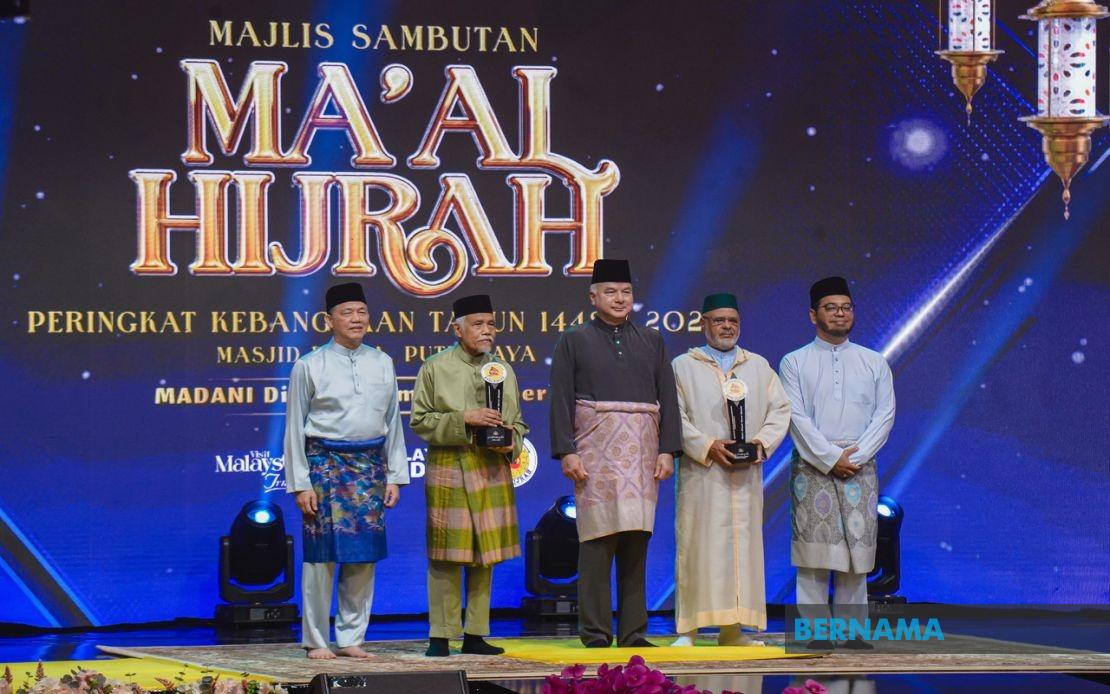
Across Malaysia, Maal Hijrah 1448H/2026 celebrations underscored a unifying message: the Islamic principle of spiritual migration and transformation serves as a foundation for national progress, stronger governance, and communal solidarity. The nationwide commemorations, held on June 17, positioned hijrah not merely as a historical religious milestone but as an ongoing framework for personal and collective renewal—a concept gaining traction among government and community leaders seeking to reconnect Islamic values with contemporary development.
The thematic emphasis of this year's festivities, centred on "MADANI Dihayati, Ummah Diberkati" (MADANI Lived, Ummah Blessed), signals an intentional alignment between Islamic principles and Malaysia's broader governance agenda. By framing hijrah as a pathway to positive transformation and civilisational advancement, organisers sought to engage diverse audiences—from religious scholars to civil servants—in a shared conversation about moral leadership and public welfare. This represents a deliberate effort to position spiritual reflection within practical governance discourse, a distinction that resonates particularly in Southeast Asia's plural societies where religious observance intersects with pluralistic governance.
Official participation at the highest levels underscored the government's commitment to the occasion. Deputy Prime Minister Datuk Seri Fadillah Yusof and Minister in the Prime Minister's Department (Religious Affairs) Dr Zulkifli Hasan attended the main ceremony, attended by approximately 5,000 participants. Their presence reflected recognition that Islamic observances carry implications for national cohesion and policy direction. The involvement of senior ministers signals that religious programmes are no longer compartmentalised affairs but integrated aspects of national identity and governance strategy—a shift worth noting for observers of Malaysian politics and public administration.
The centrepiece of ceremonial proceedings involved the presentation of prestigious awards honouring individuals whose contributions exemplify hijrah principles. Sultan Nazrin, who holds the sultanate of Perak, conferred the National Tokoh Maal Hijrah Award upon Prof Emeritus Datuk Dr Osman Bakar, rector of the International Islamic University Malaysia. The selection acknowledges IIUM's role in bridging Islamic scholarship with contemporary education, positioning it as an institutional embodiment of constructive change. This recognition carries institutional weight, elevating academic leadership alongside spiritual and political exemplars.
International recognition featured prominently in the awards ceremony, with Moroccan Islamic jurisprudence scholar Dr Ahmad Al-Raysuni receiving the International Tokoh Maal Hijrah Award. This inclusion reflects Malaysia's engagement with Islamic intellectual traditions beyond its borders and its positioning within broader Muslim scholarly networks. The honouring of an international figure alongside domestic recipients suggests an outward-looking conception of ummah unity—extending solidarity and recognition across geographical boundaries while maintaining local relevance.
Community-level acknowledgements formed the substance of broader celebrations, particularly in Sabah's observances. Datuk Ag Sharin Alimin, a community activist and former director of the Sabah Islamic Religious Affairs Department, received recognition in the male category of the Tokoh Maal Hijrah Award, while Datuk Masnah Matsalleh, a former state deputy secretary, was honoured in the female category. These selections highlight the contribution of administrative and community figures—individuals whose influence operates beyond religious institutions, extending into governance structures and grassroots engagement. Their recognition validates the conception of hijrah as transcending purely spiritual domains.
In separate Sabah-based ceremonies attended by approximately 1,000 participants, Ahmad Samsuri presented a Tokoh Maal Hijrah Award to 95-year-old Quran teacher Jusoh @ Muda Ismail. The honoured recipient's lineage as adopted student of the renowned Quranic scholar Tuan Guru Haji Mat Lintar anchors contemporary celebration in historical Islamic transmission. This recognition of an elderly educator preserves and validates chains of knowledge transmission, reflecting Islamic traditions of honouring those who sustain learning across generations. The focus on such figures ensures Maal Hijrah celebrations maintain connection to authentic Islamic heritage rather than becoming entirely modernised or institutionalised.
The nationwide character of these celebrations, spanning from federal-level ceremonies in Kuala Lumpur to state-based events in Sabah, demonstrates organisational coordination and shared messaging across regional boundaries. This breadth suggests consensus among Malaysian Islamic institutions and government departments regarding Maal Hijrah's contemporary relevance. For observers of Malaysian religious affairs, the scale and official sanction of these observances indicate renewed emphasis on Islamic-centric messaging as a component of national identity and governance legitimacy.
For Southeast Asian readers, Malaysia's Maal Hijrah emphasis on transformative hijrah carries implications beyond religious observance. The framing of spiritual renewal as connected to governance quality and ummah solidarity reflects broader Muslim-majority region engagement with reconciling traditional Islamic thought with modern state responsibilities. As Indonesia, Brunei, and other Southeast Asian nations navigate similar terrain, Malaysia's approach offers a model—whether successful remains subject to analytical debate—for institutionalising religious values within plural democratic frameworks.
The recurring emphasis on quality leadership during celebrations warrants particular attention. By positioning hijrah as fundamentally about improving governance and public welfare, organisers addressed contemporary anxieties about leadership standards and institutional effectiveness. This thematic choice suggests that religious observances increasingly serve as occasions for evaluating political and administrative performance against moral standards—a dynamic transforming how citizens engage with both religious and civic institutions.
Looking forward, Maal Hijrah 1448H celebrations establish precedent for positioning Islamic concepts as frameworks for national development discourse. The integration of diverse honourees—from university rectors to community activists to educators—suggests inclusive vision of transformation, one that recognises change occurs across multiple institutional domains. Whether such celebrations translate into sustained policy shifts or institutional reforms remains to be examined through subsequent developments in Malaysian governance and religious affairs.

%22%2F%3E%3C%2Fpattern%3E%3C%2Fdefs%3E%3Crect%20width%3D%22100%25%22%20height%3D%22100%25%22%20fill%3D%22url(%23ph40buhg)%22%2F%3E%3Crect%20width%3D%22100%25%22%20height%3D%22100%25%22%20fill%3D%22url(%23ph40buhp)%22%2F%3E%3Ctext%20x%3D%2250%25%22%20y%3D%2250%25%22%20text-anchor%3D%22middle%22%20dominant-baseline%3D%22central%22%20fill%3D%22rgba(255%2C255%2C255%2C0.95)%22%20font-family%3D%22Georgia%2C%20'Times%20New%20Roman'%2C%20serif%22%20font-weight%3D%22700%22%20font-size%3D%22320%22%20letter-spacing%3D%22-0.02em%22%3EGRS%3C%2Ftext%3E%3C%2Fsvg%3E)