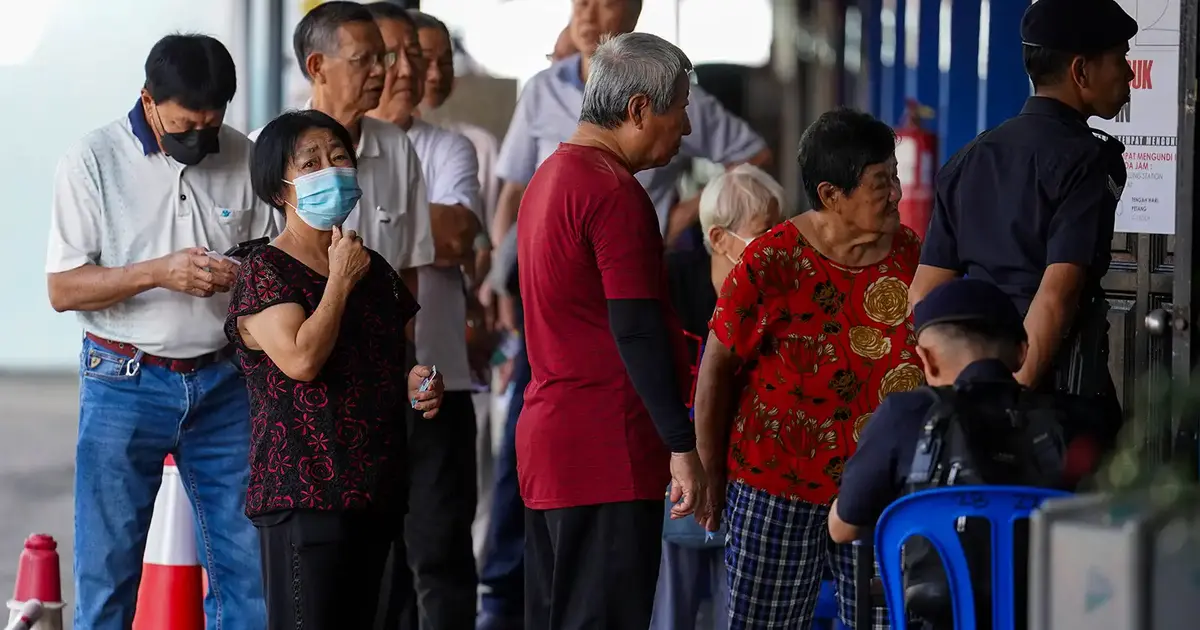
Pakatan Harapan's disappointing showing among Chinese voters in the recent Johor state election reflects a turnout problem rather than wholesale abandonment of the coalition, according to political analyst and former Bangi MP Ong Teng Cheong. The observation cuts through initial post-election narratives that Chinese voters had massively swung back to Barisan Nasional, instead pointing to a more nuanced picture of electoral disengagement in specific communities.
Ong's assessment carries particular weight given his long involvement in Malaysian politics and his direct experience representing a constituency with significant Chinese representation. His analysis suggests that Pakatan's strategic challenge in Johor is not simply reconverting voters who have switched sides, but rather reigniting enthusiasm among a constituency that appeared to withdraw from active participation. This distinction matters significantly for how opposition parties approach rebuilding support in the state ahead of future electoral contests.
The former MP's findings indicate that only a modest proportion of Chinese voters actually shifted their allegiance from Pakatan to Barisan Nasional during the recent poll. Rather than interpreting the election results as evidence of a broad realignment, Ong's research points to differential participation rates as the primary driver of the outcome. When voter enthusiasm drops disproportionately in particular demographic communities, the effective result mirrors a swing even if individual voter behaviour tells a different story.
This analysis has important implications for understanding Malaysian electoral dynamics, particularly in states like Johor where Chinese voters historically constitute a meaningful voting bloc. Chinese Malaysians have long played a pivotal role in determining electoral outcomes in mixed constituencies, and shifts in their voting patterns or participation rates can dramatically alter seat distributions. The Johor results therefore warrant careful interpretation to distinguish genuine preference changes from temporary disengagement.
The low-turnout explanation also raises questions about what factors contributed to reduced participation among Chinese voters specifically. Political scientists typically attribute such patterns to factors including reduced campaign intensity in certain areas, dissatisfaction with both major blocs, competing personal priorities, or perceived irrelevance of local contests to broader national concerns. Understanding these underlying causes becomes essential for Pakatan strategists attempting to rebuild the coalition's standing in the state.
Johor represents a particularly significant battleground in Malaysian politics, given its status as Malaysia's second-largest state and its proximity to Singapore. The state has traditionally swung between government and opposition control, with Chinese voters often occupying key positions in closely contested seats. A sustained decline in Chinese voter engagement could reshape the state's political trajectory regardless of which coalition ultimately benefits from such apathy.
Ong's distinction between defection and disengagement carries methodological importance for analysts and political strategists alike. Exit polling and voter surveys can help clarify whether observed seat losses stem from persuasion—where voters actively select alternative candidates—or demobilisation—where voters simply stay home. These phenomena require fundamentally different strategic responses, making accurate diagnosis crucial for any political recovery plan.
For Barisan Nasional, Ong's analysis suggests caution against over-interpreting the Johor results as evidence of restored Chinese voter confidence in the coalition. If the results largely reflect Pakatan's mobilisation problems rather than Barisan's appeal, then the ruling coalition cannot assume similar advantage in future elections where Pakatan runs more intensive campaigns. This has implications for both coalitions as they prepare for potential mid-term state elections or the next general election.
The Johor election results also merit consideration within Malaysia's broader political context of declining voter enthusiasm and deepening fragmentation. Turnout problems are not unique to Chinese voters or to Johor specifically, but rather reflect nationwide trends of electoral fatigue and reduced confidence in political institutions. Pakatan's challenge thus extends beyond recovering lost Chinese support to addressing the more fundamental problem of sustained voter engagement across all demographic groups.
Looking forward, Ong's analysis suggests that Pakatan Harapan should prioritise intensive grassroots mobilisation and direct engagement with Chinese communities in Johor to understand and address the sources of their electoral disengagement. Rather than assuming Chinese voters have definitively switched allegiance, the coalition might focus on demonstrating renewed relevance and recommitting to the policy concerns that initially attracted Chinese support. This approach treats the Johor setback as a mobilisation challenge rather than an ideological defeat.
The broader political implications extend to both national coalitions, which must confront the reality that electoral dominance in future contests may depend less on persuading voters to switch sides and more on simply mobilising supporters to cast ballots. In a fragmented electoral landscape where neither major coalition commands consistent supermajority support, turnout differentials between voter blocs could prove decisive in determining which coalition forms governments and determines national policy direction.

