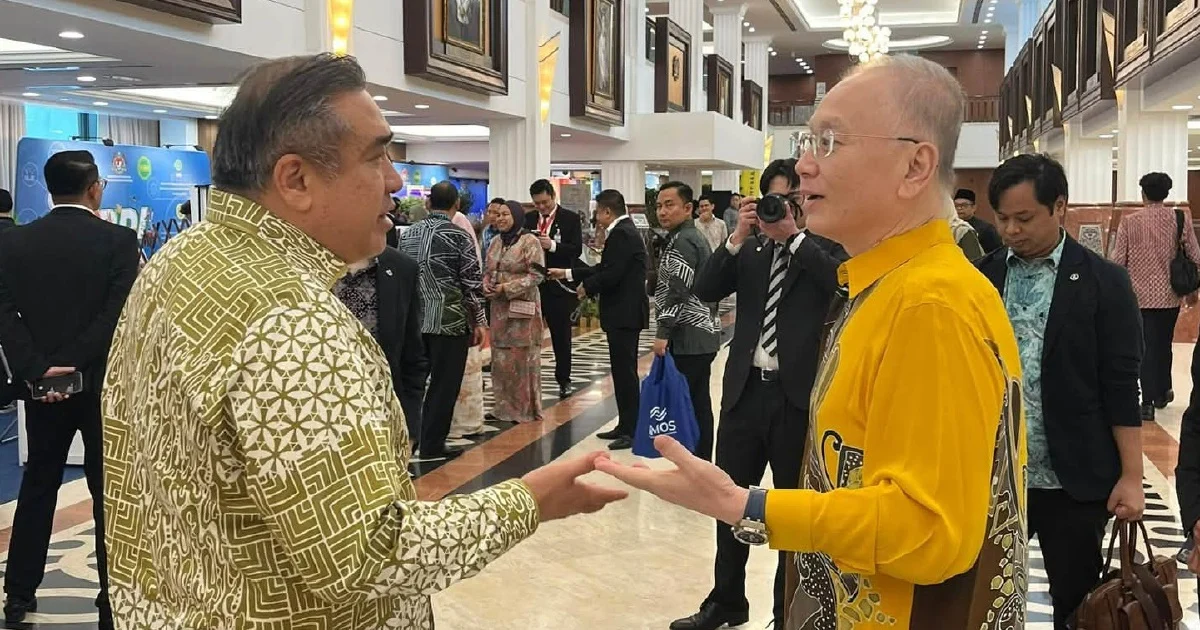
Malaysia's political rivals have demonstrated an unusual willingness to set aside partisan differences when it comes to maintaining the dignity of parliamentary proceedings. DAP secretary-general Anthony Loke has called for parliamentary debates and discussions to remain civil and professionally conducted, even as the broader political landscape becomes increasingly contentious with the looming Johor state election campaign. This commitment to parliamentary decorum comes at a time when the state election is generating substantial political heat and divisive rhetoric among competing parties seeking voter support.
The tension between electoral competition and institutional respect represents a recurring challenge in Malaysian politics. While state elections naturally encourage parties to campaign aggressively and highlight their policy differences, the parliament itself remains a space where opposing representatives must interact regularly across multiple legislative sessions. Loke's emphasis on maintaining this distinction reflects a recognition that allowing election-season animosity to seep into parliamentary halls can undermine the body's functionality and diminish public respect for the institution itself.
MCA leaders, including those directly involved in the Johor contest, have reciprocated this commitment to parliamentary professionalism. The agreement between opposition and coalition-aligned parties to preserve parliamentary courtesy demonstrates that even in a highly competitive electoral environment, there exists common ground on fundamental institutional norms. This bipartisan approach to parliamentary conduct is particularly noteworthy given Malaysia's pattern of increasingly polarized political discourse in recent years, both in mainstream media and on social platforms.
The Johor state election campaign has emerged as a particularly significant electoral moment for multiple reasons. The state has historically served as a strategic battleground between the ruling Barisan Nasional coalition and opposition forces, making its political outcome nationally significant. Campaign activities have intensified across the state, with multiple parties mobilizing supporters, highlighting policy proposals, and contrasting their visions for Johor's future development and governance. The resulting political atmosphere has become notably more energized compared to routine parliamentary sessions.
Maintaining parliamentary professionalism during competitive elections carries practical implications for legislative effectiveness. When personal animosities from campaign trails carry into parliamentary chambers, they can distract from substantive policy debates and reduce the quality of deliberation on bills and national issues. Representatives who focus their energy on scoring electoral points rather than engaging constructively with opposing viewpoints diminish parliament's capacity to serve its primary function as Malaysia's chief legislative body responsible for enacting laws and scrutinizing government policy.
The commitment to civility also has broader implications for public trust in democratic institutions. Malaysian voters observe how their elected representatives conduct themselves in parliament, and this conduct influences their assessment of political leaders' fitness for office. When parliamentarians maintain respectful dialogue even with their electoral opponents, they model the kind of political behavior that strengthens democratic culture. Conversely, when parliamentary sessions devolve into personal attacks and inflammatory rhetoric, voters become cynical about politics generally and may disengage from the democratic process.
Historically, Malaysia's parliament has experienced periods of considerable rancor alongside stretches of greater civility. The institution has survived various political transitions and electoral cycles without major structural damage, partly because informal norms—sometimes unwritten but widely understood—continue to govern parliamentary conduct. The current agreement between Loke and MCA representatives builds upon this tradition of distinguishing between campaign-season aggressiveness and parliamentary comportment, though it requires explicit reinforcement in an era of more polarized politics.
The Southeast Asian regional context adds another layer of significance to Malaysia's commitment to parliamentary professionalism. Several neighboring democracies have experienced deteriorating institutional standards and democratic backsliding in recent years, often accompanied by legislative bodies that have lost public confidence and institutional integrity. Malaysia's effort to insulate its parliament from electoral contamination can serve as a protective mechanism against such trends, helping to preserve the legitimacy and functionality of this crucial democratic institution.
Implementing this agreement in practice will require discipline from individual parliamentarians during question time, committee work, and substantive debates on contentious legislation. The coming weeks and months will test whether the commitment to civility can be sustained when electoral stakes feel high and parties are competing intensely for voter support in Johor. Party whips and parliamentary leadership will likely need to reinforce this cultural expectation repeatedly to ensure that campaign surrogates do not exceed parliamentary bounds through inflammatory statements or personal attacks designed primarily for outside audiences.
The economic and policy dimensions of the Johor election also make parliamentary decorum particularly important. Johor's development trajectory, infrastructure investments, and role in regional trade corridors affect not only its residents but also businesses and workers throughout peninsular Malaysia and neighboring Singapore. Parliamentary discussions on policies affecting the state's economic development benefit from substantive engagement rather than rhetorical point-scoring, and this quality of deliberation improves when representatives approach debates with professional respect for opposing viewpoints.
Ultimately, the agreement between Loke and Wee reflects a mature recognition that competitive democracy and institutional civility can coexist. Elections will continue to generate heated campaigns, partisan mobilization, and sharp policy contrasts—these are features of healthy democratic competition. Yet parliament can maintain a distinct character as a space where such competition is expressed through formal procedures, respectful dialogue, and professional engagement with substantive issues. This balance, though sometimes fragile, remains essential to sustaining Malaysia's democratic institutions even amid the considerable pressures of state elections.

