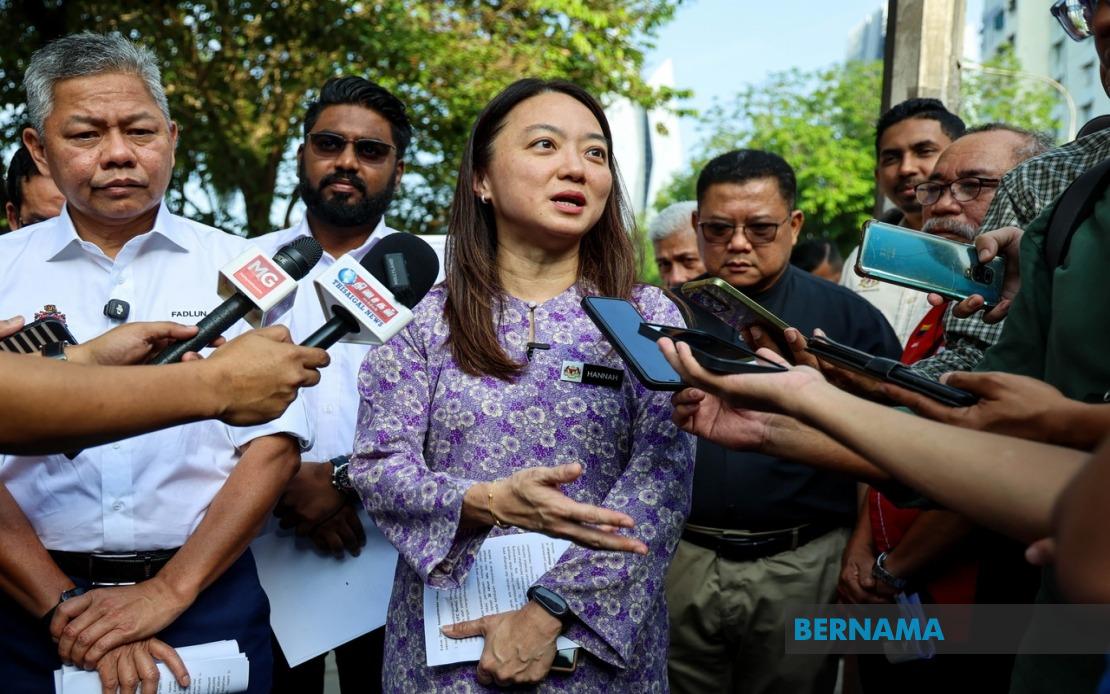
Minister in the Prime Minister's Department (Federal Territories) Hannah Yeoh has called on local authorities nationwide to adopt a more proactive stance toward maintaining public infrastructure, emphasising that basic upkeep cannot be deferred until complaints gain traction on social media platforms. Speaking after inspecting an upgrading project at the Urban Transformation Centre (UTC) Sentul in Kuala Lumpur on June 19, Hannah stressed that municipalities and local councils have no valid excuse for allowing cleanliness and safety standards to deteriorate, regardless of whether issues have been publicly highlighted.
The minister's remarks came in response to recent complaints from residents and online users regarding malfunctioning lifts and escalators in Putrajaya, a major federal territory and established tourism destination. Rather than viewing such incidents as isolated problems requiring reactive intervention, Hannah framed them as symptomatic of a broader need for systematic, continuous maintenance protocols across all public spaces managed by local authorities. She distinguished between capital-intensive upgrading projects, which might reasonably require additional budgetary allocation and planning cycles, and routine housekeeping tasks that fall squarely within existing operational mandates.
Putrajaya Corporation's leadership has already initiated repairs following the social media complaints, according to Hannah's account. However, her message to the corporation and other local authorities suggests that this responsiveness should have been anticipated rather than triggered by viral content. The distinction matters because it points to a gap between reactive crisis management and the systematic, preventative maintenance culture that Hannah believes ought to characterise effective municipal governance. In tourism-dependent locations such as Putrajaya, visitor impressions depend heavily on the condition of public amenities, making consistent upkeep not merely a civic responsibility but an economic imperative.
The minister stressed the importance of frequent, on-site inspections as a mechanism for early detection and resolution of maintenance issues. By encouraging local authority leaders to conduct regular ground visits, Hannah was essentially advocating for a management approach that privileges direct observation over reporting mechanisms that may obscure the actual state of facilities. This hands-on supervision approach carries particular weight in Malaysian governance contexts, where the visibility and accessibility of leadership has become an increasingly valued signal of administrative competence and citizen responsiveness.
Beyond her directive to local authorities, Hannah offered commentary on the broader information ecosystem surrounding such complaints. She cautioned social media users to exercise greater discernment before amplifying claims about public infrastructure failures, noting that videos and images shared online frequently capture only a narrow slice of context. According to her perspective, footage circulating on platforms such as TikTok, Instagram, or Facebook may represent as little as 10 per cent of the full circumstances surrounding any given issue, leaving substantial portions of the story untold or misrepresented.
This appeal to digital literacy reflects growing concerns within Malaysian government circles about the speed and distortion with which information propagates through social media. The democratisation of content creation means that anyone can document and publicise grievances, but this accessibility does not necessarily correlate with accuracy, comprehensiveness, or proportionality of response. Hannah's point that multiple perspectives and angles exist alongside the narrative presented by individual content creators speaks to legitimate frustrations about how public perception can become misaligned with administrative reality when the loudest voices occupy disproportionate influence over discourse.
However, the minister's emphasis on social media users' responsibility to verify claims before sharing them also touches on a deeper tension within contemporary governance. While greater citizen scrutiny of public service delivery can drive improvements—as the Putrajaya repairs arguably demonstrate—an expectation that ordinary members of the public develop sophisticated analytical capabilities before raising concerns risks creating barriers to legitimate accountability. The line between prudent scepticism toward isolated complaints and a pattern of dismissing public grievances as merely viral sensation-seeking can become blurred.
For Malaysian local authorities, Hannah's message crystallises an emerging expectation that proactive facility maintenance should become business-as-usual rather than a periodic response to reputational threats. Municipalities across Peninsular Malaysia, Sabah, and Sarawak increasingly find their performance judged not only through formal audits and official channels but through the cumulative weight of citizen observations shared instantaneously across digital platforms. This shift in accountability mechanisms suggests that local authorities can no longer rely on information asymmetries or delayed reporting cycles to mask infrastructure problems.
The maintenance culture Hannah advocates also aligns with Malaysia's broader positioning as a regional tourism and business hub. Cities competing for international visitor numbers and investment capital cannot afford perception gaps where infrastructure quality appears to deteriorate between official inspections. Putrajaya's status as the federal administrative centre and a showcase destination makes it particularly emblematic of this challenge: any shortcomings in public facility maintenance carry symbolic weight beyond their immediate functional impact, potentially affecting broader assessments of governmental efficiency and national infrastructure standards.
Going forward, the ministry's engagement with Putrajaya Corporation on this matter may establish precedents for how federal oversight translates into local operational improvements. Other local authorities observing this intervention will likely recognise that proactive maintenance standards are now an explicit performance expectation rather than an optional enhancement. The combination of direct ministerial attention, public accountability through media coverage, and social media amplification creates multiple pressure points incentivising compliance with maintenance standards.