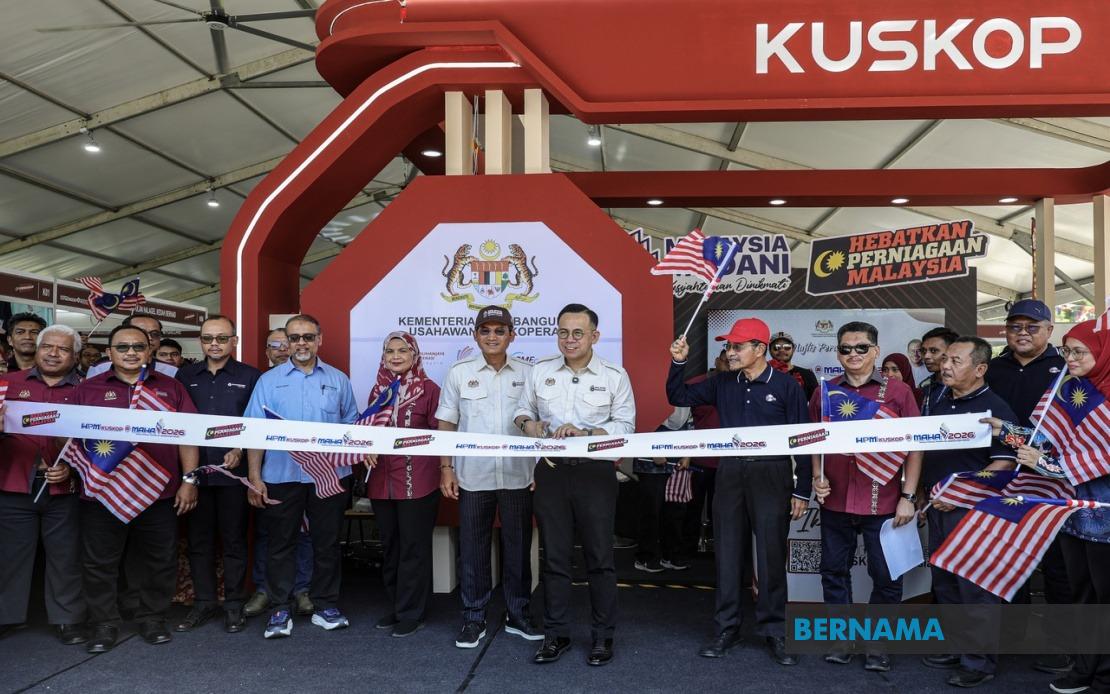
The Ministry of Entrepreneur and Cooperatives Development (KUSKOP) is pursuing an ambitious sales target of RM500,000 at its first-ever presence at MAHA 2026, the biennial Malaysian agricultural and consumer showcase held in Serdang. The ministry's pavilion is already demonstrating strong momentum, having generated more than RM110,000 in sales within the first few days of the event, according to Minister Steven Sim.
The inaugural HPMKUSKOP@MAHA site represents a strategic effort to connect Malaysia's entrepreneurial ecosystem directly with consumers and business partners at one of the nation's largest agricultural and lifestyle expos. By bringing together 66 companies, cooperatives, and micro, small and medium enterprises (MSMEs) under a single pavilion, KUSKOP has created a concentrated marketplace that showcases the diversity and innovation within Malaysia's entrepreneurial sector. This concentration of business entities allows visitors to explore multiple commercial opportunities and gain exposure to the range of products and services developed by businesses supported or registered through KUSKOP initiatives.
The attendance figures paint an encouraging picture for the ministry's debut. Over 100,000 visitors have passed through the pavilion during its opening days, providing considerable foot traffic and commercial opportunity for the participating enterprises. This level of engagement suggests genuine interest from the broader Malaysian consumer and business community in the products and services represented at the HPMKUSKOP@MAHA site. For many of the smaller enterprises and cooperatives exhibiting, MAHA's visitor volume represents exposure to potential customers and wholesale partners they might not otherwise reach through conventional marketing channels.
The choice to debut at MAHA 2026 reflects a deliberate positioning strategy by KUSKOP. MAHA, held biennially, attracts a demographically diverse audience ranging from farmers and agricultural professionals to urban consumers interested in lifestyle products, farm-to-table offerings, and artisanal goods. This makes it an ideal platform for connecting entrepreneurial ventures—particularly those in food production, handicrafts, and agribusiness—with receptive audiences. For KUSKOP, participating at such a high-profile event serves multiple purposes: showcasing the quality and diversity of supported enterprises, building brand recognition for the ministry's support programmes, and generating direct sales revenue for participating businesses.
Minister Sim's comments during the pavilion's official opening underscore KUSKOP's enthusiasm for the commercial results achieved thus far. His presence and public endorsement of the event signal the ministry's commitment to supporting entrepreneurial development beyond administrative functions. By actively promoting the MAHA appearance and celebrating early sales achievements, Sim has positioned KUSKOP as an engaged custodian of Malaysia's entrepreneurial landscape, particularly for small and medium-sized businesses that often struggle with visibility and market access.
The RM500,000 sales target is significant both as a commercial goal and as a demonstration of the economic potential within KUSKOP's supported business network. If achieved, this figure would validate the ministry's strategy of concentrated market presence and suggest that Malaysian consumers and businesses show strong appetite for the products and services offered by KUSKOP-affiliated enterprises. The target also establishes a performance benchmark that could inform decisions about future MAHA participation and similar high-traffic retail events.
For the 66 participating companies and cooperatives, MAHA 2026 represents more than just a sales opportunity. It offers valuable market feedback, direct consumer interaction, and the chance to build customer databases and establish wholesale relationships. Many MSMEs operate with limited marketing budgets and rely heavily on events like MAHA to achieve visibility. The centralized KUSKOP pavilion removes individual exhibitors' burden of securing pavilion space, managing logistics, and bearing standalone promotional costs, making participation more accessible to smaller enterprises.
The Ministry of Agriculture and Food Security's successful organisation of MAHA 2026, as acknowledged by Sim, has provided an enabling environment for KUSKOP's debut. The collaborative approach between the two ministries reflects broader government efforts to create integrated platforms that serve multiple policy objectives—in this case, supporting both agricultural development and entrepreneurial growth. Such inter-ministerial coordination demonstrates how Malaysia's government agencies are attempting to create synergies that benefit different sectors of the economy simultaneously.
Looking forward, KUSKOP's positive initial results at MAHA 2026 will likely influence the ministry's participation strategy in similar events. If the RM500,000 target is achieved or exceeded, MAHA could become a regular fixture in KUSKOP's annual calendar. This would provide participating businesses with consistent, predictable access to the expo's audience and allow the ministry to build institutional knowledge about which types of enterprises and products resonate most strongly with MAHA visitors. Over time, such regular presence could establish MAHA as a key channel for consumer discovery of KUSKOP-supported businesses.
The strong early performance also signals healthy vitality within Malaysia's cooperative and MSME sectors. The fact that 66 enterprises were willing and able to participate in MAHA, and that visitors have already spent more than RM110,000 at the pavilion, suggests ongoing entrepreneurial activity and consumer spending power despite periodic economic headwinds. This is particularly relevant for policymakers and economic observers monitoring the health of Malaysia's small business ecosystem, which employs millions of workers and contributes substantially to GDP and economic resilience.
As MAHA 2026 continues, the HPMKUSKOP@MAHA site will serve as a real-time case study in how government support systems can create value for private enterprises. The pavilion demonstrates that with proper coordination and platform provision, even modest individual businesses can achieve significant collective impact when brought together in the right setting. The journey from RM110,000 to the RM500,000 target over the remainder of the event will provide valuable data about consumer preferences, peak shopping patterns, and the effectiveness of the centralized pavilion model.

