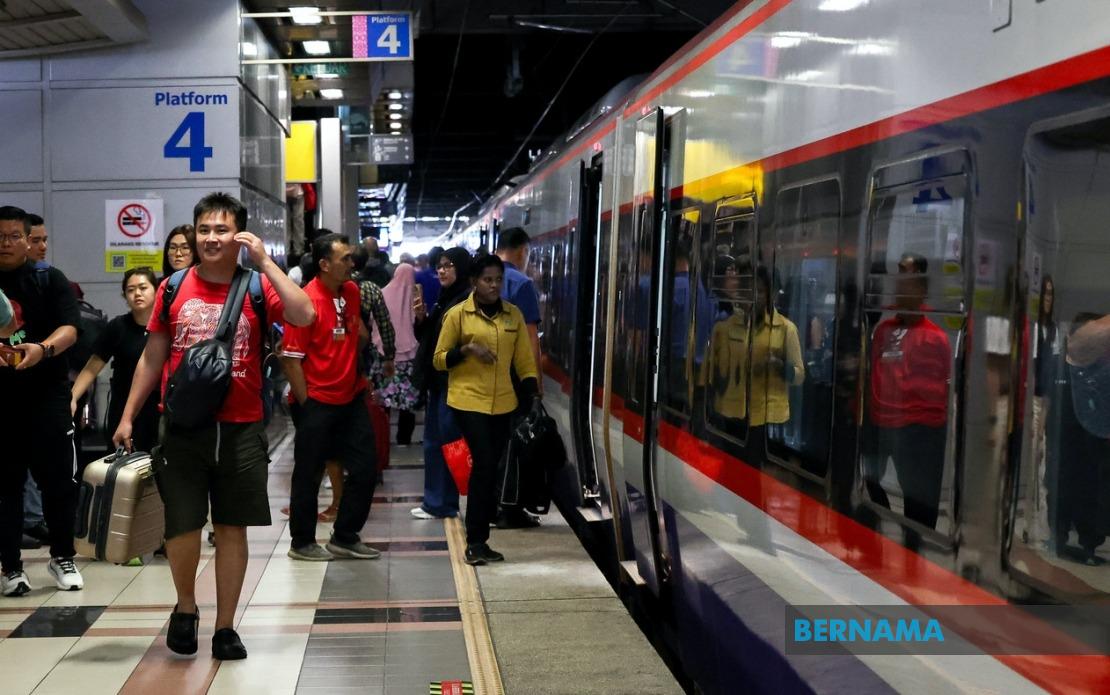
Keretapi Tanah Melayu Berhad (KTMB) has mobilised additional rail capacity ahead of the Johor state election, putting 7,464 extra seats into service across the southern Electric Train Service network to accommodate the expected surge of voters travelling to their constituencies. The initiative reflects the railway operator's response to unprecedented demand following the rapid sell-out of a previous batch of promotional tickets released in mid-June, signalling how pivotal rail transport has become for Malaysia's electoral logistics.
The expansion involves eight additional train services operating across two key corridors: the KL Sentral to JB Sentral route and the JB Sentral to Gemas line. Each service will move approximately 2,488 passengers per day during the three-day operational window from 10 to 12 July, creating a significant logistical undertaking that demonstrates how state elections now require coordinated infrastructure responses from multiple government agencies. The routing strategy cleverly connects Kuala Lumpur with Johor's heartland through both direct and hub-and-spoke pathways, maximising accessibility for voters across the Klang Valley and further afield.
To sweeten the proposition and incentivise train usage over potentially congested roadways, KTMB is offering a blanket 20 percent discount across all supplementary ETS services during this period. This pricing strategy serves dual purposes: it reduces the financial burden on voters—many of whom are wage earners taking time off work—while simultaneously promoting sustainable transport infrastructure at a moment of peak demand. The discount effectively positions rail travel as the sensible choice compared to fuel costs and toll expenses associated with driving to Johor, a calculation that will resonate particularly with younger voters and families watching their household budgets.
The phased ticket release strategy reveals KTMB's operational caution. Sales for the JB Sentral to Gemas corridor opened at 3:00 pm on 7 July, while the KL Sentral to JB Sentral route followed the next morning at 9:00 am. This staggered approach prevents the digital infrastructure from being overwhelmed and gives the railway operator time to gauge demand patterns and adjust subsequent announcements if necessary. The timing also allows potential travellers a window to plan bookings without the frenetic rush that accompanied the earlier June promotion, which sold out entirely within a compressed timeframe.
For Malaysian voters, the practical implications are substantial. Election day travel has historically been chaotic, with highways clogged and parking facilities overwhelmed at polling centres. By normalising rail usage for electoral movements, KTMB is fundamentally reshaping how Malaysians approach voting as a physical journey. The convenience factor is heightened by the railway operator's insistence that passengers book through digital channels—the KITS Style mobile application, the official KTMB website, or station kiosks—eliminating the need to queue at ticket counters and enabling seamless journey planning.
The operational parameters underscore the seriousness of this undertaking. KTMB has issued explicit guidance that passengers must arrive thirty minutes before scheduled departure times, with platform access closing five minutes before trains leave. These requirements are not bureaucratic theatre but necessary safeguards when running trains at or near capacity during peak-demand periods. Overcrowding and missed trains would undermine the entire purpose of this initiative, so the advance notice serves as both logistical requirement and implicit message to voters: plan carefully, depart early, expect the unexpected.
For Southeast Asian observers monitoring Malaysian electoral infrastructure, this development illustrates how election management increasingly depends on transport coordination. Unlike smaller nations where voters can reach polling stations quickly, Malaysia's geographic sprawl means that enabling democratic participation directly correlates with transport capacity. The Johor election, serving as a barometer for federal politics, justifies this investment in logistics. What worked successfully here could become a template for future elections, establishing precedent for how government-linked companies contribute to maintaining electoral accessibility.
Context matters here: the June promotional tickets sold out because prior predictions about demand apparently underestimated voter willingness to use rail services. This second tranche of 7,464 seats acknowledges that miscalculation while avoiding the appearance of over-supply by carefully limiting the three-day window. Railways typically operate on consistent schedules; inserting temporary additional services requires repositioning rolling stock from other routes, marshalling crew resources, and managing maintenance cycles around the election calendar. These logistics run invisibly but represent genuine operational commitment.
The 20 percent discount, while appearing modest, creates meaningful savings at scale. A return journey from Kuala Lumpur to Johor Bahru might normally cost RM 100 to RM 150 in standard fares; the discount translates to RM 20 to RM 30 recovered per trip, which for families of multiple voters represents consequential savings. Moreover, the discount signals government investment in removing friction from the voting process itself—the state is effectively subsidising democratic participation through transport affordability.
For commuters and businesses operating along the ETS network, the announcement carries secondary implications. The addition of eight trains during 10-12 July will moderately increase congestion on the broader southern corridor, potentially affecting regular commuter services during peak hours. However, this temporary disruption is accepted as the cost of facilitating electoral participation, reflecting societal prioritisation of voting access over marginal delays in commercial commuting.
Ticket purchasing opens with sufficient lead time—up to three days before travel—allowing voters to secure seats without engaging in last-minute scrambles. The KTMB Call Centre remains available at 03-9779 1200 for queries, providing a human interface for passengers uncomfortable with digital booking platforms, an important inclusivity measure given Malaysia's diverse digital literacy levels across age groups and socioeconomic segments.
Looking forward, this election cycle offers valuable data about Malaysian transport demand patterns during elections. If subsequent analysis shows sustained preference for rail travel during electoral events, infrastructure planning for future elections might prioritise similar investments. The success or failure of this Johor initiative—measured in seat utilisation rates, customer satisfaction, and whether the discount proved necessary—will inform how KTMB and other transport operators calibrate their responses to future electoral calendars.

