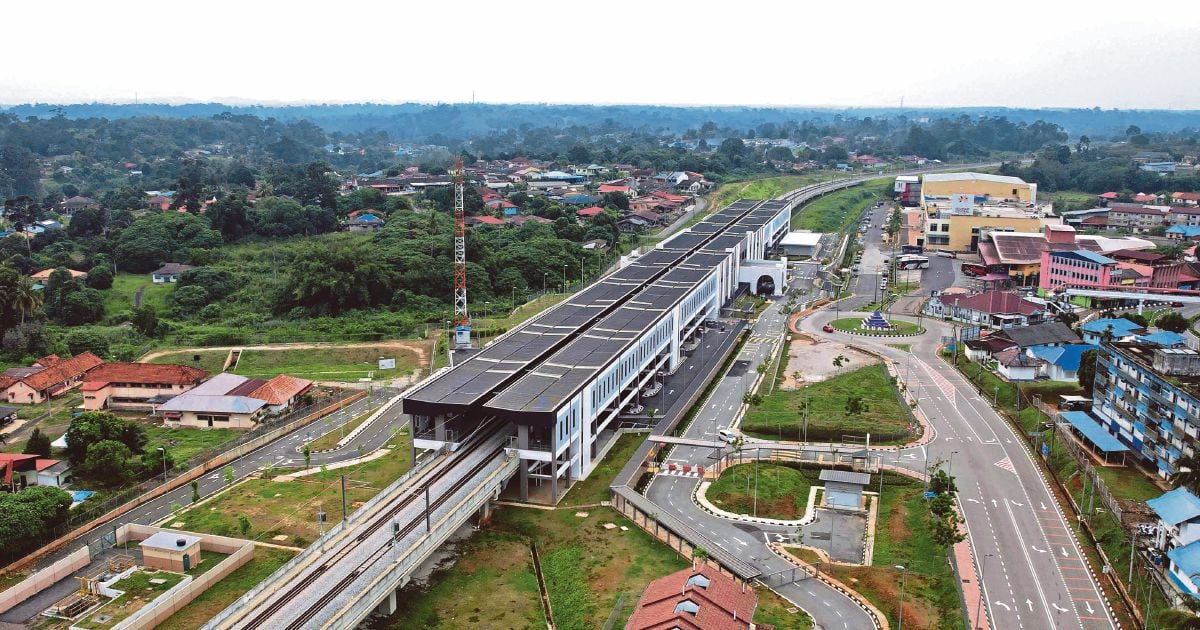
Malaysia's national rail operator Keretapi Tanah Melayu Berhad has unveiled a comprehensive mobility initiative designed to facilitate voter participation in the forthcoming Johor state election, deploying additional Electric Train Service capacity across the heavily trafficked southern corridor while simultaneously offering substantial fare incentives to registered electors.
The operator is supplementing its regular timetable with extra ETS services providing an aggregate of 7,464 additional seats throughout the southern sector, directly addressing anticipated surge in passenger demand as voters travel to cast their ballots across the state. This targeted expansion represents a deliberate effort to eliminate transport barriers that might otherwise impede electoral participation, particularly among commuters and residents in outlying districts who depend on rail connectivity to reach designated polling venues.
Central to KTMB's initiative is a promotional 20 per cent fare discount extended exclusively to verified Johor voters, reducing the cost barrier for election-day travel. Eligible passengers presenting valid identification confirming voter registration status will access the reduced fares across designated services, effectively lowering the financial disincentive for interstate or inter-district movement. This incentive structure mirrors previous election-support schemes implemented by transport authorities across Southeast Asia, recognising that accessibility directly correlates with voter turnout in distributed populations.
The southern sector ETS network constitutes a critical transport artery connecting major Johor population centres including Kuala Lumpur, Selangor municipalities, and destinations throughout Johor state itself. During election periods, this corridor typically experiences substantially elevated passenger volumes as voters commuting between residential and voting locations exploit rail alternatives to road congestion. KTMB's capacity augmentation pre-emptively addresses this predictable demand spike, preventing service saturation that could strand potential voters or force them toward alternative—and potentially time-consuming—transport modes.
For Malaysian readers, the initiative underscores how state and federal authorities coordinate around electoral infrastructure, treating voter accessibility as a logistical challenge requiring systematic solutions. Unlike many democracies where voting-day transport support remains ad hoc, Malaysia has progressively formalised such arrangements, acknowledging that practical obstacles disproportionately affect voters in non-urban regions and those lacking private vehicle access. KTMB's expansion thus reflects institutional recognition that electoral integrity encompasses not merely voting mechanisms but the practical capacity of citizens to exercise franchise rights.
The timing of this announcement—strategically released ahead of the Johor election weekend—demonstrates how transport operators integrate electoral calendars into operational planning. Such coordination requires advance communication between Election Commission Malaysia, KTMB management, and state authorities to ensure service schedules align with polling day logistics. The operational complexity of deploying thousands of additional seats across a regional network within compressed timeframes underscores the considerable preparation required for even relatively routine electoral support measures.
Regionally, Malaysia's approach contrasts with several Southeast Asian neighbours where public transport sectors either lack sufficient capacity to meaningfully support election-day mobility or operate under governance structures precluding such pro-electoral initiatives. The KTMB scheme reflects both Malaysia's relatively developed rail infrastructure and the political priority accorded voter accessibility within the country's democratic framework, even amid broader ongoing debates about electoral administration and reform.
For regular ETS passengers and commuters throughout the southern corridor, the election-period service expansion offers secondary benefits, effectively increasing overall network capacity during peak-demand periods. Passengers planning travel around the election weekend should anticipate elevated congestion despite additional services, with experienced commuters likely booking tickets in advance and allowing extended journey buffers. KTMB has implicitly encouraged early service utilisation through the fare discount incentive, potentially distributing voter-related demand across multiple time slots rather than concentrating journeys immediately before polls open.
The operational sustainability of KTMB's initiative raises longer-term questions about infrastructure requirements across the southern sector. If election-generated demand approaches the levels justifying deployment of 7,464 additional seats, this data point contributes to broader case studies about whether regular service expansions might be warranted on this corridor, independent of electoral considerations. Rising urbanisation throughout Johor and Selangor continues increasing suburban commuter dependence on rail services, potentially justifying more permanent capacity investments.
Voter response to KTMB's combined capacity and price incentives will provide valuable metrics for future election-support initiatives across Malaysia's transport sector. If participation rates prove substantial, federal authorities may consider expanding similar schemes during national elections or encouraging other transport operators—including intercity bus services and airport rapid transit systems—to implement comparable fare reductions for registered voters. Conversely, limited uptake might suggest that transport barriers constitute less significant electoral obstacles than previously assumed, redirecting policy attention toward alternative accessibility challenges.
The Johor state election occurs amid a broader context of transport infrastructure development throughout Malaysia's southern corridor, where KTMB continues competing with private operators and road-based alternatives for market share. Positioning the operator as an enabler of democratic participation represents a sophisticated public relations strategy alongside genuine service improvement, potentially strengthening KTMB's institutional legitimacy and ridership loyalty. Whether passengers remember the election-period capacity expansion as either gratifying convenience or inadequate response to underlying infrastructure deficiencies will shape perceptions of the operator's responsiveness to regional transport needs.

