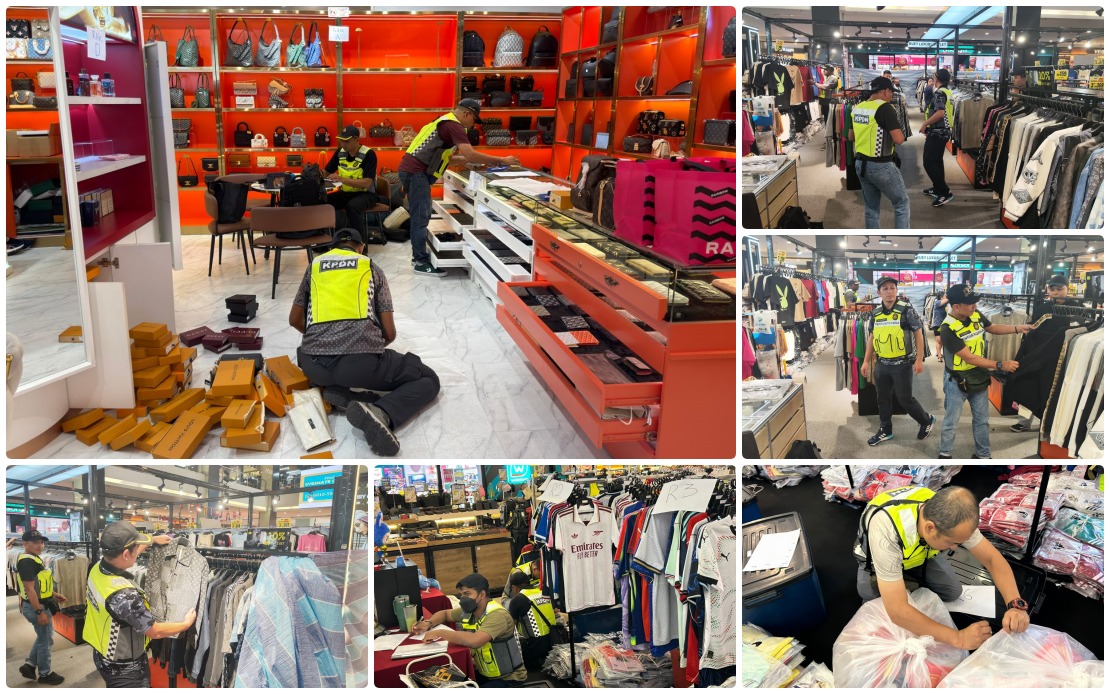
Following a month-long intelligence-gathering operation, the Ministry of Domestic Trade and Cost of Living (KPDN) has dismantled a counterfeit goods distribution network operating across Johor Bahru, seizing merchandise valued at RM600,000 during simultaneous raids on three separate commercial premises on June 15. The enforcement action represents an escalating crackdown on intellectual property violations in Malaysia's southern manufacturing hub, where organised counterfeiting operations have long posed challenges to both consumers and legitimate brand owners seeking market protection.
According to Datuk Azman Adam, the ministry's enforcement director-general, the investigation uncovered a sophisticated supply chain wherein traders were not merely retailing counterfeit items at major supermarket chains but were actively functioning as regional distributors channelling fake products to smaller retailers. This multi-tiered distribution model suggests the operation transcended opportunistic street vending and instead represented a structured commercial enterprise deliberately designed to maximise market penetration and profit margins by exploiting consumer trust in established brand names.
The confiscated inventory revealed the breadth of counterfeit production capacity within the operation. Seized items encompassed clothing lines, designer-style handbags, leather wallets, belts, perfume bottles, and associated business documentation, all bearing trademarked logos applied without authorisation from legitimate intellectual property holders. The diversity of counterfeited product categories indicates manufacturers likely operated sophisticated equipment capable of reproducing security features and packaging aesthetics sufficiently convincing to deceive ordinary consumers navigating retail environments.
Investigators determined through initial verification procedures that sufficient evidence existed to establish reasonable grounds for prosecution under Section 102(1)(c) of the Trademark Act 2019, the specific provision criminalising possession of goods displaying fraudulently applied trademarks with intent for commercial distribution. This legal framework represents Malaysia's primary statutory mechanism for protecting registered trademark holders and maintaining marketplace integrity against organised counterfeiting operations that undermine consumer confidence and legitimate business competition.
The enforcement operation culminated in the detention of four local individuals including the identified business proprietor and premises caretaker, all suspected of involvement in daily operational management. The Ministry's decision to detain personnel rather than simply seizing merchandise reflects investigative strategy oriented toward dismantling organisational structures and establishing culpability chains that extend beyond low-level distribution points to encompassing decision-makers and supervisory personnel who orchestrate supply operations.
Under current Malaysian law, individual perpetrators face potentially severe consequences calibrated according to offence severity and recidivism patterns. First-time offenders risk maximum fines of RM10,000 per counterfeit item or imprisonment extending to three years, or concurrent penalties combining both financial and custodial sanctions. The statutory framework escalates substantially for repeat violations, permitting fines reaching RM20,000 per item or imprisonment up to five years, thereby providing judicial discretion to impose proportionate punishments reflecting the scope and sophistication of counterfeiting enterprises.
Corporate entities face distinctly higher financial exposure, confronting maximum penalties of RM15,000 per counterfeit item during initial prosecutions and ascending to RM30,000 per item for subsequent convictions. This differentiated sentencing structure acknowledges that organised counterfeit operations typically operate through business entities rather than individual proprietors, and consequently legislative frameworks impose substantially elevated financial deterrents targeting corporate balance sheets to render such illicit ventures economically unviable.
The Johor Bahru enforcement action exemplifies KPDN's stated commitment to intensifying trademark protection operations across Malaysian territory, demonstrating unwavering departmental resolve against intellectual property violations regardless of operational scale or commercial sophistication. Such sustained enforcement activity serves dual objectives: directly disrupting specific counterfeiting networks whilst simultaneously signalling to prospective violators that Malaysian regulatory authorities maintain active monitoring and operational capacity to identify and neutralise trademark infringement enterprises before they achieve significant market penetration.
From a broader Southeast Asian perspective, Malaysia's escalating trademark enforcement efforts reflect regional recognition that counterfeiting operations increasingly transcend domestic borders, with manufacturing typically concentrated in jurisdictions offering permissive regulatory environments whilst distribution channels span multiple nations. Johor's geographic proximity to Singapore and Thailand, combined with its established manufacturing infrastructure and commercial transportation networks, renders it particularly susceptible to counterfeiting operations exploiting trade corridors and cross-border commercial relationships. Consequently, this enforcement action represents Malaysia's participation in multinational intellectual property protection efforts that increasingly characterise regional trade governance frameworks.
Consumer protection implications remain substantial, as counterfeit merchandise frequently incorporates substandard materials and manufacturing processes incompatible with original specifications, potentially compromising product safety and durability. Counterfeit perfumes and skincare products present particular health risks given the absence of quality assurance protocols governing ingredient sourcing and formulation processes. By dismantling distribution networks, enforcement operations prevent consumer exposure to potentially hazardous products whilst simultaneously protecting legitimate manufacturers' market reputation and investment in research and quality assurance programs.
The operation's success depended fundamentally upon sustained intelligence collection methodologies enabling investigators to identify operational premises and supply chains before confiscation became feasible. This intelligence-driven approach contrasts with reactive enforcement models that address only visible retail distribution points, and reflects KPDN's strategic evolution toward targeting upstream supply chain vulnerabilities where interception generates maximum disruptive impact against organisational continuity. Such methodological sophistication requires substantial investigative resource allocation and inter-agency coordination, suggesting Malaysian authorities have elevated trademark protection to a priority enforcement domain receiving commensurate budgetary and personnel commitments.
Moving forward, the detained individuals' investigative outcomes will likely establish important precedent regarding prosecutorial strategies and sentencing patterns for counterfeiting offences in Malaysian jurisprudence. Successful convictions carry implications extending beyond immediate defendants, potentially influencing risk calculation among prospective counterfeiters evaluating operational feasibility given demonstrated enforcement capacity and judicial willingness to impose maximum statutory penalties. Conversely, lenient sentencing outcomes could inadvertently communicate permissiveness, thereby incentivising future counterfeiting enterprises. Therefore, the Johor Bahru case represents a consequential test of Malaysian judicial systems' commitment to intellectual property protection through consistent and proportionate criminal sanctioning.


%22%2F%3E%3C%2Fpattern%3E%3C%2Fdefs%3E%3Crect%20width%3D%22100%25%22%20height%3D%22100%25%22%20fill%3D%22url(%23ph54ndmg)%22%2F%3E%3Crect%20width%3D%22100%25%22%20height%3D%22100%25%22%20fill%3D%22url(%23ph54ndmp)%22%2F%3E%3Ctext%20x%3D%2250%25%22%20y%3D%2250%25%22%20text-anchor%3D%22middle%22%20dominant-baseline%3D%22central%22%20fill%3D%22rgba(255%2C255%2C255%2C0.95)%22%20font-family%3D%22Georgia%2C%20'Times%20New%20Roman'%2C%20serif%22%20font-weight%3D%22700%22%20font-size%3D%22226%22%20letter-spacing%3D%22-0.02em%22%3ERussia%3C%2Ftext%3E%3C%2Fsvg%3E)