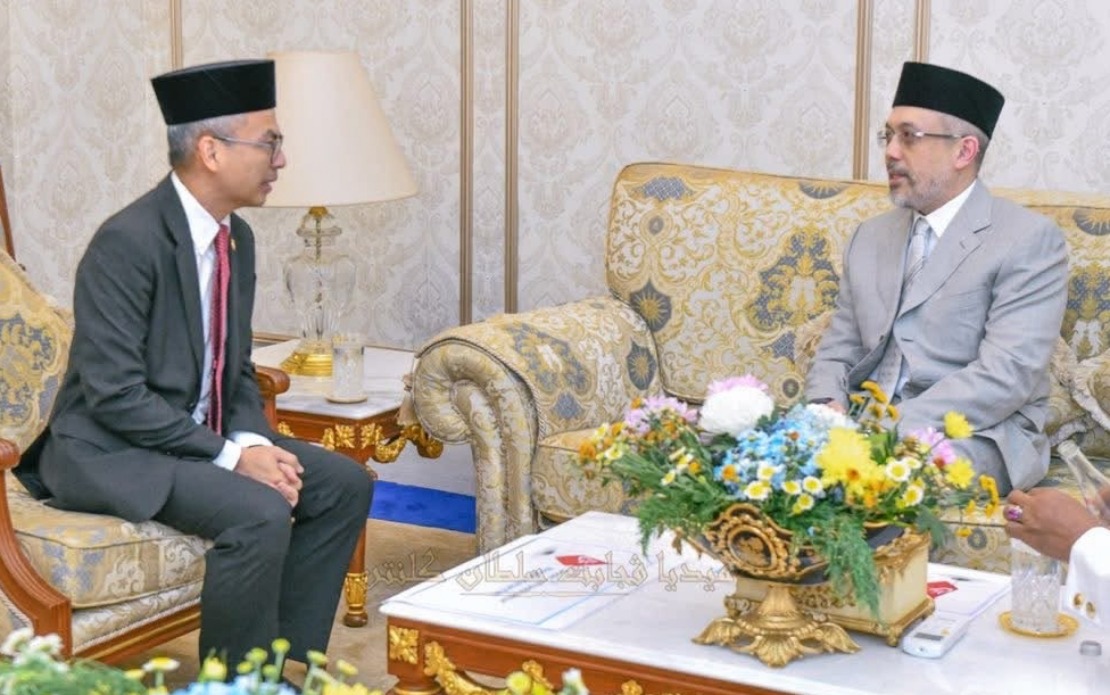
Kelantan's Regent Tengku Muhammad Fakhry Petra received Communications Minister Datuk Fahmi Fadzil at Kota Lama Palace in Kota Bharu on June 16, in a formal audience that underscored growing official concern about the proliferation of inauthentic accounts on social media platforms. The one-hour meeting, which commenced at 5 pm, brought together representatives from both the palace and the ministry to discuss matters of immediate relevance to national digital governance and institutional protection.
The palace's media office indicated that the gathering served primarily as an opportunity for the minister to update the Regent on recent developments and operational matters within the Communications Ministry's purview. Such audiences between senior royalty and cabinet ministers typically reflect the monarchy's engagement with government operations affecting the kingdom, particularly on issues touching on institutional integrity or public discourse.
Among the substantive topics addressed during the session was the escalating menace of fake accounts proliferating across social media platforms, a challenge that has drawn increasing scrutiny from Malaysian policymakers and law enforcement. The discussion zeroed in on how these fraudulent accounts facilitate the dissemination of false information and defamatory content specifically targeting the Malaysian Royal Institution—a matter of profound constitutional and cultural significance within Malaysia's political framework.
The emergence of coordinated inauthentic behaviour on platforms such as Facebook, Twitter, and TikTok has become a persistent headache for the government and palace authorities alike. These fake accounts, often operated by networks of individuals or automated systems, can rapidly amplify false narratives and damage institutional reputations before authentic rebuttals gain traction. The spread of misinformation about the monarchy is particularly sensitive given the institution's constitutional centrality to Malaysian governance and the legal protections enshrined in sedition and defamation statutes.
For Malaysian and regional observers, this high-level engagement between the palace and the Communications Ministry signals a coordinated approach to safeguarding institutional dignity in the digital age. The Regent's willingness to convene the minister suggests that palace officials view the fake account problem as sufficiently grave to warrant direct engagement at senior levels, rather than leaving it to lower bureaucratic channels. This elevation of the issue reflects broader regional anxieties about information warfare and the weaponisation of social media against state institutions.
The Communications Ministry, under Fahmi's stewardship, has been tasked with implementing Malaysia's digital governance framework, which encompasses cybersecurity, online content regulation, and the prevention of harmful digital activities. The ministry's efforts to address fake accounts must balance legitimate free speech protections with the need to combat organised disinformation campaigns that undermine public trust and institutional stability. This conversation at the palace likely explored practical measures and policy approaches that could be escalated or refined.
Beyond the specific issue of fake accounts, the broader meeting reflected the government's ongoing attempts to navigate the treacherous terrain of digital information control. Social media platforms operate with limited transparency regarding their moderation practices in Malaysia, creating enforcement challenges for authorities seeking to remove inauthentic accounts swiftly. The tech giants themselves have been inconsistent in their responsiveness to government requests, particularly when content touches on sensitive political or institutional matters.
The presence of the minister's senior private secretary and accompanying officers indicated the formality and seriousness with which the government approached the audience. Similarly, the attendance of senior palace officials underscored the Regent's personal interest in the matter. Such ceremonial elements, alongside the exchange of a memento from the minister to the Regent, reinforced the collaborative relationship between executive and royal institutions on issues of mutual concern.
For Southeast Asian context, Malaysia's experience with fake account proliferation mirrors challenges faced across the region, where social media penetration is high and regulatory frameworks remain evolving. Thailand, the Philippines, and Indonesia have similarly grappled with coordinated inauthentic behaviour targeting government institutions and public figures. The Kelantan palace's engagement suggests that Malaysia is moving toward a more proactive stance in confronting such digital threats, potentially informing broader regional approaches.
The focus on content targeting the Royal Institution also highlights how digital misinformation intersects with Malaysia's unique constitutional and legal environment. Laws protecting the monarchy from seditious or defamatory speech remain potent, yet their application in the digital sphere presents interpretive and enforcement challenges. Officials must determine whether operators of fake accounts distributing anti-royalty content fall within existing legal purviews or whether new legislative frameworks are required.
Looking ahead, the momentum generated by this palace-level discussion may catalyse more concrete policy responses. The Communications Ministry might accelerate collaboration with social media platforms to establish rapid-response protocols for removing inauthentic accounts. Alternatively, discussions could pivot toward public education campaigns designed to build digital literacy and help Malaysians identify and report fake accounts themselves. The palace's involvement suggests that any solutions developed will carry institutional weight and broader governmental buy-in.
The meeting also underscores the monarchy's contemporary role in Malaysian governance, extending beyond ceremonial functions to encompass substantive policy engagement. By receiving the communications minister and substantively engaging on digital governance challenges, the Regent demonstrated the palace's commitment to monitoring threats to institutional dignity and working collaboratively with the executive to address them. This partnership between crown and cabinet, focused on protecting democratic institutions and public discourse quality, may set a template for how Malaysia approaches similar challenges in the digital realm going forward.

%22%2F%3E%3C%2Fpattern%3E%3C%2Fdefs%3E%3Crect%20width%3D%22100%25%22%20height%3D%22100%25%22%20fill%3D%22url(%23ph40buhg)%22%2F%3E%3Crect%20width%3D%22100%25%22%20height%3D%22100%25%22%20fill%3D%22url(%23ph40buhp)%22%2F%3E%3Ctext%20x%3D%2250%25%22%20y%3D%2250%25%22%20text-anchor%3D%22middle%22%20dominant-baseline%3D%22central%22%20fill%3D%22rgba(255%2C255%2C255%2C0.95)%22%20font-family%3D%22Georgia%2C%20'Times%20New%20Roman'%2C%20serif%22%20font-weight%3D%22700%22%20font-size%3D%22320%22%20letter-spacing%3D%22-0.02em%22%3EGRS%3C%2Ftext%3E%3C%2Fsvg%3E)