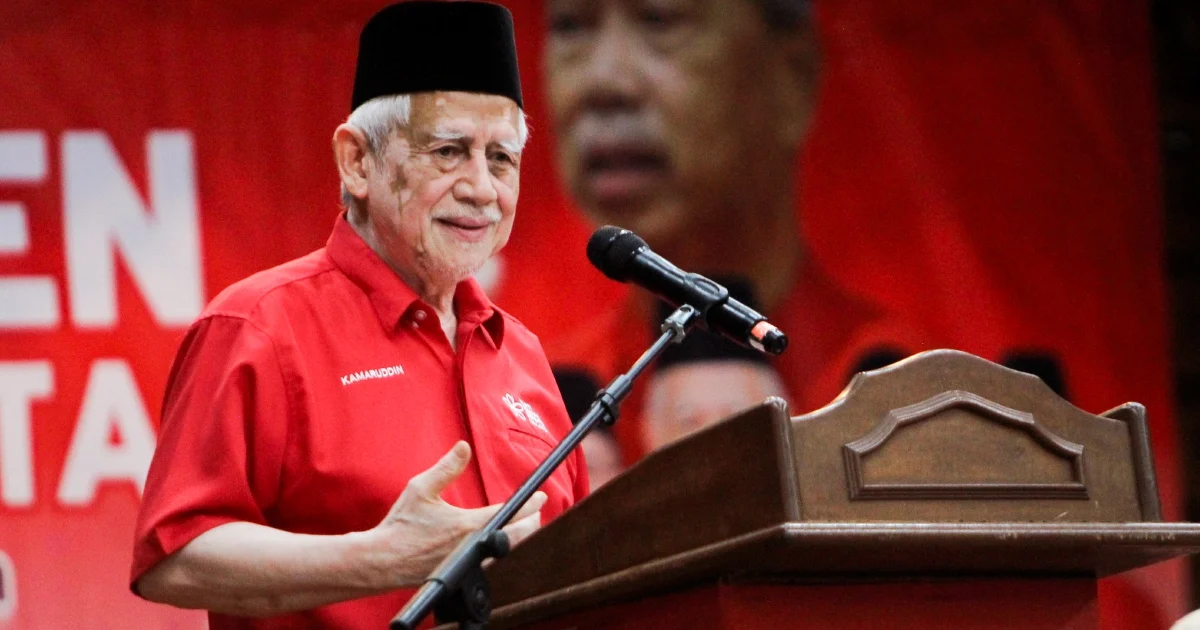
The Kelantan chapter of Bersatu appeared untroubled by Perikatan Nasional's announcement last evening that it would exclude Datuk Seri Mohamed Azmin Ali and Datuk Dr Mohd Radzi Md Jidin from its leadership structure, signalling a decisive reshuffling within the opposition coalition.
The development marks another significant moment in the internal dynamics of Perikatan Nasional, the major political grouping that emerged from the 2022 political realignment and has positioned itself as a leading opposition force. The removal of both figures, each with considerable influence and track records in their respective political careers, underscores ongoing deliberations about direction and personnel within the coalition's upper echelons.
Azmin Ali, a veteran politician who has held ministerial portfolios and led key government initiatives, has been a contested figure within Perikatan's structure. His inclusion or exclusion from leadership positions has previously sparked debate within coalition circles. The decision to drop him reflects either a strategic recalibration or resolution of factional tensions that may have persisted behind closed doors.
Radzi Md Jidin, similarly, represents a significant political presence, having served in administrative roles and maintained influence within certain party quarters. His departure from the designated leadership line-up suggests that Perikatan's decision-makers prioritised alternative voices or sought to consolidate authority around different individuals altogether.
The measured response from Kelantan Bersatu is noteworthy from a regional political perspective. Kelantan, governed by Bersatu-aligned leadership since 2018, remains a crucial heartland for the coalition in East Malaysia's broader political landscape. The state division's apparent equanimity about personnel changes at the national level implies either confidence in the coalition's viability or perhaps acknowledgment that such decisions lie within the prerogative of central leadership structures, warranting neither alarm nor public objection.
This development carries implications for Malaysian coalition politics more broadly. Perikatan's ability to make decisive personnel adjustments without triggering public fractures within affiliated state chapters suggests, at least superficially, organisational cohesion during moments of internal transformation. However, such reshuffles often mask underlying tensions or disagreements about strategic direction that may resurface when more substantive policy or electoral questions arise.
For regional observers, the changes reflect a broader pattern in contemporary Malaysian politics where opposition coalitions continuously recalibrate leadership structures in response to electoral calculations, internal dynamics, or shifting political circumstances. These manoeuvres frequently involve testing party units' loyalty and assessing which figures maintain sufficient support to retain prominent positions.
The timing of the announcement also warrants consideration. Such decisions rarely emerge without careful calculation of media narrative and potential fallout. The fact that Kelantan leadership opted for a measured response rather than public criticism or expressions of concern suggests either forewarning or an assessment that the changes would not jeopardise the coalition's operational effectiveness within the state.
Looking forward, observers will likely monitor whether this leadership reconfiguration translates into observable policy shifts or campaign adjustments. Personnel changes at the top of coalitions often precede strategic pivots, whether in messaging, electoral positioning, or partnership approaches. Kelantan, as a significant political base for the coalition, would inevitably bear consequences from such redirections.
The muted reaction from Kelantan Bersatu may also reflect pragmatic calculation about national political narratives. State-level party divisions understand that publicly disputing central leadership decisions risks marginalisation or reduced influence in future resource allocation or strategic planning. Acceptance, even if reluctant, often serves state interests better than confrontation.
Moreover, the decision to exclude Azmin and Radzi could signal Perikatan's attempt to refresh its public image or consolidate power among preferred figures. Such moves frequently precede electoral campaigns or coordinated messaging initiatives designed to strengthen coalition appeal among target voters.
Ultimately, the Kelantan Bersatu response illustrates how Malaysian political coalitions operate across multiple levels of governance, with state chapters frequently moderating their public positions relative to national decisions, even when such decisions might affect their operational autonomy or local political equations. The coalition's ability to absorb such changes without visible discord will likely be tested further as additional strategic questions emerge.

%22%2F%3E%3C%2Fpattern%3E%3C%2Fdefs%3E%3Crect%20width%3D%22100%25%22%20height%3D%22100%25%22%20fill%3D%22url(%23ph40buhg)%22%2F%3E%3Crect%20width%3D%22100%25%22%20height%3D%22100%25%22%20fill%3D%22url(%23ph40buhp)%22%2F%3E%3Ctext%20x%3D%2250%25%22%20y%3D%2250%25%22%20text-anchor%3D%22middle%22%20dominant-baseline%3D%22central%22%20fill%3D%22rgba(255%2C255%2C255%2C0.95)%22%20font-family%3D%22Georgia%2C%20'Times%20New%20Roman'%2C%20serif%22%20font-weight%3D%22700%22%20font-size%3D%22320%22%20letter-spacing%3D%22-0.02em%22%3EGRS%3C%2Ftext%3E%3C%2Fsvg%3E)