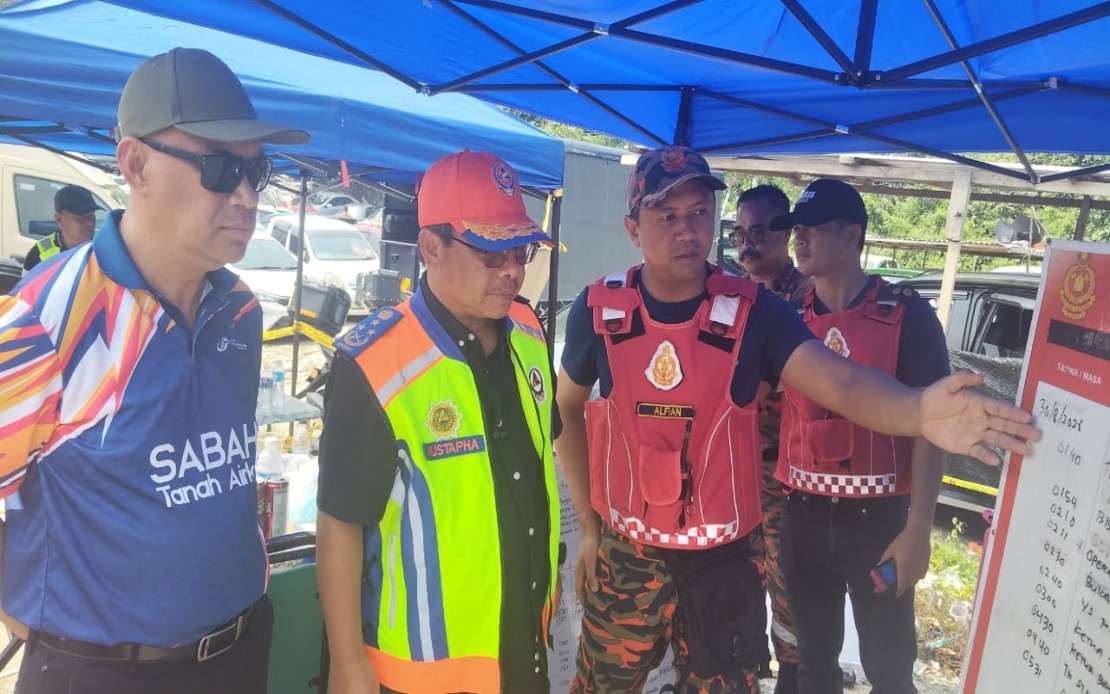
A catastrophic fire swept through Kampung Lok Buta in Kota Kinabalu early Friday morning, destroying more than 200 houses and claiming the lives of three children in what authorities have now designated as a disaster zone. The tragic incident, which occurred at 1.40 am, has displaced over 200 residents and prompted an immediate emergency response from federal and state officials seeking to coordinate relief efforts and support for the affected community.
The three victims have been identified as Nana Abdullah, aged 4, and her brother Mohd Asrul Abdullah, aged 6, along with their cousin Nurfarahdilah Mohd Tajihah, aged 8. The loss of the young lives underscores the severity of the disaster and has galvanised authorities to respond swiftly. Datuk Mustapha Sakmud, the Minister in the Prime Minister's Department responsible for Sabah and Sarawak matters, visited the affected area and announced that two temporary shelters have been established at Dewan Kampung Likas and Dewan Damai to house the displaced persons and coordinate assistance efforts.
The declaration of Kampung Lok Buta as a disaster zone by Kota Kinabalu City Hall (DBKK) represents an important administrative step that enables mobilisation of greater resources and faster deployment of aid. The relief centres will serve multiple functions beyond basic shelter, acting as registration points for victims, coordination hubs for various agencies, and distribution points for incoming donations and supplies. This centralised approach aims to create order during the chaotic aftermath of such a large-scale emergency, ensuring that assistance reaches those most in need without duplication or gaps in service delivery.
Mustapha emphasised during his visit that particular attention must be directed toward identifying students affected by the fire across all levels of education. The minister stressed that authorities must work actively to prevent the disaster from disrupting the academic progression of young people caught in the tragedy. This concern reflects broader considerations about how sudden displacement and trauma can have cascading effects on educational outcomes, particularly for vulnerable populations in Sabah where infrastructure and resources are sometimes limited compared to peninsular Malaysia.
In recognition of these educational concerns, Mustapha indicated that he would formally notify the Ministry of Education about the situation so that students displaced by the fire—whether from primary or secondary schools, tertiary institutions, or technical and vocational training centres—could receive appropriate support. This multi-level approach acknowledges that affected families include children at various educational stages, each requiring tailored assistance to maintain academic momentum during their recovery period.
Datuk Seri Dr Sabin Samitah, the DBKK mayor and District Disaster Management Committee chairman, accompanied Mustapha during the site visit, signalling coordination between federal representation and local administration. The presence of both officials underscores the seriousness with which authorities are treating the incident and suggests that subsequent meetings will convene relevant agencies to develop comprehensive recovery strategies. Mustapha called for DBKK and participating agencies to immediately schedule coordination meetings to formulate targeted measures for disaster relief and longer-term rehabilitation of affected families.
The minister also indicated that the incident would be elevated to the highest levels of government. He mentioned that a Malaysia Agreement 1963 (MA63) Implementation Action Council meeting, to be attended by Prime Minister Datuk Seri Anwar Ibrahim and Sabah Chief Minister Datuk Seri Hajiji Noor, could provide an opportunity for the DBKK mayor to brief the nation's top leadership on the fire's impact and discuss necessary interventions. This escalation reflects how significant disasters in Sabah can command national attention and trigger coordinated responses across federal and state tiers of government.
Beyond immediate shelter and coordination, Mustapha pledged that initial financial assistance would be extended to the families of the three deceased children. While the specific amount was not disclosed, this commitment represents a first step in compensating families for their devastating losses. Such assistance, though it cannot remedy the fundamental tragedy, demonstrates official recognition of the need for tangible support during the acute grief and disorientation that follows such loss.
The scale of destruction—over 200 houses reduced to rubble—suggests that Kampung Lok Buta may be a densely populated settlement of modest housing typical of many informal communities in Sabah. The fire's rapid spread and the high casualty toll raise important questions about fire prevention infrastructure, building standards, and early warning systems in such settlements. While immediate attention naturally focuses on rescue and relief, the incident will likely prompt subsequent investigations into whether residential densities, electrical standards, or access roads for emergency vehicles contributed to the fire's severity.
For Kota Kinabalu and Sabah more broadly, this disaster underscores the vulnerability of communities living in close quarters with limited resources for fire prevention and rapid evacuation. The establishment of relief centres and the coordination of government resources illustrate institutional capacity to respond, yet they also highlight underlying vulnerabilities in housing quality and disaster preparedness that affect many settlements across East Malaysia. The incident serves as a reminder that comprehensive disaster management requires not only effective response mechanisms but also preventative investment in safer housing and community infrastructure.

