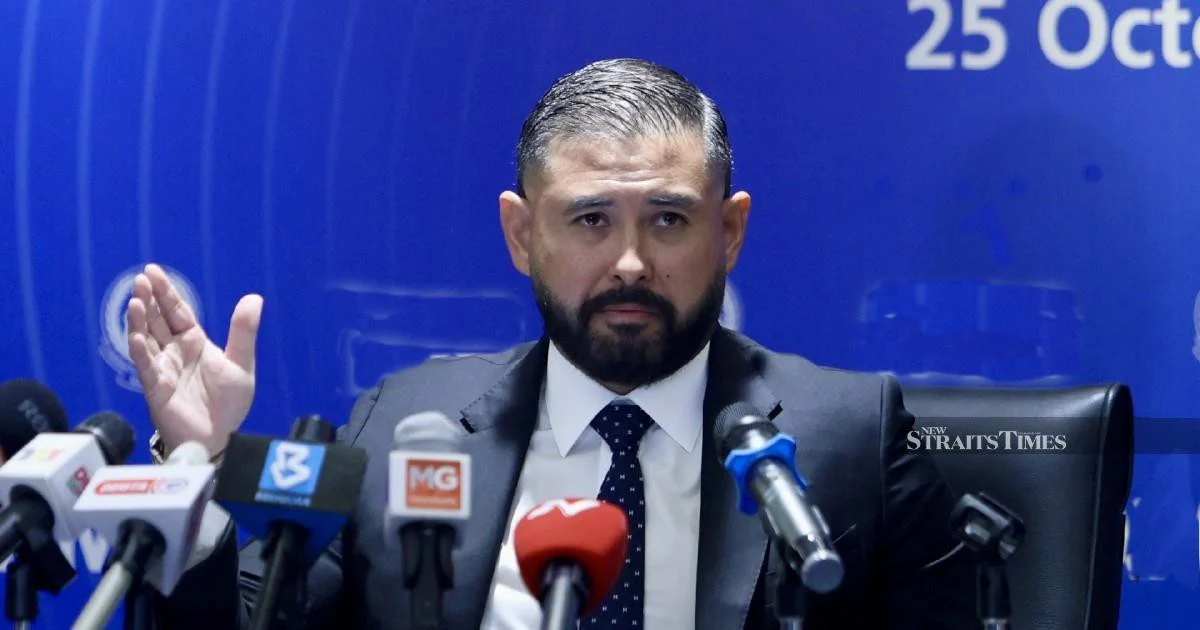
Johor Regent Tunku Ismail Sultan Ibrahim has directly contested the federal government's public framing of his state's finances, rejecting characterizations of systemic leakages and instead pointing to structural imbalances in revenue distribution between Kuala Lumpur and the states. The regent's remarks represent a significant pushback against recent statements from the prime minister that positioned Johor as a prosperous jurisdiction hampered by internal fiscal mismanagement.
The dispute centers on fundamentally different interpretations of where financial accountability lies within Malaysia's federalist system. While the federal government has suggested that Johor's challenges stem from poor internal controls and wasteful spending practices, the regent argues that the underlying problem is more structural—that existing arrangements systematically transfer wealth away from the state to federal coffers without corresponding returns in services or investment.
This exchange reflects broader tensions that have simmered throughout Malaysia's political landscape regarding resource allocation between the federal center and state governments. Johor, as one of Malaysia's most economically significant states with substantial revenue-generating capacity through ports, agriculture, and manufacturing, occupies a particularly important position in these discussions. The state's economic contributions to national coffers have long been a point of contention in state-federal negotiations.
The regent's intervention is significant because it elevates the dispute beyond the realm of bureaucratic accounting into the realm of high-level constitutional and political principle. As a member of the Malay Sultanate and head of state, Tunku Ismail Sultan Ibrahim's position carries considerable weight in Malaysian governance structures and carries implications for how federal-state relations are conducted and perceived.
Understanding the substance of this disagreement requires appreciating how Malaysia's revenue system operates. States generate income through various sources including land tax, business licenses, and royalties from natural resources. However, the federal government collects income tax, corporate tax, and customs duties—the largest revenue streams in the national budget. This structural arrangement means states depend on federal transfers and allocations, creating an inherent asymmetry in fiscal power that proponents of greater state autonomy view as fundamentally problematic.
Johor's specific circumstances amplify these concerns. As a state with significant port facilities at Tanjung Pelepas and Pasir Gudang, substantial agricultural production, and major manufacturing clusters, Johor generates considerable economic activity and federal tax revenue. Yet, according to the regent's implicit argument, the state does not receive proportional returns through federal funding for infrastructure, education, healthcare, and development projects. This disparity between contribution and return represents what the regent characterizes as the true problem, rather than internal leakages.
The prime minister's emphasis on leakages also carries political implications, as it suggests mismanagement by state-level officials and stewardship problems within Johor's administration. The regent's counter-argument reframes the narrative, shifting blame away from state institutions toward federal policy and structures. This positioning has potential ramifications for how the federal government's performance is evaluated and how voters in Johor may perceive their interests being served.
For Malaysian readers and observers across Southeast Asia, this dispute illuminates ongoing challenges in federalist systems where revenue generation and political power remain unevenly distributed. Other federal nations in the region, including India and Malaysia's fellow ASEAN members, grapple with similar tensions between central governments seeking to maintain fiscal control and states seeking greater economic autonomy. The Johor situation demonstrates how these technical fiscal issues quickly become matters of political principle and constitutional interpretation.
The regent's public statement also reflects changing dynamics within Malaysian politics where state leaders are increasingly willing to engage directly with federal authorities on matters traditionally handled through quieter channels. This more transparent contestation of federal narratives represents a shift in how intergovernmental relations are conducted, with implications for executive federalism in Malaysia moving forward.
Beyond the immediate dispute, the exchange raises substantive questions about economic efficiency and federalism. If states genuinely lack resources for development despite economic productivity, this could affect competitiveness, infrastructure quality, and long-term growth trajectories. Johor's position as a crucial economic engine means that how its resources are allocated—whether retained at state level or transferred federally—carries implications for national economic performance.
The disagreement also touches on transparency and accountability mechanisms within Malaysia's fiscal system. Establishing clearer methodologies for calculating state contributions, federal returns, and determining whether funds are genuinely lost to leakage or structural redistribution would provide empirical grounding for these debates. Currently, the absence of detailed public accounting allows both sides to frame the narrative according to their preferred interpretation.
Moving forward, this exchange may catalyze broader discussions about federal revenue-sharing formulas and the constitutional framework governing state-federal fiscal relations in Malaysia. Whether this remains a Johor-specific grievance or evolves into a more systemic challenge to federal fiscal arrangements will depend significantly on whether other states echo similar concerns and whether the federal government responds with substantive reforms or maintains its current approach.