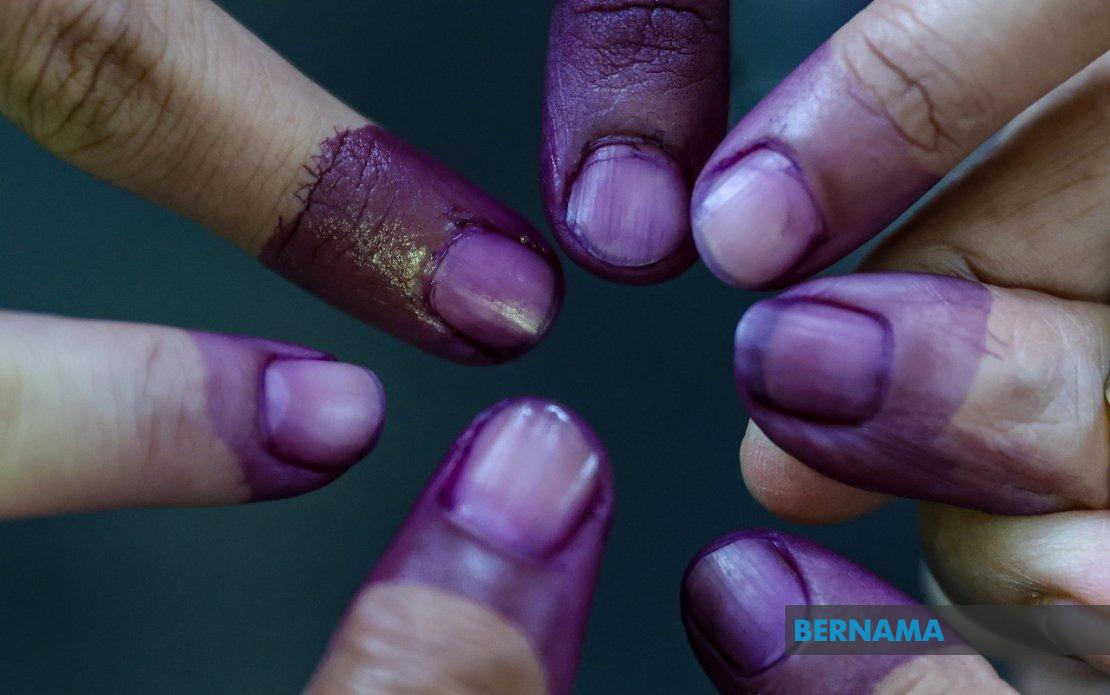
Johor's 16th state election on July 11 became more than a civic exercise as voters discovered their purple-stained index fingers—the mandatory indelible ink mark used in Malaysian elections—could unlock an unexpected array of food and beverage bargains throughout the state. The convergence of democratic participation and commercial incentives created a unique election day atmosphere, with major food chains competing to reward those who had cast their ballots.
The Coffee Bean & Tea Leaf led the promotional push by offering a 20 per cent discount on selected menu items to customers displaying their marked fingers, a deal limited to election day only. Krispy Kreme extended the celebration by slashing the price of its Original Glazed doughnuts to just RM2 for voters willing to show proof of their participation, operating on a first-come-first-served basis. These mainstream chains recognised early that the indelible ink represented not merely an election requirement but an opportunity to align their brands with civic engagement and community spirit.
Other established players joined the initiative with their own variations. Burger King announced complimentary Soft Serve Cone ice cream for customers purchasing any set meal, extending the offer through to July 12 to capture voters who cast ballots on the second day. Marrybrown implemented a bundle strategy, offering a free piece of fried chicken with the purchase of their MB Combo when customers presented their stained finger—a promotion that combined value with the appeal of a familiar local brand. The diversity of offerings across different price points and food categories ensured that the incentives resonated with various voter demographics.
Social media amplified the grassroots excitement surrounding these promotions, with voters throughout the morning and afternoon sharing photographs of themselves at participating outlets, their purple-marked fingers held proudly alongside food purchases or consumption moments. The digital sharing transformed individual transactions into visible expressions of community participation, turning polling day into a shareable, celebratory occasion rather than a purely procedural civic duty. This organic amplification cost the brands nothing in paid advertising yet generated authentic, peer-driven word-of-mouth exposure that money typically cannot purchase.
The indelible ink itself carries significant institutional history within Malaysia's electoral framework. The Election Commission first introduced this marking system in 2013 during the Kuala Besut by-election, implementing it as a critical safeguard against multiple voting—a practice that threatened electoral integrity. The purple dye, designed to remain visible on the skin for days, creates a verifiable, immediate record of participation that is difficult to circumvent. Over the preceding decade, the ink had become so integral to Malaysian electoral identity that voters themselves had begun expecting it as a standard component of the voting experience.
Johor's election stakes were substantial enough to warrant serious commercial attention. More than 2.6 million eligible voters participated in choosing representatives for 56 seats within the State Legislative Assembly, making it a significant electoral exercise with real governance implications. The scale of participation meant that the number of voters displaying inked fingers throughout the day ran into the millions, creating substantial foot traffic for retail outlets participating in the promotional schemes. For food and beverage chains, this represented a calculated opportunity to convert election-day traffic into customer acquisition and basket-size expansion.
The electoral landscape itself reflected Johor's mature political competition. A total of 172 candidates contested the 56 seats, with Pakatan Harapan and Barisan Nasional each fielding 56 candidates, demonstrating the binary mainstream political competition that characterised recent Malaysian electoral contests. Perikatan Nasional entered with 33 candidates, reflecting the fractionalisation of Malay-Muslim political representation that had characterised Malaysian politics in recent election cycles. Smaller parties and independent candidates—including Parti Bersama Malaysia with 15 candidates, MUDA with four, Parti Orang Asli Malaysia, Parti Sosialis Malaysia, and six independents—collectively represented the broader ecosystem of political alternatives available to voters beyond the major coalitions.
The promotional strategy employed by participating chains revealed sophisticated understanding of voter behaviour and consumer psychology. By explicitly rewarding election participation, the brands positioned themselves as civic-minded corporate actors invested in democratic health. This positioning cost relatively little in actual discounts or free items while generating substantial goodwill and positive brand association with patriotism and community responsibility. For voters, particularly younger citizens less engaged with politics as customary duty, the tangible rewards provided immediate psychological reinforcement for participation, subtly reframing voting from obligation to opportunity.
Beyond the individual transactions and promotional mechanics, the phenomenon reflected broader global trends in how commercial entities engage with electoral processes. Companies increasingly recognise that appearing to support democratic participation—even through modest food discounts—aligns with corporate social responsibility narratives that resonate with modern consumers. The Johor promotions demonstrated how this can extend to the grassroots retail level, transforming ordinary point-of-sale moments into touchpoints for civic messaging and brand differentiation within competitive food and beverage markets.
The temporary community atmosphere created by these promotions carried implications extending beyond immediate sales figures. Election day itself becomes more memorable and positively associated when participation yields tangible, pleasant experiences rather than merely abstract civic satisfaction. Malaysian voters, returning home with free doughnuts or discounted coffee purchased with their marked fingers, would likely retain warmer associations with the electoral process itself. This subtle psychological reinforcement potentially influences future participation intentions, particularly among voters whose engagement with democracy remains developing rather than deeply embedded.
As the polling stations closed and vote counting commenced, the purple-stained fingers that had unlocked commercial rewards throughout the day returned to their primary purpose—serving as physical evidence that millions of Johoreans had fulfilled their democratic responsibility. The food and beverage promotions, modest in aggregate value but meaningful in their collective impact on election day atmosphere, illustrated how commercial incentives and civic participation can intersect productively. They demonstrated that democracy in contemporary Malaysia operates not in isolation from market forces but increasingly through partnership between electoral processes and the commercial ecosystem surrounding them, creating shared experiences that reinforce both democratic engagement and community cohesion.

