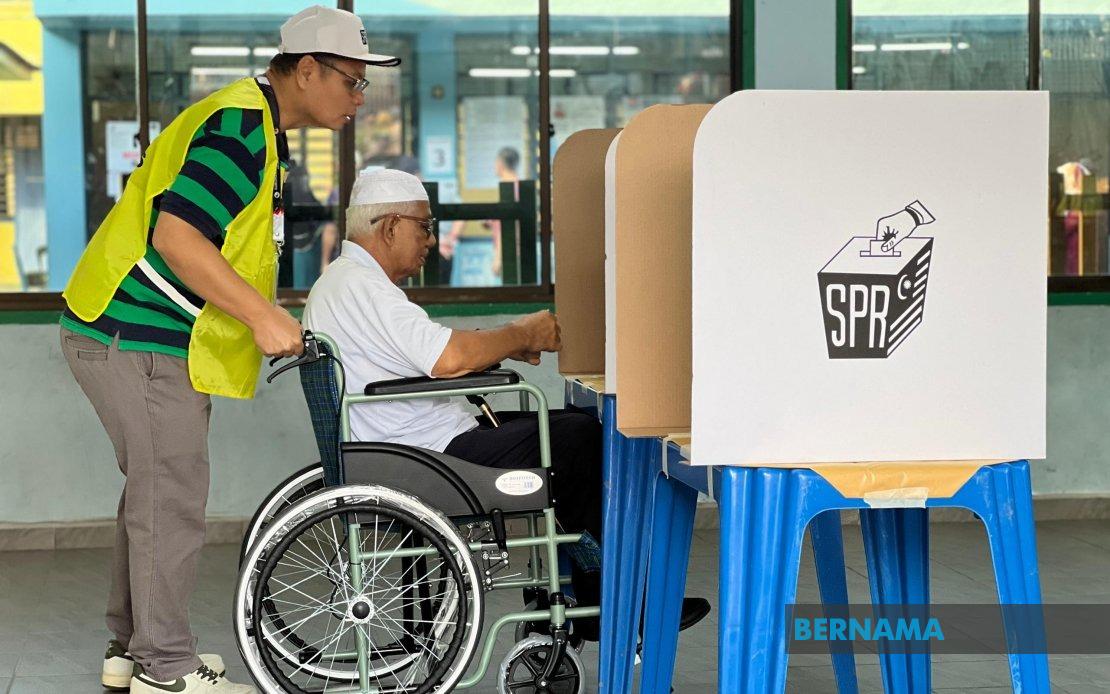
The Johor state election swung into motion today as all 1,076 polling centres unlocked their doors at 8 am, ushering in what the Election Commission hopes will be a decisive mandate from the state's electorate. The simultaneous opening of facilities across the state marked the culmination of a fortnight's campaigning and set the stage for 2.7 million registered voters to determine the composition of the state government for the years ahead.
The logistical scope of the exercise underscores the complexity of managing electoral democracy across a large, geographically dispersed state. The 1,076 centres are subdivided into 4,889 individual polling streams, each designed to process voters efficiently while maintaining the integrity of the ballot. This distribution reflects careful planning to ensure no voter faces unreasonable travel distances, particularly in rural and outlying areas where population density is lower. Such infrastructure, though taken for granted, represents months of preparation by the Election Commission to guarantee accessibility and fairness in the voting process.
The contest itself reflects Johor's competitive political landscape. A total of 172 candidates are vying for 56 State Legislative Assembly seats, a ratio that demonstrates sustained interest in representing constituencies across the state. The nature of the competition varies significantly: twelve four-cornered contests will fragment votes among multiple camps, twenty-seven three-cornered fights present more traditional competitive scenarios, and fourteen straight fights pit two candidates directly against each other. This contest configuration suggests that no single outcome is predetermined, with vote-splitting potentially playing a decisive role in several constituencies.
The Election Commission has set an ambitious target of capturing a 70 per cent voter turnout, a figure that would indicate strong engagement from the electorate. Such participation levels are crucial for political legitimacy, as high turnout typically reflects public confidence in the democratic process and validates the eventual winner's claim to represent the people's will. By pegging results announcements for as early as 10 pm, the commission aims to maintain momentum and public interest throughout the day while allowing rapid verification of outcomes.
Voting is scheduled to continue until 6 pm across most venues, though certain practical arrangements will alter this timeline. Polling centres located in constituencies with smaller electorates will close their doors in stages beginning as early as 11 am, once all registered voters in those areas have been processed. This staggered approach reflects efficiency considerations rather than any irregularity—once every voter on the rolls has voted, continued operation serves no purpose. The variation in closing times means results will likely begin filtering in before the official 6 pm cutoff, creating an uneven information flow that media organisations and political parties will monitor closely.
On the ground, security measures were conspicuous from the outset. Personnel were visibly deployed at multiple polling stations observed by Bernama reporters, underscoring the emphasis placed on orderly conduct and voter safety. The presence of security forces at the earliest hours, combined with media personnel positioning themselves by 7 am, indicated anticipation of potential complications, though the morning's opening appeared calm across most of Johor. The infrastructure for observing and documenting the process was robust, with journalists already filing reports as daybreak arrived.
Weather conditions favoured voting in most areas of the state, with clear skies prevailing across the vast majority of constituencies. Muar district proved the exception, where rain fell through the morning hours. While precipitation might marginally suppress turnout by deterring some voters, Johor's relative development and urban concentration suggest that weather is unlikely to substantially depress participation compared to more remote or less-developed regions elsewhere in Malaysia.
The 16th Johor state election carries significance beyond the state itself. Johor's economy and population make it crucial to Malaysia's overall development trajectory, and the state government's composition will influence policy on critical issues including industrial development, infrastructure, and urban planning. For the wider region, Johor's political direction often signals trends that ripple across Southeast Asia's most economically integrated state, given its proximity to Singapore and role as a cross-border trading hub.
For Malaysian voters more broadly, this election offers insight into contemporary political preferences and the durability of traditional coalition arrangements. The configuration of contests—particularly the proliferation of three and four-way contests rather than simple two-candidate races—suggests fragmentation and fluidity in voter loyalty. Johor's outcome will provide data on whether national political movements are finding traction at state level and whether electoral arithmetic is shifting in ways that might presage federal-level changes.

