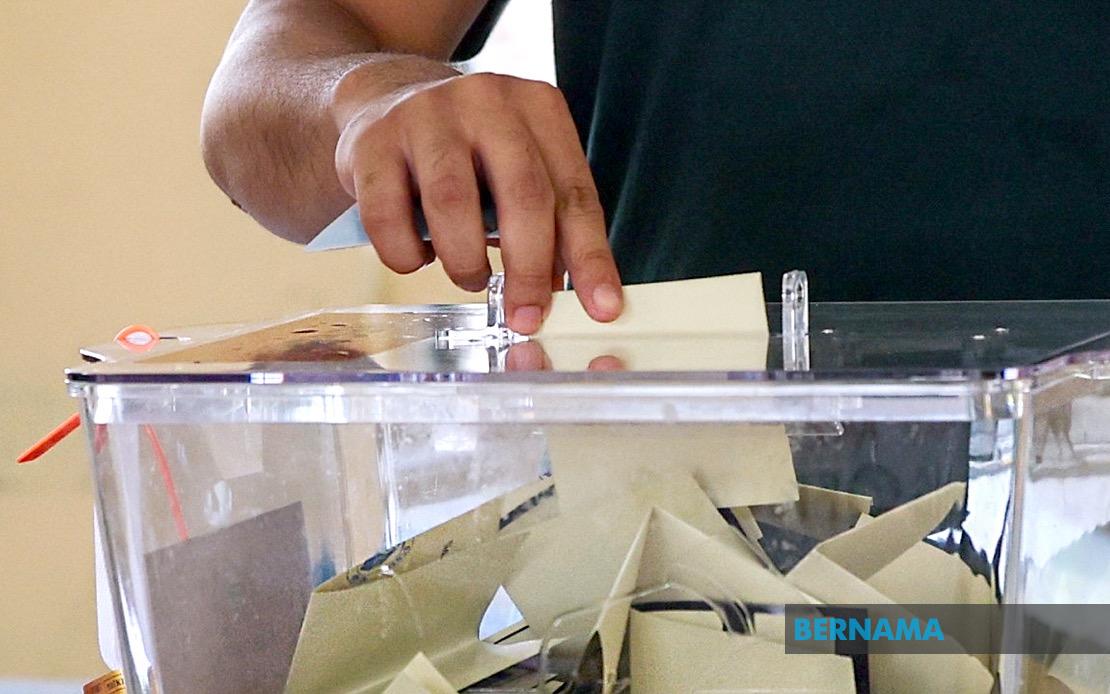
Rahmat Shukor's determination to exercise his democratic right in the 16th Johor state election ultimately came to naught when he pulled up at SJK (C) Foon Yew 4 in Johor Bahru on July 11 with merely 60 seconds separating him from the chance to vote. The 57-year-old self-employed businessman had undertaken a gruelling cross-state journey from Sri Medan in Batu Pahat, covering 120 kilometres of Malaysian highway, only to find the polling centre's doors effectively shut in his face as voting officials concluded their work for the day at the stroke of 6 pm.
Rahmat's predicament encapsulates a broader challenge facing voters in Malaysia's geographically dispersed electoral landscape, where distance, timing, and infrastructure intersect to determine whether citizens can meaningfully participate in the electoral process. His experience shines a light on the practical obstacles that can disenfranchise voters despite their genuine commitment to voting, raising questions about how election administrators balance procedural punctuality with the realities of voter mobility across state boundaries.
The root cause of Rahmat's misfortune was a traffic catastrophe that descended upon the North-South Corridor during voting day. He had departed Sri Medan with ample time to reach Johor Bahru, but the congestion that began accumulating from the Simpang Renggam Rest and Recreation Area and intensified toward Sedenak proved insurmountable. Despite attempting multiple alternative routes along Skudai road in a bid to circumvent the gridlock, fortune did not favour his efforts, and he remained stuck in the jam that ultimately cost him his vote.
What makes Rahmat's situation particularly poignant is that his family members successfully navigated the same voting process. His wife and other relatives returned to Johor Bahru on Friday as originally planned and cast their ballots without incident, making Rahmat the sole family member unable to participate. The decision to remain overnight at his late mother's house in Sri Medan, motivated by the exhaustion he felt after completing plantation and contract work, inadvertently placed him in the problematic position of starting his journey later than anticipated.
When Rahmat arrived at the polling centre, he came equipped with documentation of his predicament. He carried photographs and evidence of the traffic jam that had detained him, and he clearly explained his circumstances to officials, hoping that either an exception might be made or at least the factual record would reflect the genuine obstruction he had encountered. However, the rules governing polling centre closure times are strictly observed in Malaysian elections, and election officials cannot accommodate latecomers regardless of the extenuating circumstances behind their tardiness.
The closure of all 1,076 polling centres across Johor at precisely 6 pm represented the culmination of voting procedures for the state election. These cutoff times are established in advance and publicised to the electorate, allowing voters theoretical opportunity to plan their participation. Yet cases like Rahmat's reveal the gap between theory and lived experience, particularly for voters whose circumstances require them to travel significant distances or who may face unpredictable impediments such as traffic congestion that can render even meticulous planning ineffective.
Despite the crushing disappointment of missing his opportunity to vote by such a narrow margin, Rahmat adopted a remarkably philosophical stance toward his exclusion from the electoral process. He acknowledged his misfortune, expressed acceptance of the situation, and indicated his hope that the democratic machinery would continue functioning properly irrespective of his individual setback. Such grace under adversity speaks to a cultural expectation that voters should absorb responsibility for reaching polling stations rather than attributing failure to systemic limitations or procedural rigidities.
Yet Rahmat's experience invites reflection on whether Malaysia's electoral administration could benefit from mechanisms that account for documented traffic incidents on election day. Some democracies have explored voting extensions or alternative verification procedures when infrastructure failures demonstrably prevent voters from reaching polls, though Malaysia's approach emphasises strict time discipline. The challenge lies in distinguishing genuine emergencies from excuse-making, a calculation that election officials understandably prefer to handle conservatively.
The incident also underscores disparities in voting accessibility between voters living in proximity to polling centres and those whose geography necessitates substantial travel. Urban voters in Johor Bahru faced minimal travel burdens, whereas Rahmat's cross-state journey from Batu Pahat exposed him to proportionally greater risk of logistical disruption. This geographic dimension of electoral participation deserves attention as Malaysia continues refining its democratic infrastructure, particularly in states like Johor where distances between residential centres can be considerable.
For regional observers, Rahmat's story illustrates broader challenges facing Southeast Asian democracies where rapid urbanisation, traffic congestion, and sprawling metropolitan regions create friction between electoral convenience and voter accessibility. Malaysia is hardly unique in grappling with these tensions, but the visibility of cases like Rahmat's—where documentation and earnest effort prove insufficient—may eventually prompt policymakers to reconsider whether incremental refinements to electoral procedures could enhance participation without compromising integrity.

