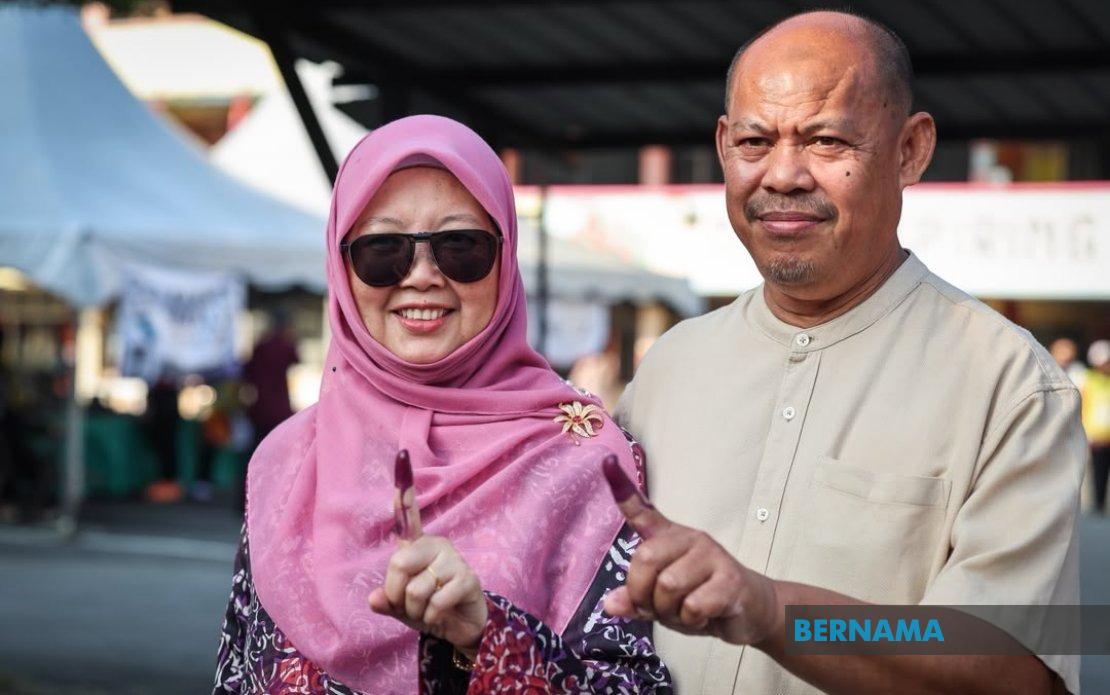
The 16th Johor state election unfolded across the southern state on July 11, with prominent political figures setting the tone for voter participation by arriving at polling stations during the morning hours. The early arrival of these party stalwarts underscored their commitment to the democratic process while sending a symbolic message about civic engagement to their supporters and the broader electorate.
Johor PKR chairman Datuk Seri Dr Zaliha Mustafa made her way to Sekolah Menengah Kebangsaan (SMK) Bandar Baru Uda in Johor Bahru at 9 am, accompanied by her husband, Dr Ahmad Adzlan Musa. Both cast their votes in the Larkin constituency. The former Minister in the Prime Minister's Department (Federal Territories) leveraged her early voting opportunity to communicate directly with media personnel about the broader election dynamics affecting the state.
Dr Zaliha's messaging to the press reflected practical concerns about weather conditions and voter behaviour. She appealed to Johor residents to take the initiative in participating early at the polls, highlighting meteorological forecasts that predicted rainfall beginning from midday and continuing through the afternoon. This weather advisory held particular significance, as heavy rain in tropical regions such as Johor can dampen voter enthusiasm and create logistical challenges at polling stations, potentially affecting final turnout figures that analysts track closely during state elections.
The PKR chairman's call for early voting demonstrated awareness of historical voting patterns in Malaysian elections, where weather fluctuations and daily routines often influence when voters choose to participate. By encouraging constituents to come out during the morning hours, she sought to maximise participation during a window less likely to be disrupted by environmental factors. Such messaging from party leaders carries weight among grassroots supporters who view their representatives' actions and recommendations as indicators of priority and urgency.
Beyond PKR's presence at the polls, the Democratic Action Party also fielded its senior leadership at voting stations across the state. Johor DAP chairman Teo Nie Ching voted at Sekolah Jenis Kebangsaan Cina (SJKC) Kulai Besar in Kulai at approximately 9.30 am. Her participation in the electoral process, like that of Dr Zaliha, represented the coordinated presence of major coalition partners at the ballot box during the crucial opening hours of voting.
The clustering of senior party figures voting in the morning hours served multiple strategic purposes. Beyond the immediate act of exercising their franchise, these visible displays of electoral participation provided media opportunities and visual narratives that supporters could latch onto. In Malaysian political culture, where symbols and gestures carry considerable weight, seeing prominent leaders queuing at schools and community centres reinforces messages about the legitimacy and importance of the electoral exercise.
For Johor specifically, the 16th state election represented a significant political moment in the broader Malaysian electoral landscape. The state has historically served as a bellwether for national political trends and coalition dynamics, with its results often providing early indicators of voter sentiment. The early turnout of party leadership suggested parties viewed the election as sufficiently competitive or strategically important to warrant high-level engagement from their senior officials.
The weather forecasts that influenced Dr Zaliha's public statements reflected the practical realities of conducting elections in Malaysia's tropical climate. Afternoon thunderstorms are common during certain seasons and can significantly impact voter turnout, particularly among certain demographics less willing to venture out during heavy rain. Election observers and analysts typically factor weather conditions into their turnout projections and result interpretations, making the meteorological context relevant to understanding final participation figures.
The phenomenon of senior party leaders voting early also carries implications for party morale and voter perception. When constituents see their chosen party's leadership actively participating in elections early in the voting day, it sends a signal that the party hierarchy believes the stakes warrant their personal attention and time. This visible commitment can translate into increased engagement among supporters who view such actions as validation of the election's importance to their preferred political formation.
The presence of multiple party leaders across different constituencies suggested a distributed campaign strategy wherein senior figures maintained visibility across geographically diverse areas within the state. Rather than concentrating their presence in a single location, PKR and DAP deployed their leadership across different polling stations, allowing them to cover more ground and interact with broader voter bases. This approach reflected sophisticated campaign management and resource allocation by the parties involved.
For Malaysian voters monitoring the Johor results, the early participation of these party figures provided context for understanding campaign intensity and party confidence levels. The visible engagement of Dr Zaliha Mustafa and Teo Nie Ching, among other senior officials, indicated that the major coalitions fielding candidates in Johor considered the state election consequential enough to merit their personal participation and public statements. This level of engagement often correlates with elections where outcomes could meaningfully shift state-level political configurations or test coalition unity and viability.

