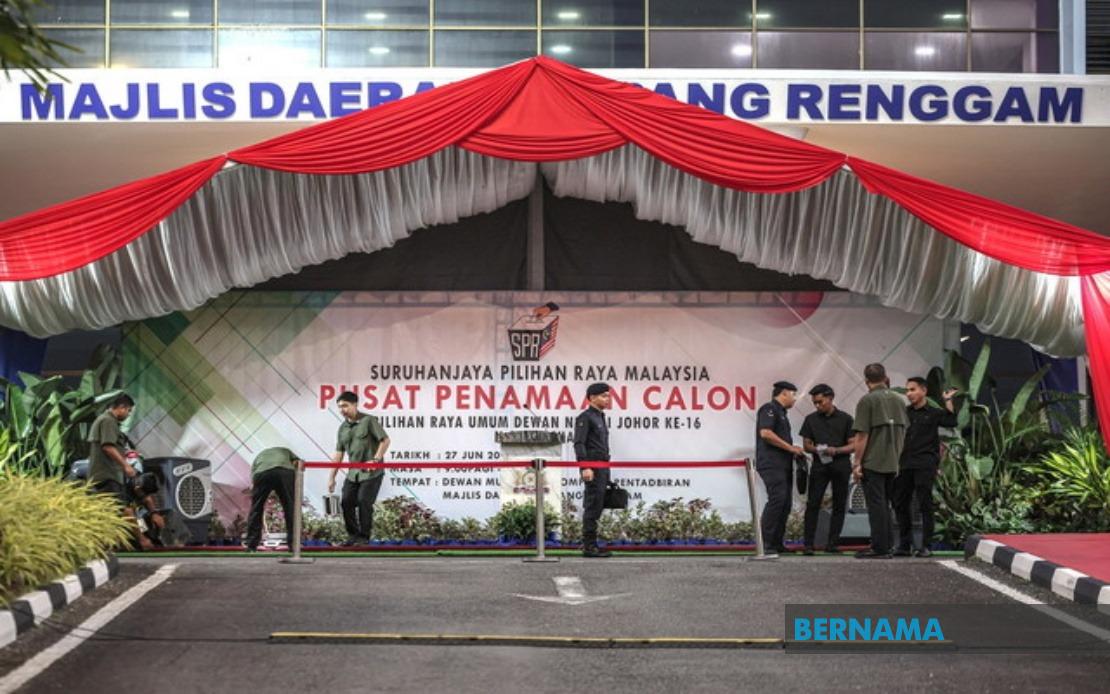
The 16th Johor State Election entered its critical nomination phase today as all 56 designated centres across the state simultaneously unlocked their doors at 9am, marking the official start of the formal candidacy process. The coordinated opening represented a major logistical undertaking by state electoral authorities, establishing the framework through which aspiring representatives would formally declare their intention to contest the polls. This synchronised approach ensured uniformity and transparency across all districts, preventing any procedural advantages or disadvantages based on geography or timing.
Candidates faced a tight one-hour window, closing at 10am, to physically deliver their nomination forms to the returning officers stationed at each centre. The compressed timeframe created a sense of urgency that reverberated through party camps statewide, with supporters of various political coalitions beginning their vigils as early as 6.30am to demonstrate solidarity with their nominees. The presence of enthusiastic party workers and sympathisers at nomination centres underscored the competitive intensity surrounding what many analysts view as a bellwether contest for Malaysian politics beyond Johor's borders.
The nomination submission process itself maintains specific procedural requirements designed to ensure legitimacy and accountability. Candidates must present their nomination papers in person alongside their proposer and seconder, though the regulations allow flexibility permitting any combination of these three to submit the documentation. This provision accommodates various logistical situations while preserving the essential checks that link candidates directly to their nominators. Once the returning officer receives all documentation, a verification phase commences to confirm that nominees meet constitutional and electoral requirements before the official candidate list publication.
Following successful verification of candidate nominations, the Election Commission has established a 14-day campaign period stretching from the announcement date through 11.59pm on July 10. This timeframe provides political parties sufficient opportunity to conduct grassroots mobilisation, public forums, and media engagement before the electoral process reaches its conclusion. The campaign period represents the crucial phase where competing visions for Johor's governance receive public airing and scrutiny, allowing voters to make informed assessments of available options across ideological and policy spectrums.
Weather considerations loomed over the nomination process, with the Malaysian Meteorological Department forecasting variable conditions across different districts. Johor Bahru, Muar, Batu Pahat, Kota Tinggi, Pontian, Tangkak and Kulai were expected to experience rain during the morning nomination hours, potentially complicating voter movement and party gatherings. Conversely, Segamat, Kluang and Mersing were anticipated to remain clear, providing dry conditions for nomination centre operations. Afternoon thunderstorms were predicted across most districts including Johor Bahru, Segamat, Kluang and Kota Tinggi, suggesting weather could influence candidate movement and campaign scheduling throughout the day.
Security arrangements reflected the significance of the electoral moment, with police units and the People's Volunteer Corps (RELA) deploying comprehensive measures around all nomination centres. Traffic management and crowd control protocols were implemented to ensure unobstructed access for candidates, officials, and party representatives while preventing any incidents that might compromise the nomination process's integrity. These precautions demonstrated authorities' commitment to maintaining electoral sanctity during an inherently charged period when political passions typically peak.
The electoral landscape encompasses substantial numbers reflecting Johor's demographic weight within Malaysia's federal system. The Election Commission recorded 2,727,926 eligible voters across the state, comprising 2,703,175 ordinary voters alongside 12,041 military personnel and their spouses, plus 12,710 police personnel and their spouses. These figures underscore Johor's significance as Malaysia's second-largest state by population, with electoral dynamics here frequently influencing broader national political trajectories. The inclusion of military and police personnel as distinct voter categories reflects Malaysia's constitutional framework recognising uniformed services' participation in electoral processes.
The electoral timeline moving forward includes provisions for early voting scheduled for July 7, accommodating citizens unable to participate on the standard polling day. This arrangement recognises modern work patterns and mobility while maintaining the integrity of single-day polling through careful ballot management procedures. The main polling day of July 11 will determine which candidates successfully translate nomination into elected office, with results potentially reshaping Johor's political configuration and influencing national coalition dynamics.
For Malaysian observers beyond Johor's borders, this state election carries implications extending into federal politics, particularly regarding Umno's electoral recovery and the viability of the current government's coalition. Johor's traditional role as a barometer of political sentiment makes nomination results and subsequent campaign developments worth monitoring closely by political analysts and strategists nationwide. The competitive nature of this election, combined with broader national political uncertainties, suggests the next two weeks will generate significant political discourse and manoeuvring.

