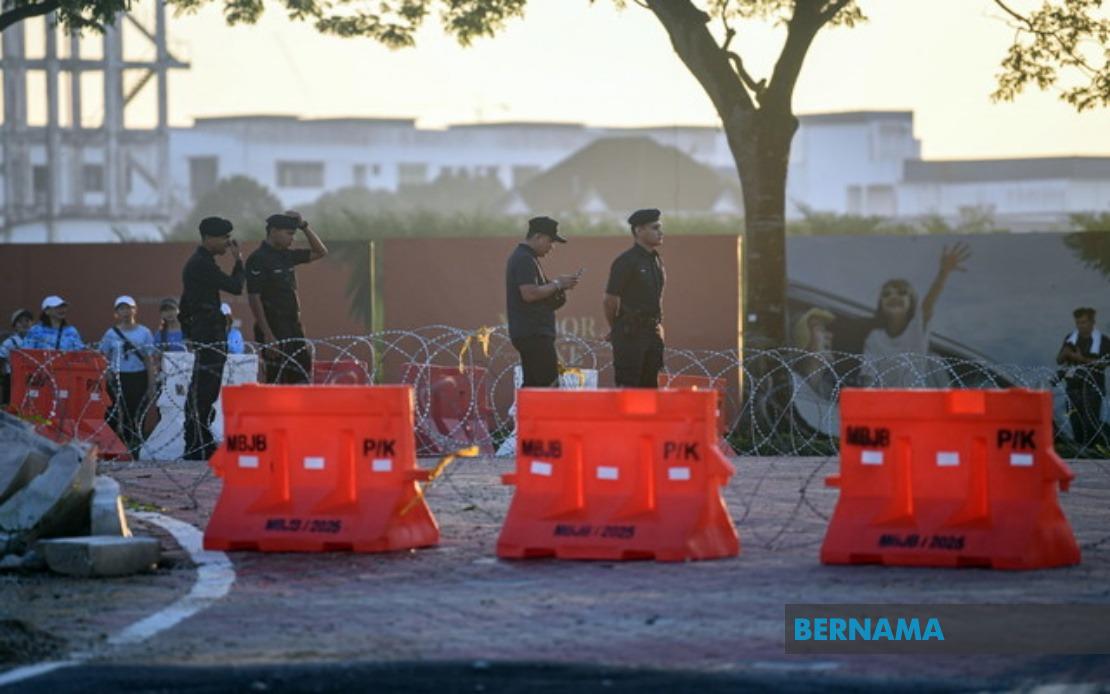
The nomination process for Johor's 16th state election unfolded without incident on June 27, benefiting from cooperative weather that helped Election Commission officials and security personnel manage the day's proceedings across 56 nomination centres distributed throughout the state. Morning conditions remained predominantly dry, allowing the early administrative work to proceed as scheduled, with the Malaysian Meteorological Department indicating that afternoon thunderstorms would pose minimal disruption to the overall timetable. The fortuitous atmospheric conditions set a constructive tone for what represented a crucial juncture in the electoral cycle, with nomination centres receiving completed papers between 9am and 10am following comprehensive final preparations by EC staff.
The operational environment at numerous nomination venues demonstrated the institutional capacity required to manage such large-scale electoral exercises. Election Commission personnel had completed their logistical arrangements well in advance, positioning themselves to receive nomination documentation efficiently while maintaining the administrative rigor essential to electoral integrity. The orderly atmosphere reflected careful planning and coordination among multiple government agencies, each assigned specific responsibilities that collectively ensured the process advanced without the congestion or confusion that can characterise high-stakes electoral events.
Security considerations featured prominently throughout the nomination day, with law enforcement personnel positioned at all 56 centres to preserve order and deter any conduct that might compromise the electoral process. This comprehensive security deployment reflected the competitive intensity surrounding the Johor contest and the Commission's determination to establish an environment where the nomination process could proceed free from intimidation or interference. The visible security presence served both practical and symbolic functions, reassuring participants and observers that institutional mechanisms existed to protect the integrity of proceedings.
Party activism materialised early, with supporters of various candidates assembling at nomination centres from approximately 7.30am onwards. This enthusiasm underscored the significance many Johor constituencies attach to state-level elections, where local issues often dominate campaign discourse more directly than in federal contests. The early gathering of party adherents demonstrated the competitive reality underlying the nomination process, as rival candidates sought to establish momentum and demonstrate organisational capacity to media observers and potential voters. Such displays of support, while routine in Malaysian electoral culture, also illustrated the grassroots mobilisation strategies that shape campaign dynamics in the months preceding polling day.
The Johor State Legislative Assembly comprises 56 seats across the state, a configuration that creates considerable territorial scope for the EC's administrative operations. The dissolution of the assembly on June 1 initiated the formal electoral calendar, with the Commission establishing July 7 as the early voting date and July 11 as the general polling day. This timeline compressed the campaign period into approximately two weeks from nomination through to election day, a compressed schedule that intensifies competition between contending parties and places pressure on candidates to establish their messaging rapidly and effectively within an electorate of substantial size.
The electoral roll for this contest encompasses nearly 2.73 million registered voters, a figure reflecting Johor's status as one of Malaysia's most populous states. This total comprises 2,703,175 ordinary voters alongside 12,041 military personnel and spouses, plus 12,710 police officers and family members eligible to cast votes. The inclusion of personnel from security forces within the ordinary voting population underscores the inclusive approach Malaysian electoral law adopts toward public servants, permitting those in uniform to participate in civilian elections alongside the broader population. Such a large registered voter base multiplies the complexity of the Commission's operations and amplifies the potential for unexpected disruptions during nomination, early voting, or polling day phases.
For Johor's opposition and incumbent coalitions alike, nomination day represented the moment when electoral ambitions crystallised into official candidacies. The transition from internal party selection processes to formal Commission recognition carried profound implications for campaign strategy, as candidates would subsequently focus efforts on persuading the 2.73 million registered voters to support their respective parties and platforms. The nomination process therefore occupied an intermediary position within the broader electoral framework, simultaneously concluding behind-the-scenes party deliberations while inaugurating the public-facing campaign phase.
The conduct of Johor's nomination process within a single day across 56 dispersed centres reflected the logistical sophistication the EC has developed through decades of managing Malaysian elections. The coordination required to field trained personnel, establish secure nomination environments, process documentation, and maintain security simultaneously across such geographic scope demonstrated institutional capacity that observers frequently overlook when evaluating electoral administration. Yet such operational competence provides the foundational infrastructure upon which electoral legitimacy ultimately rests, as voters' confidence in election outcomes depends substantially on whether institutional actors execute their assigned roles professionally and impartially.
The favourable meteorological conditions of June 27 thus represented more than atmospheric happenstance; they facilitated the practical execution of administrative processes that would collectively determine whether the campaign proceeded according to the established timetable. Disruptions caused by severe weather at any nomination centre could theoretically have required rescheduling or adjustments affecting the entire electoral calendar. The clement conditions therefore contributed to the smooth progression of events that the EC successfully achieved, permitting both the institutional machinery and political competitors to move forward without unexpected obstacles.

