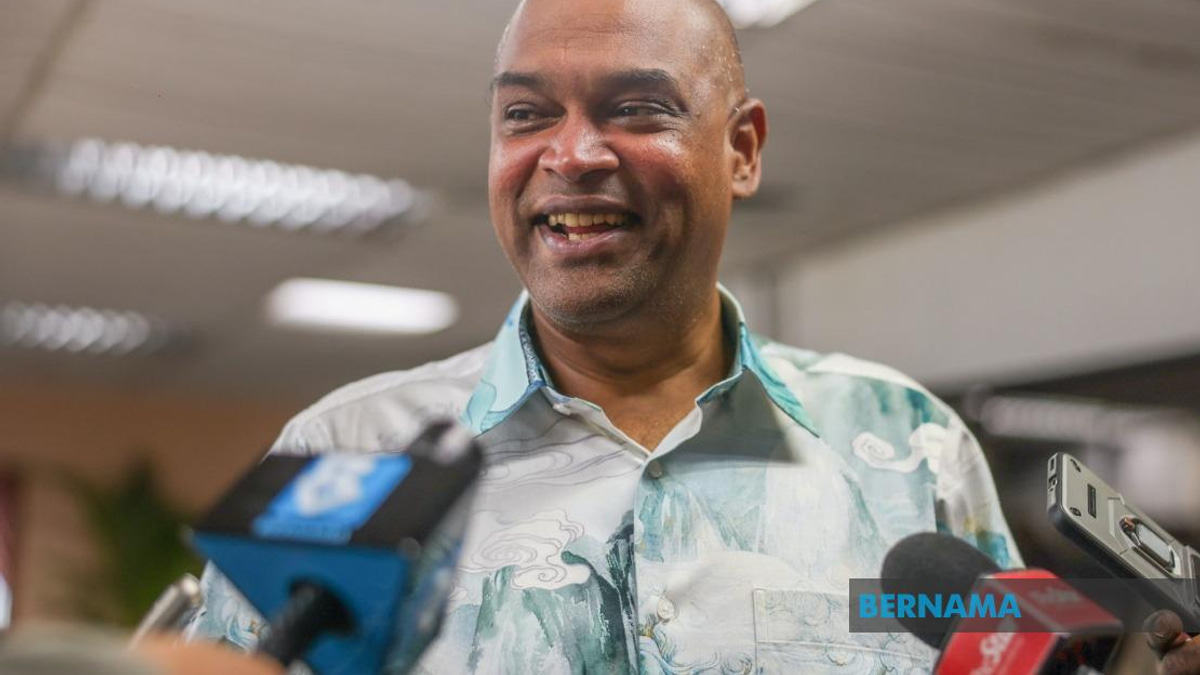
Tengku Muhriz Putra, the Regent of Johor, has lifted the curtain on his hands-on approach to monitoring the state's administration, revealing that he does not hesitate to reach out to senior government officials during unusual hours when he identifies matters requiring urgent clarification. The regent's proactive engagement style underscores the extent to which constitutional monarchs in Malaysia's federal system continue to play a substantive supervisory role within their respective jurisdictions, particularly concerning the efficiency and responsiveness of state machinery.
The regent's willingness to make calls at 3am to the menteri besar and state secretary reflects a governance philosophy that prioritises accountability and swift resolution of administrative obstacles. Rather than limiting his involvement to ceremonial functions or formal meetings during business hours, the Johor regent has positioned himself as an active monitor of state affairs, prepared to seek immediate explanations when issues remain unresolved. This approach carries significant implications for how state government officials structure their responsiveness, knowing that senior political actors may request updates on pending matters at any time.
Within Malaysia's constitutional framework, the ruler of each state possesses advisory and supervisory powers that, while technically circumscribed by written conventions and the rise of democratic accountability mechanisms, continue to exercise considerable practical influence over state governance. The Johor regent's disclosure about his monitoring activities illustrates how these formal powers translate into informal mechanisms of oversight and pressure on the executive branch. The menteri besar and state secretary, as the most senior civilian administrators in Johor's government, occupy a unique position where they must remain perpetually conscious that their decisions and the pace of administrative action can attract attention from the palace at any hour.
Johor's governance structure has long been characterised by close cooperation between the palace and elected government, with the ruler's household wielding considerable influence over state-level policy direction and administrative priorities. The regent's comments suggest that this relationship extends beyond high-level strategic discussions into the granular management of government operations. When issues fester without resolution, the palace appears willing to intervene directly rather than permitting bureaucratic inertia to persist unchecked. This dynamic distinguishes Johor's administrative culture from states where rulers adopt a more distant stance toward day-to-day government functioning.
The timing of such calls—occurring at 3am rather than during conventional working hours—carries its own significance. Such unexpected contact from the palace likely serves multiple purposes simultaneously: it disrupts the normal rhythm of governance to convey urgency, it catches officials when they may be more candid about obstacles and constraints, and it demonstrates that the regent's scrutiny operates on a 24-hour basis rather than adhering to standard office schedules. This element of unpredictability may serve as a motivational force for officials who understand that their performance is subject to surprise evaluation by the head of state.
For the menteri besar and state secretary, such calls represent a unique occupational hazard. Unlike their counterparts in federal government, who face parliamentary scrutiny and media pressure as primary accountability mechanisms, Johor's senior officials must navigate an additional layer of oversight from a figure who combines formal constitutional authority with considerable informal influence. The necessity of remaining available and prepared to justify administrative decisions at unconventional hours places specific demands on these officials' time management and their depth of knowledge regarding state affairs. The regent's approach essentially guarantees that the menteri besar and state secretary cannot fully disengage from work responsibilities during evening hours.
The regent's monitoring practice also reflects broader questions about the appropriate balance between the traditional advisory role of constitutional monarchs and the principle of ministerial responsibility in elected democracies. In Malaysia's system, rulers retain certain prerogatives and advisory functions that are more substantial than those exercised by purely ceremonial monarchs in other Commonwealth nations. Johor's regent appears to interpret these constitutional provisions as authorising proactive engagement with the executive branch concerning administrative performance. Whether such interventions ultimately strengthen governance by adding another accountability mechanism or potentially complicate decision-making by introducing palace preferences remains a matter of ongoing analysis among observers of Malaysian state politics.
The implications for Johor's broader governance ecosystem extend beyond the immediate relationship between the palace and the menteri besar. Government officials throughout the state administration become aware, through word of mouth and institutional memory, that the palace maintains active interest in how efficiently government functions. This knowledge creates a dispersed accountability effect throughout the civil service, where officials at various levels understand that poor performance or unresolved issues can eventually escalate to the attention of the regent. Such widespread awareness of palace scrutiny potentially incentivises more attentive administration and faster resolution of public grievances.
Comparatively, the Johor regent's oversight approach provides a contrast to some other Malaysian states where the palace maintains a more traditionally ceremonial profile, remaining largely separate from administrative minutiae. Johor's model suggests that constitutional monarchs can exercise meaningful influence over state governance through strategic intervention and vigilant monitoring without formally overstepping into executive decision-making. The regent clearly positions himself as holding the menteri besar and state secretary accountable for administrative performance while respecting their formal authority to make policy decisions.
Looking forward, the regent's comments may influence how future administrations in Johor approach their relationship with the palace. The knowledge that a regent is willing to conduct surprise oversight through late-night communications suggests that governments in Johor cannot take palace engagement as merely ceremonial or predictable. Any menteri besar serving under a regent with this hands-on management style must accept that state governance occurs within a framework where the constitutional head of state remains an active participant in administrative accountability, prepared to demand explanations regarding government performance on short notice and according to a schedule entirely of the palace's choosing.