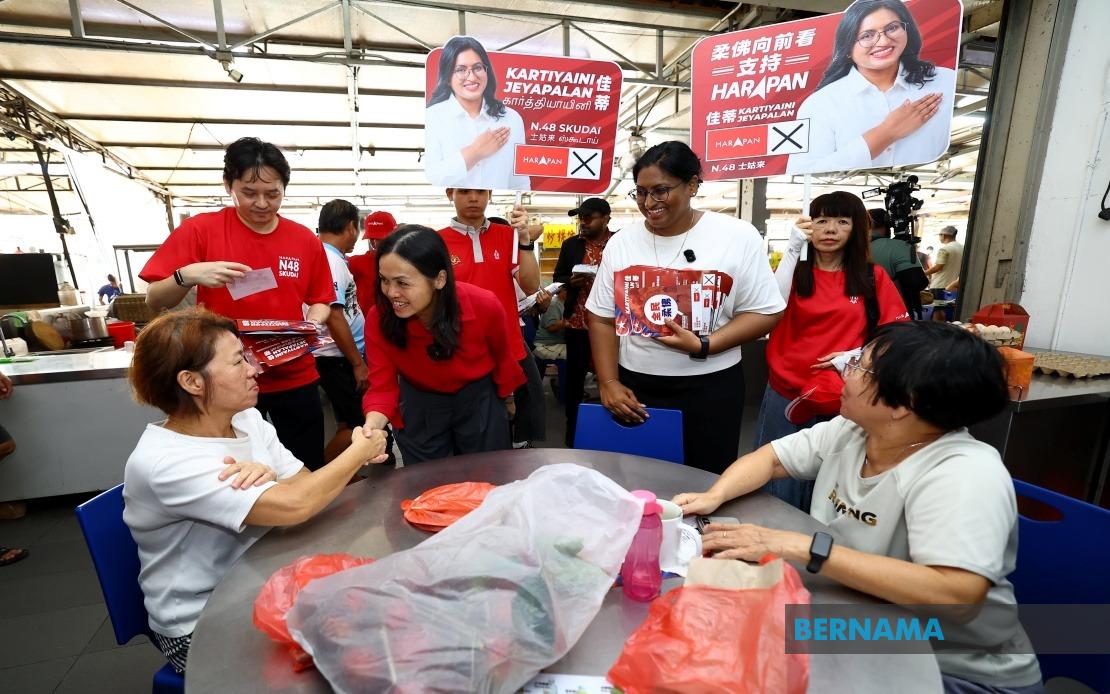
The Johor state election this Saturday will test not only voter commitment but also the integrity of Malaysia's democratic process, according to Johor DAP chairman Teo Nie Ching, who has launched a dual campaign aimed at mobilising voters and combating election-related misinformation. Speaking in Johor Bahru after engaging residents of Kampung Baru Skudai, Teo, who serves as Deputy Communications Minister, pressed upon voters—particularly those residing outside Johor or the country—the importance of exercising their democratic right at the ballot box. With 2.7 million registered voters expected to participate in electing 56 state assembly representatives, the turnout and conduct of this electoral exercise carry broader implications for how Malaysian voters view state-level governance and civic participation.
At the heart of Teo's campaign lies a compelling narrative about sacrifice and commitment drawn from the experiences of Malaysians living abroad. She recounted the story of a Queensland-based voter who went to extraordinary lengths to hand-carry his postal ballot to Malaysia after courier services could not guarantee timely delivery before the July 11 polling deadline. Similarly, she described a master's student in China who paid an additional RM1,000 to change his flight ticket and return home to vote, and another voter in the United States who worked diligently to find a Malaysian citizen to witness his postal voting process. These anecdotes serve a strategic purpose: by highlighting the willingness of overseas voters to invest time and money for a single ballot, Teo seeks to shame or inspire local voters—particularly those working in nearby Kuala Lumpur or Singapore—into recognising the privilege and responsibility of the franchise.
The mobilisation of cross-border voters represents a significant logistical and political challenge in Johor's electoral landscape. Thousands of Johor residents commute daily to Singapore for work, and many more are scattered across Malaysia's major economic centres. Kartiyaini Jeyapalan, the Pakatan Harapan candidate for the Skudai state seat, has articulated the campaign's strategy: reaching workers at the Sultan Iskandar Building Customs, Immigration and Quarantine Complex as early as 5 am and boarding the buses that ferry workers to Singapore. This grassroots approach reflects the recognition that modern voter mobilisation requires meeting voters where they are, both physically and in terms of their daily routines, rather than expecting them to navigate to party offices independently.
Kartiyaini's campaign messaging extends beyond mere exhortation to return home, emphasising instead the substantive importance of state-level elections in shaping Johor's future. Her argument—that a responsive and proactive state government can deliver tangible policy outcomes in areas that directly affect residents' daily lives—addresses a potential complacency among voters who may perceive state elections as less significant than federal elections. This distinction matters in Malaysian politics, where state governments control education, local development, agriculture, and environmental management. For Johor, a state that has experienced rapid urbanisation and migration, the quality of state governance directly influences infrastructure development, employment opportunities, and quality of life, making the election's outcome consequential regardless of voters' perceptions.
Parallel to voter mobilisation, Teo has sounded an alarm about the proliferation of fake news and deliberately misleading social media content in the final stages of the campaign. Her warning reflects a legitimate anxiety about information integrity during electoral periods, when voters are making consequential political decisions amid competing claims and counter-claims. The Deputy Communications Minister's appeal for "verify before you share" reflects a strategic shift in combating misinformation: rather than solely relying on regulatory measures or fact-checking institutions, she is encouraging citizens to become agents of information verification themselves. This approach recognises that digital misinformation spreads through networks of ordinary people sharing unverified content, often with good intentions.
Teo's emphasis on digital literacy and critical information consumption carries particular resonance in Southeast Asia, where rapid smartphone penetration has created large populations of social media users with varying levels of media literacy. In Malaysia's specific context, where previous elections have witnessed deliberate campaigns of false information targeting particular communities or candidates, the warning against fake news acquires urgency. The final week before an election represents a particularly vulnerable period, when the campaign temperature peaks and voters are consolidating their choices, making them susceptible to last-minute claims that may not be thoroughly verified.
The mechanics of misinformation during elections often exploit legitimate concerns or grievances, amplifying them beyond their factual basis or attributing false claims to credible figures. Teo's call for a culture of verification before sharing directly challenges the impulse to rapidly disseminate content that aligns with one's existing political preferences. This represents a subtle but important shift in democratic hygiene: recognising that voters themselves, through their sharing practices, bear some responsibility for the information environment. Rather than positioning citizens as passive victims of misinformation, Teo frames them as active participants who can shape the quality of public discourse through their personal choices about what to amplify and what to verify.
The interplay between voter mobilisation and misinformation control reveals tensions within contemporary electoral politics. Campaign efforts to energise voters—particularly through emotional appeals and vivid storytelling—can inadvertently create conditions where misinformation flourishes. When voters are motivated primarily by emotional investment in outcomes rather than careful consideration of evidence, they become more vulnerable to false claims that align with their preferences. Conversely, overly cautious approaches to voter engagement that prioritise information verification over motivation may fail to generate the turnout necessary for legitimate mandate-building. Teo's dual approach attempts to navigate this tension by combining emotional appeals (the stories of overseas voters' sacrifice) with rational appeals to information discipline (the call for verification).
From a regional perspective, the Johor election's management of misinformation carries implications for Southeast Asia's broader struggle with election integrity. Malaysia, as one of the region's more established democracies with regular competitive elections, sets standards—or cautionary examples—that influence how neighbouring countries approach electoral challenges. If Malaysia successfully demonstrates mechanisms for combating misinformation while maintaining voter participation and enthusiasm, it contributes to regional best practices. Conversely, if misinformation significantly distorts the electoral outcome or reduces voter confidence, it underscores vulnerabilities that authoritarian actors across Asia could exploit.
The practical challenge of implementing Teo's vision during a compressed election campaign timeline should not be underestimated. With voting occurring within days of her statements, there is limited time for public education campaigns on digital literacy or verification techniques to take meaningful effect. The most likely impact is among voters who are already politically engaged and consuming news deliberately rather than passively scrolling social media feeds. This raises questions about whose information environment actually improves through such appeals. Nevertheless, the attempt to address misinformation at the citizen level, rather than solely through institutional or regulatory means, represents an important evolution in Malaysian democratic discourse.
The confluence of these themes—voter mobilisation, sacrifice narratives, digital literacy, and information verification—reflects the complexity of modern electoral politics in Malaysia. Elections are no longer contests decided purely by policy platforms or constituency service records; they unfold across multiple information environments simultaneously, requiring political actors to address not only what voters think but also how they access and process information. Teo's campaign, whether ultimately effective or not, indicates a deepening recognition among Malaysian political leaders that maintaining democratic legitimacy requires attending to the quality of civic engagement itself, from ensuring inclusive participation to fostering critical thinking about information sources.

