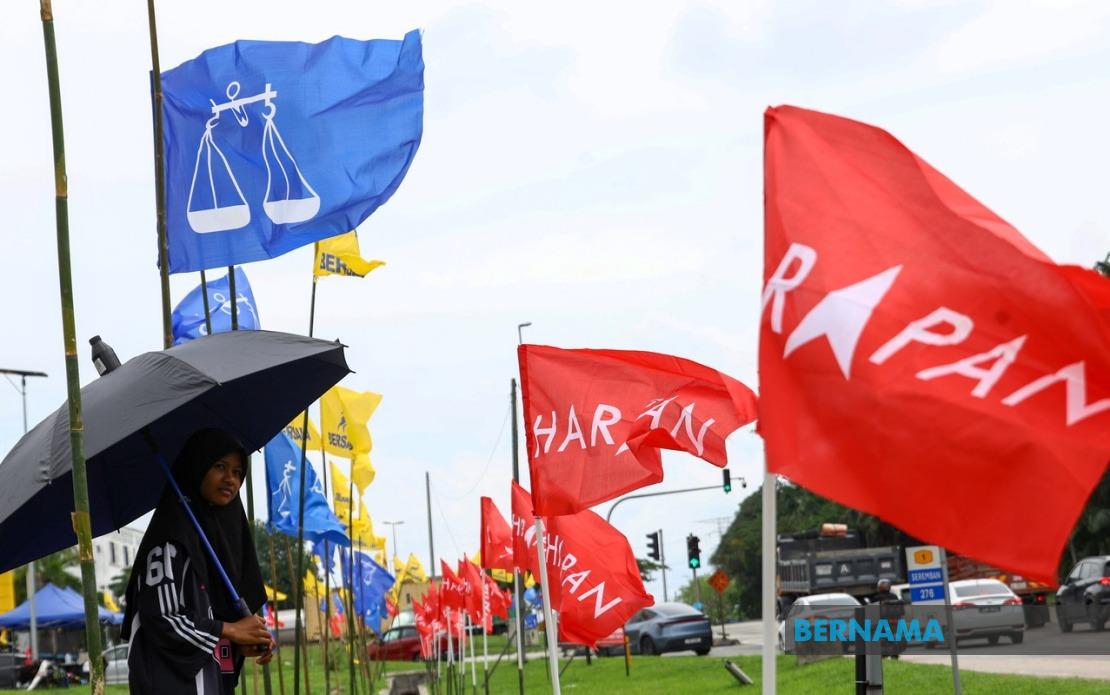
Pakatan Harapan's success in the upcoming Johor state election represents far more than a regional political contest—it is fundamentally about preserving institutional safeguards that prevent authoritarian consolidation of power, according to DAP secretary-general Anthony Loke. Speaking at a party dinner in Kluang, Loke articulated a vision of electoral politics centred on pluralism and accountability, positioning the July 11 polls as a referendum on whether Johor's governance will reflect competitive democratic principles or slide toward unchecked single-party rule.
The electoral mathematics of Johor underscore the stakes of this contest. The state assembly comprises 56 seats, making it a substantial political prize in Malaysia's federal structure. Pakatan Harapan, the three-party coalition comprising PKR, DAP, and Amanah, is contesting all available positions, signalling serious ambitions to reshape the state's political balance. This comprehensive candidate slate contrasts with fragmented opposition efforts in previous cycles, suggesting coordination and strategic planning by the coalition. The broader candidate field—172 individuals competing across the 56 seats—indicates a competitive electoral environment where victory margins may prove decisive in determining whether coalitions can claim clear mandates.
Loke's central argument touches on a persistent tension within Malaysia's political system: the relationship between electoral dominance and democratic quality. His warning that single-party monopoly creates governance without alternatives speaks to concerns about accountability mechanisms. When one party controls a supermajority, it can theoretically pass legislation, approve budgets, and implement policies with minimal legislative friction. Opposition members, reduced to token representation, struggle to mount effective scrutiny or propose meaningful alternatives. The absence of genuine parliamentary debate—where competing visions contest for legislative supremacy—diminishes democratic vitality even when elections remain formally competitive.
This concern resonates particularly in Malaysian context, where previous episodes of overwhelming single-party control have occasionally produced governance challenges. Without parliamentary opposition to question decisions, expose policy flaws, or propose alternatives, administrations sometimes drift toward inefficiency or unaccountability. Loke implicitly argues that Johor's political health depends on maintaining competitive dynamics where multiple political forces maintain meaningful representation. Such fragmentation, while occasionally complicating governance, forces coalition-building and compromise that reflect diverse constituencies' interests.
The Pakatan Harapan coalition brings distinct political traditions to this calculation. DAP represents predominantly urban, Chinese-based constituencies focused on secular governance and meritocratic principles. PKR, founded by Anwar Ibrahim, appeals to multiethnic constituencies and emphasizes social justice. Amanah, the smaller component, concentrates on Malay-Muslim constituencies with progressive orientations. Together, they project an alternative vision to Johor's incumbent administration, though their internal coherence remains subject to strains that periodically surface during elections and governance periods.
The election calendar itself merits attention. Early voting occurs on July 7, with the main poll following four days later on July 11. This compressed timeframe concentrates campaign activity and voter attention, potentially amplifying messaging around Loke's democratic accountability themes. Malaysian voters have demonstrated increasing sophistication in differentiating between local and federal political dynamics, meaning Johor's election may not simply reflect national sentiment but rather specific state grievances and preferences. Campaign messaging emphasizing checks and balances may resonate with voters concerned about local governance effectiveness.
Present at Loke's remarks were DAP deputy national chairman Nga Kor Ming and deputy secretary-general Steven Sim Chee Keong, both significant figures within the party hierarchy. Their attendance underscores DAP's commitment to the Johor campaign and suggests the party views this contest as consequential for its national trajectory. For DAP particularly, electoral success outside its traditional strongholds in Penang and Selangor would validate its multiethnic appeal and broaden its claim to federal relevance.
The broader implications extend beyond Johor's borders. Malaysia's political landscape has experienced successive waves of realignment—the 2018 federal victory by Pakatan Harapan, subsequent fracturing and Perikatan Nasional's rise, and ongoing repositioning. State elections increasingly function as testing grounds where national coalitions assess their electoral strength and refine strategies for subsequent federal contests. A strong Johor performance could energize Pakatan Harapan's grassroots organizing and provide momentum heading toward future national elections, while conversely, defeat might necessitate coalition rethinking.
Loke's framing of the election around democratic principles rather than purely material promises or patronage networks signals DAP's strategic positioning. By emphasizing systemic governance quality over transactional benefits, the party appeals to middle-class urban voters increasingly concerned with institutional integrity. This approach contrasts with traditional Malaysian electoral messaging focused on development projects or communal benefits, reflecting generational shifts in voter priorities and DAP's sophisticated organizational capacity.
The warning against single-coalition dominance also implicitly addresses concerns about federalism and regional autonomy. Johor, as Malaysia's most economically significant state and historically influential within UMNO networks, carries outsized importance. A concentrated power structure there could set precedents affecting how state-federal relations function. Conversely, a competitive outcome might reinforce principles of genuine state-level democratic accountability that reinvigorate federalism as a governing principle.
For Southeast Asian observers, Johor's election offers insights into how established democracies with multiethnic populations navigate electoral competition. Malaysia's institutional framework—constitutional monarchy, parliamentary system, federal structure—provides checks on executive power at national level, yet state governments sometimes operate with fewer restraints. Whether voters employ state elections to deliberately distribute power across coalitions, thereby creating internal checks, remains an open question that this contest may help answer.
Ultimately, Loke's intervention frames Johor's election not primarily as a contest between competing personalities or parties, but as a choice about governance architecture itself. Voters will decide whether they prioritize single-coalition stability that can implement undisputed mandates, or accept competitive complexity that ensures alternative power centers scrutinize administration. This fundamental choice, articulated through the lens of democratic checks and balances, suggests Johor voters will be evaluating deeper questions about how power should be distributed and accountability mechanisms structured in their state.

