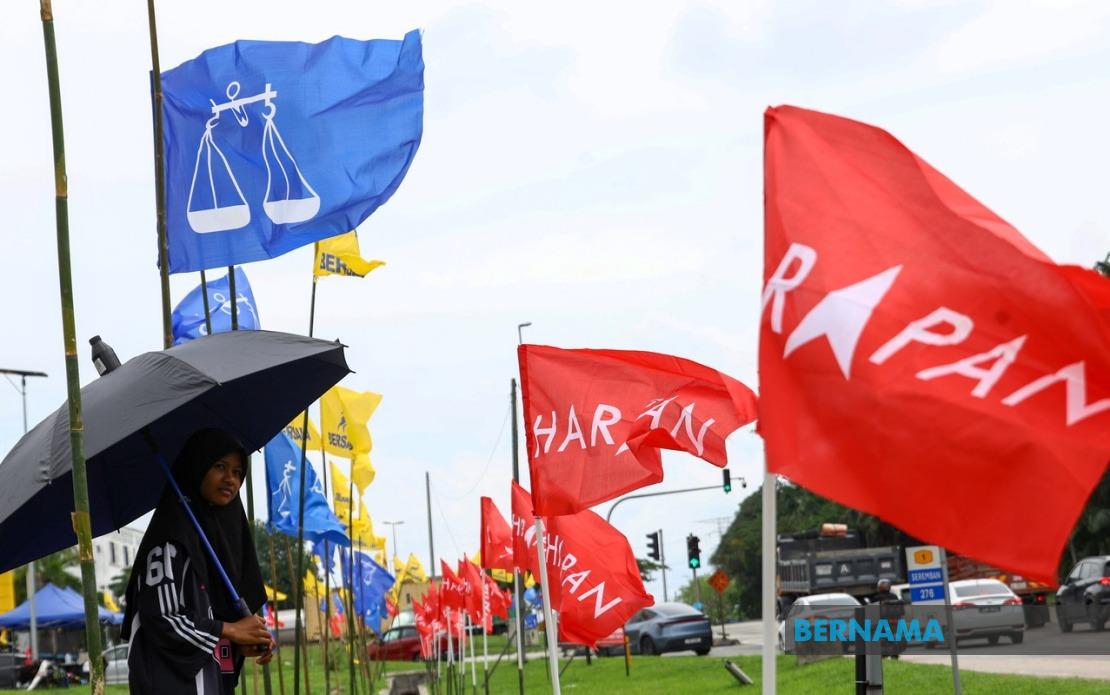
The campaign for Johor's 16th state election has intensified during its second week, with Pakatan Harapan and Barisan Nasional deploying distinctly different approaches to capture voter sentiment ahead of the July 11 polling day. Both coalitions are contesting all 56 state seats, yet their methods reflect fundamentally divergent assumptions about what will persuade Malaysian voters in a state that has historically been a political bellwether for the nation. The divergence between these strategies offers revealing insights into how Malaysian political parties are adapting to evolving voter preferences and demographic shifts in their electorate.
Pakatan Harapan's campaign architecture centres on substantive policy platforms designed to address the tangible daily struggles of ordinary Johor residents. The coalition has positioned itself around a manifesto entitled "Johor For All", which frames state development not merely as an accumulation of foreign investment or headline economic growth figures, but as a mechanism for improving living standards at the household level. This approach tackles interconnected issues including wage stagnation, housing affordability, employment quality, and social welfare provisions. By anchoring its campaign to these bread-and-butter concerns, PH is attempting to reshape how voters evaluate state performance, redirecting attention away from aggregate economic metrics and towards individual economic security and quality of life.
According to Dr Mohammad Tawfik Yaakub from Universiti Malaya's political analysis faculty, PH's strategic emphasis reflects a calculated bet that voters in Johor have become more sophisticated in their political evaluation. Rather than accepting official narratives about development measured purely through investment volumes or GDP expansion, PH argues that true development requires translating economic activity into tangible wage improvements, accessible housing options, genuine employment opportunities with career progression, and credible social safety nets. This framing challenges the implicit premise underlying traditional Malaysian developmental politics—namely, that growth figures alone legitimise government performance. By contrast, PH's messaging insists that Johor residents deserve direct, measurable benefits from their state's economic participation.
Barisan Nasional's campaign strategy follows a markedly different trajectory, prioritising the mobilisation of party infrastructure and the deployment of prominent political personalities to energise campaign events and amplify media attention. The coalition has strategically reintroduced two significant UMNO figures who had stepped away from active politics: former UMNO vice-president Datuk Seri Hishammuddin Tun Hussein and former UMNO Youth chief Khairy Jamaluddin, both returning through the "Rumah Bangsa" initiative. BN's calculation appears to centre on the assumption that these personalities retain sufficient influence and recognition to regenerate enthusiasm among party supporters while attracting media coverage that amplifies the coalition's campaign reach. The presence of such figures at campaign ceramah events aims to convey organisational vitality and political relevance.
However, Dr Tawfik's analysis suggests that the political environment may have shifted in ways that diminish the efficacy of personality-driven campaigning alone. Contemporary Johor voters, he argues, have become markedly more discerning in their political judgments. The mere appearance of prominent speakers at campaign events no longer automatically translates into voter persuasion. Instead, voters are increasingly evaluating whether parties present coherent policy platforms, field credible candidates with demonstrable competence, and address substantive concerns that resonate with their lived experience. This evolution reflects broader global patterns in electoral behaviour, where voters increasingly distinguish between celebrity endorsement and substantive governance capability.
Regarding Hishammuddin's strategic return, analyst Assoc Prof Dr Mohd Yusry Ibrahim from Ilham Centre observes that his active participation could rehabilitate the party's standing among UMNO supporters who had previously drifted away or become disengaged. Hishammuddin retains considerable political capital within Johor specifically, stemming from his tenure and historical association with the state. His reactivation signals organisational renewal and could reverse attrition among traditional BN constituencies, particularly among middle-aged voters and older demographics who still value continuity and established political networks. The psychological impact of welcoming back a familiar figure may reassure voters that UMNO remains a consequential political force deserving of their loyalty.
Khairy Jamaluddin's inclusion in the campaign addresses a different demographic vulnerability. Young voters in contemporary Malaysia display markedly fluid voting patterns, lacking the generational party loyalty that characterised earlier electoral cohorts. This younger demographic gravitates towards political figures they recognise through media exposure, whose public personas resonate with their values, and with whom they feel personal connection—whether through social media engagement, cultural alignment, or perceived authenticity. Khairy has successfully cultivated a profile among younger Malaysians through consistent visibility and messaging that acknowledges youth concerns. His reintroduction into BN's campaign specifically targets the younger voter segment that UMNO and BN previously struggled to mobilise, attempting to reverse the coalition's structural weakness among voters under 40.
Mohd Yusry emphasises that candidate personality and perceived relatability have become increasingly determinative in shaping younger voters' electoral decisions. Unlike their parents' generation, young voters do not inherit party allegiance as a family inheritance or cultural identity marker. Instead, they evaluate individual candidates and party representatives based on whether those figures demonstrate awareness of youth-specific issues, present themselves authentically rather than through traditional political theatre, and seem genuinely invested in solutions that young Malaysians prioritise. This transformation creates both opportunity and risk for political parties: personalities can drive support among younger cohorts, but withdrawal of such figures or perceived inconsistency can equally quickly erode support.
The 16th Johor state election thus represents a test of competing theories about contemporary Malaysian political behaviour. With 172 candidates competing for 56 seats, the contest provides a controlled comparison between policy-forward campaigns and personality-mobilisation strategies. Early voting commenced on July 7, with the main polling day scheduled for Saturday, July 11. The results will offer significant data about which approach resonates more effectively with voters facing cost-of-living pressures, housing affordability challenges, and economic insecurity. For political strategists across the peninsula, the Johor outcome will provide evidence about whether voters respond primarily to substantive policy differentiation or to the recognition and appeal of individual political personalities.
The divergence between these two campaign architectures also illuminates broader questions about how Malaysian democracy functions at the state level. If voters consistently reward policy substance over personality and party machinery, it suggests that Malaysian democracy is gradually maturing towards issue-based competition and evidence-based evaluation of government performance. Conversely, if personality-driven mobilisation continues to dominate electoral outcomes, it suggests that Malaysian voters remain more influenced by traditional political structures and familiar figures than by competing policy visions. The Johor election outcome will thus carry implications extending well beyond the state itself, offering indicators about the trajectory of Malaysian electoral politics and the factors that increasingly determine how ordinary Malaysians evaluate their political choices.

