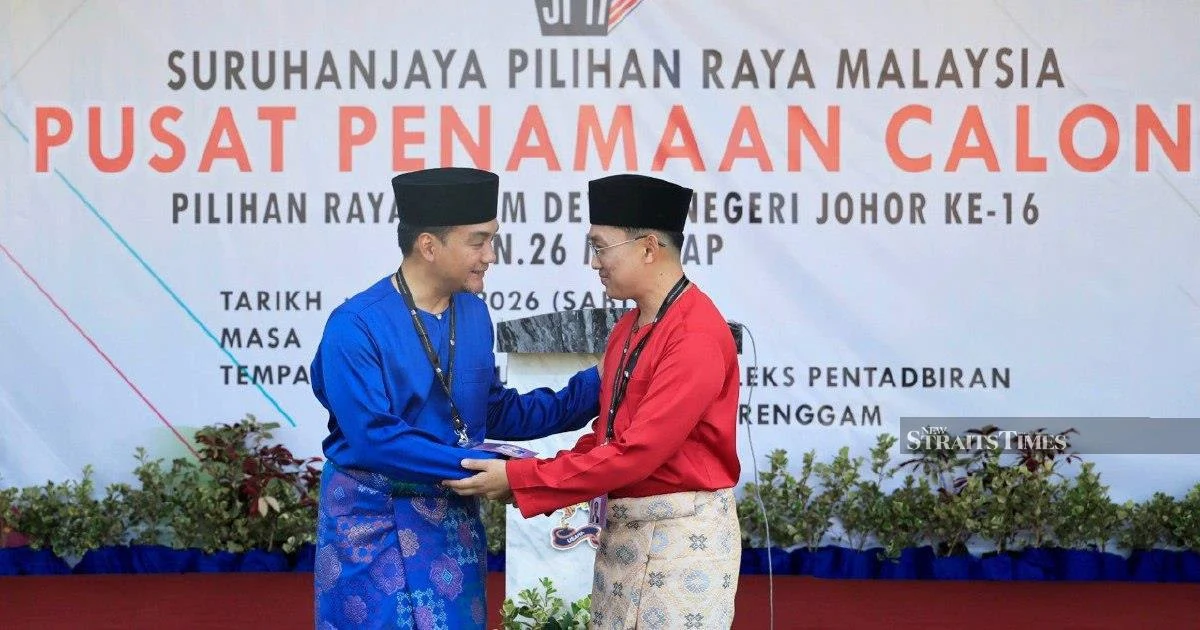
Johor's caretaker Menteri Besar Datuk Onn Hafiz Ghazi has sounded a note of caution regarding the forthcoming state election, rejecting any suggestion that his bid for a second term in the Machap constituency is assured. Speaking in Simpang Renggam, the BN-backed incumbent emphasized that the competitive dynamics of electoral contests remain inherently unpredictable, signalling his administration's resolve to maintain momentum in what could prove to be a closely contested race.
The July 11 election represents a critical juncture for Johor's political landscape and Onn Hafiz's personal political future. As the sitting Menteri Besar, he holds significant institutional advantages, including the machinery of state government and established voter networks. Yet his cautious messaging suggests an awareness that complacency can prove costly in contemporary Malaysian politics, where voter sentiment remains volatile and alternative coalitions continue to vie for relevance across state constituencies.
Machap, the constituency where Onn Hafiz seeks re-election, holds symbolic importance beyond its electoral arithmetic. The seat has served as a bellwether for broader sentiment within Johor's electorate, and its composition reflects the state's demographic diversity. Onn Hafiz's public acknowledgment that outcomes remain uncertain underscores the extent to which even established political figures must wage competitive campaigns rather than assuming incumbency guarantees success.
The nature of Johor's political terrain has shifted considerably in recent years. The state, historically a BN stronghold, witnessed the rise of competing political narratives and organizational structures following the 2018 general election and subsequent political realignments. While BN has maintained institutional strength, the emergence of revitalized opposition movements and internal coalition dynamics has created a more complex battleground than in previous election cycles. This context lends weight to Onn Hafiz's caution.
Campaign dynamics in Machap will likely reflect broader state-level contests occurring simultaneously across Johor's constituencies. Voters in the seat will weigh not only local governance issues and development priorities but also state-wide economic performance, infrastructure investments, and the comparative appeal of competing visions for Johor's future direction. Onn Hafiz's administration must articulate a compelling narrative about continuity and progress to convince voters that a second term warrants their continued support.
The caretaker Menteri Besar's comments also reflect political realism about the evolving nature of voter behaviour in Malaysia. Traditional indicators of electoral strength, such as party membership and organizational capacity, remain relevant but no longer constitute determinative factors. Voters increasingly evaluate performance metrics, respond to grassroots messaging, and demonstrate willingness to shift allegiances based on localized concerns and personalities. This fluid environment necessitates sustained engagement and humility regarding electoral outcomes.
BN's positioning in Johor carries implications extending beyond the state's borders. As Malaysia's largest state by population and a historically significant electoral battleground, Johor's results carry weight in national political calculations. Opposition coalitions view potential gains in the state as validation of their broader electoral viability, while BN treats Johor as essential to maintaining its political dominance. The stakes for both major coalitions ensure that resources, messaging, and organizational effort will be substantial.
Onn Hafiz's administration has pursued infrastructure-focused governance strategies, including development projects aimed at urban centres and industrial zones. These initiatives feature prominently in government communications and campaign narratives. However, whether voters perceive sufficient tangible benefit from such programs to justify continued support remains subject to individual assessment. The election will effectively serve as a referendum on whether Johor residents believe existing governance trajectories merit continuation.
The interval between now and July 11 will see intensive campaign activity across Machap and surrounding constituencies. Both established ruling coalitions and opposition formations will deploy their full organizational apparatus, test messaging strategies, and attempt to mobilize voter enthusiasm. The unpredictability that Onn Hafiz identifies stems partly from this competitive activation, which can generate surprises and shift dynamics in unanticipated directions.
For Malaysian observers beyond Johor, the state election offers a barometer of broader national political health. The voting patterns that emerge will indicate whether established political structures retain voter confidence, which constituencies remain genuinely competitive, and whether demographic or economic shifts are reshaping electoral mathematics. Onn Hafiz's pragmatic acknowledgment that outcomes remain uncertain reflects political maturity and the recognition that electoral competition in contemporary Malaysia has become genuinely unpredictable, regardless of incumbent status or organizational resources.

