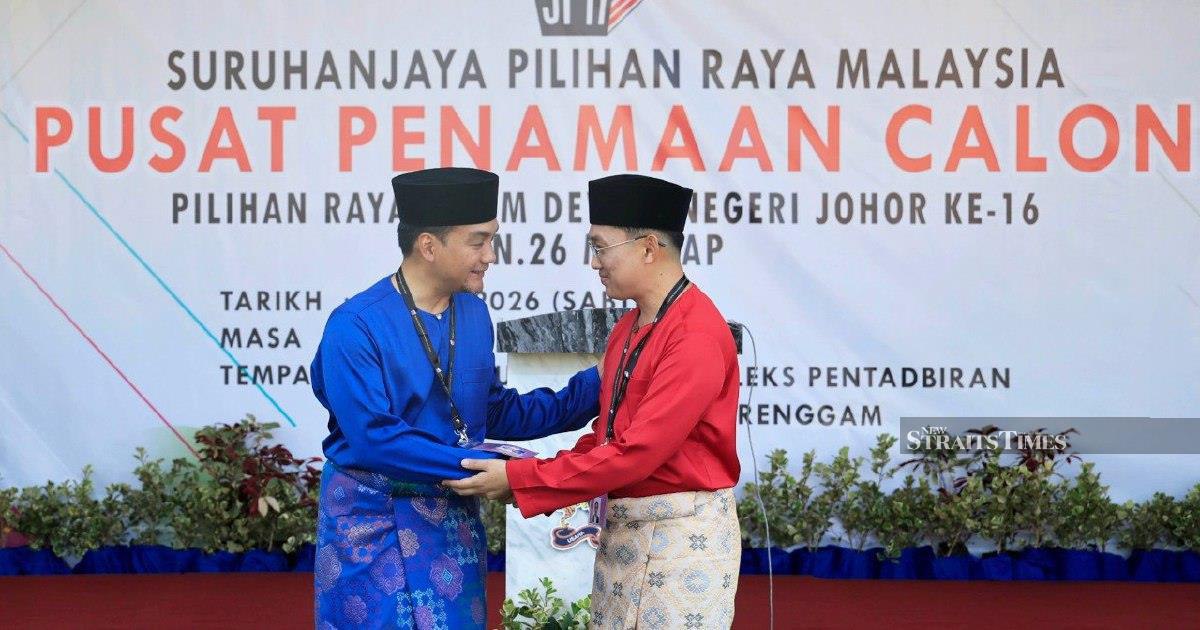
Johor's caretaker Menteri Besar Datuk Onn Hafiz Ghazi has acknowledged the unpredictable nature of the upcoming state election, cautioning that momentum and voter sentiment remain fluid factors that could reshape the electoral landscape. Speaking at Simpang Renggam, Onn Hafiz indicated that his campaign for a second term in the July 11 contest cannot assume any advantage, particularly in his Machap constituency, which he characterised as genuinely competitive despite his incumbent status.
The candid assessment reflects a broader recognition within Johor's political establishment that state elections present distinct challenges compared to federal contests. Unlike national polls, which often turn on broad coalitional shifts and economic narratives, state elections frequently hinge on localised grievances, constituency-level personalities, and the effectiveness of ground campaigns at the neighbourhood level. Onn Hafiz's warning suggests that his administration's performance over the past five years, while substantive, may not insulate him from unexpected developments in the final weeks of campaigning.
The Machap constituency, which encompasses parts of Johor's central region, represents a traditionally mixed demographic area with both urban and semi-rural voters. The seat's composition makes it susceptible to swing voting patterns, particularly if opposition parties successfully mobilise voters around specific service delivery issues or if there are defections within the ruling coalition. Onn Hafiz's observation that anything can happen underscores the competitive dynamics that have emerged in several Johor constituencies, where traditional party strongholds have shown signs of weakening in recent election cycles.
For Malaysian observers, Onn Hafiz's stance carries implications beyond his personal electoral prospects. The Menteri Besar's position within Barisan Nasional and his relationship with federal leadership have been subjects of speculation, particularly following various leadership transitions in Kuala Lumpur. An unexpectedly weak showing in Johor would send reverberations through national politics, potentially weakening his hand in coalition negotiations and future ministerial appointments. Conversely, a decisive victory would consolidate his status as a key figure in east coast politics.
The July 11 election occurs within a broader context of Malaysian politics characterised by coalition fragmentation and voter volatility. The Perikatan Nasional coalition, which includes PAS and other parties, has made significant inroads in several states previously considered Barisan Nasional bastions. In Johor specifically, PAS has sought to expand its presence beyond traditional strongholds, targeting constituencies where development concerns or dissatisfaction with incumbent administrations might create openings. This competitive environment explains Onn Hafiz's refusal to project confidence, despite his incumbency advantage.
Voter sentiment in Johor has shown considerable diversity in recent years. The state's economy, traditionally dependent on manufacturing and petrochemicals, faces structural headwinds as Malaysia transitions toward higher-value activities and digital industries. Younger voters particularly express frustration with employment prospects and housing affordability, issues that may not fully respond to state-level interventions. These demographic and economic shifts mean that incumbency can sometimes become a liability if populations view sitting governments as insufficiently responsive to emerging concerns.
Onn Hafiz's campaign strategy appears to centre on demonstrating concrete achievements in infrastructure, education, and healthcare while addressing specific complaints raised during constituency walkabouts. The caretaker Menteri Besar has been visible across Johor in recent months, attending community events and engaging with constituent groups. However, visibility alone does not guarantee electoral success, particularly if opposition candidates can position themselves as fresher alternatives or if internal coalition tensions discourage voter turnout.
The role of personality and local reputation should not be underestimated in Machap. Onn Hafiz, as a second-generation political leader from Johor, carries advantages rooted in family connections and established networks. Yet these same connections can sometimes generate resistance from voters who prefer new faces or from communities feeling marginalised by established political structures. The constituency's composition includes both constituencies where traditional politics remains dominant and areas where younger, more issue-focused voters exert influence.
Regional dynamics also factor into Johor's electoral equation. Neighbouring Kelantan and Terengganu, both governed by Perikatan Nasional, offer templates for opposition mobilisation strategies. If successful tactics developed in those states are adapted for Johor's distinct political culture, the effects could surprise observers accustomed to Barisan Nasional's historical dominance in the state. The opposition's capacity to translate popularity in other regions into meaningful gains in Johor remains an open question that will only resolve on election day.
Onn Hafiz's measured rhetoric suggests campaign discipline aimed at preventing overconfidence within his own organisation while avoiding statements that might be weaponised by opponents. By acknowledging uncertainty, he paradoxically attempts to mobilise supporters who might otherwise assume victory is assured and stay home on polling day. This communication strategy reflects mature political instinct, recognising that elections are won through ground activation and voter persuasion, not through assumptions of inevitable outcomes.
The July 11 election will provide crucial signals about Johor's political trajectory and the state's role in Malaysia's broader governmental equations. Whether Onn Hafiz secures his second term or faces unexpected electoral reversal will influence leadership calculations throughout the peninsula and shape coalition mathematics ahead of the next federal election cycle.

