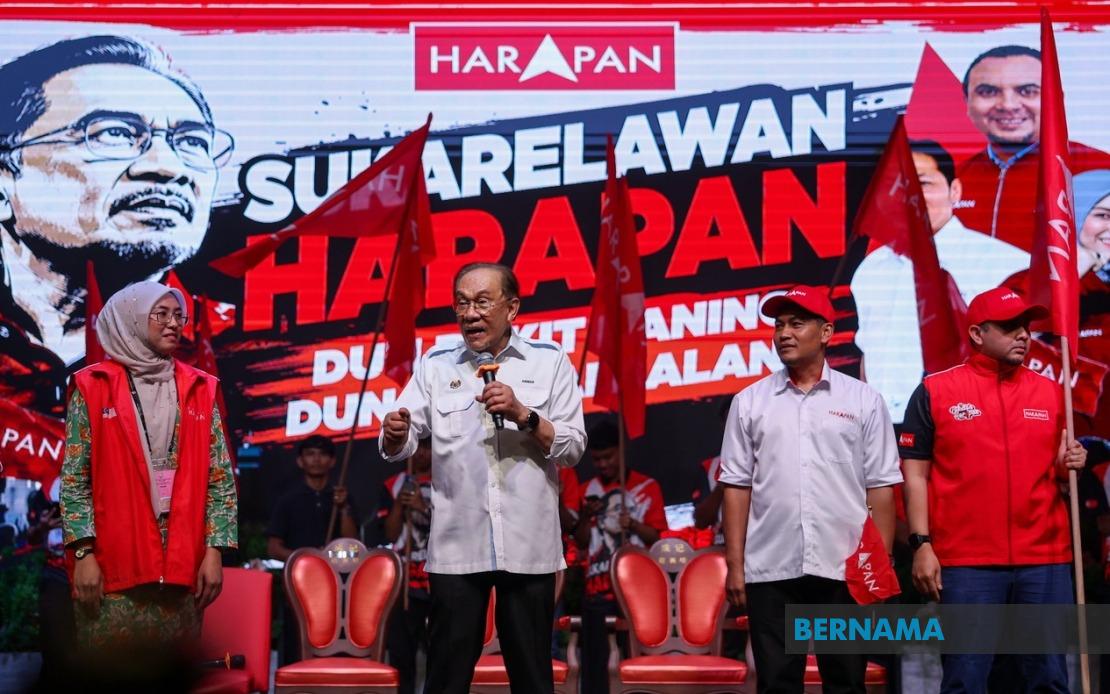
Prime Minister Datuk Seri Anwar Ibrahim is positioning Malaysia's upcoming Johor state election as a defining moment for the nation's youth to take control of their political destiny and build a more inclusive future. Speaking at a campaign rally in Muar on July 5, Anwar made an impassioned plea for young voters to move beyond the divisive race-based narratives that have long dominated Malaysian politics, urging them instead to evaluate candidates based on substantive policy platforms that directly improve their daily lives.
Anwar, who also chairs the Pakatan Harapan coalition, delivered a pointed critique of what he characterised as outdated political messaging designed to sow discord among Malaysia's diverse communities. He specifically highlighted how certain political actors continue to peddle inflammatory rhetoric intended to create fear of the Chinese, resentment towards Indians, and conflict between Malays and Chinese populations. Rather than allowing themselves to be manipulated by such divisive tactics, Anwar argued that young Malaysians should focus on leaders demonstrating genuine commitment to addressing the concrete challenges facing their generation, including access to quality education, meaningful employment opportunities, and comprehensive state-level development initiatives.
The Prime Minister articulated a broader critique of Malaysia's political establishment, suggesting that while ordinary citizens become entangled in manufactured communal conflicts, political elites at the highest levels concentrate on personal enrichment and self-interested agendas. This framing positions youth participation not merely as a voting obligation but as an act of resistance against a corrupt and self-serving political system. Anwar directly addressed young Malays, Chinese, and Indian voters gathered at the Bukit Naning constituency volunteer programme launch, exhorting them to recognize their collective power to effect systemic change and to refuse manipulation by what he dismissed as the "rotten political system" plaguing the country.
Anwar's remarks were accompanied by visible enthusiasm from the assembled young people, with the Prime Minister expressing genuine surprise and satisfaction at the turnout. He characterised the gathering as historically significant, interpreting the youth presence as evidence of growing political consciousness among Malaysia's younger generation and an emerging determination to challenge the status quo. Having campaigned extensively over more than a decade, Anwar suggested that the energy evident at this particular event surpassed previous mobilisation efforts, signalling a potential generational shift in political engagement and awareness.
Central to Anwar's message is a deliberate framing of the Johor election as an opportunity for substantive national renewal through youth leadership. He called on young people not to adopt a passive stance toward electoral politics but rather to become active agents of change, visiting villages, neighbourhoods, and districts to communicate a clear message about their capacity to transform Malaysian politics. This grassroots mobilisation strategy emphasises the cumulative impact of consistent, patient organising at the community level rather than reliance on top-down political machinery or celebrity-driven campaigning.
The timing of these remarks takes on particular significance given the electoral mechanics at play. The Johor state election will see 172 candidates competing across 56 state seats, with polling scheduled for July 11 and early voting occurring on July 7. This competitive contest in Malaysia's second-largest state provides Anwar and Pakatan Harapan with a crucial platform to test their political messaging and organisational capacity in a traditional stronghold of opposition support. The inclusion of PH candidates for the Simpang Jeram and Bukit Naning constituencies at the campaign event underscores the coalition's strategic focus on specific constituencies where youth-driven campaigns might yield electoral gains.
Anwar's broader vision extends beyond electoral victory to encompass a fundamental reimagining of Malaysian national identity and political culture. He argues that racial divisiveness represents not merely a political problem but an active betrayal of the principles upon which independent Malaysia was founded. By characterising race-based political narratives as "poison" and "outdated," Anwar positions those peddling such rhetoric as representatives of a discredited old guard out of step with contemporary Malaysian reality and values. This generational framing implicitly challenges older political actors to accept diminished relevance or risk obsolescence.
The Prime Minister emphasised that Malaysia's greatest strength has historically derived from its remarkable achievement in maintaining peace and stability across an ethnically and religiously diverse population. He celebrated the country's ability to sustain meaningful coexistence among Malays, Chinese, Indians, and Orang Asli communities, arguing that this accomplishment represents a genuine source of national pride and international distinction. When observing contemporary Malaysian youth, Anwar expressed deepened optimism about the nation's trajectory, suggesting that younger generations inherently grasp the fragility of communal harmony and the mutual benefits of respectful, caring relationships across ethnic and religious lines.
Anwar's exhortation to young people to abandon bystander status and embrace active responsibility for shaping Malaysia's future represents a deliberate effort to transform political participation from episodic voting into sustained civic engagement. He contended that creating a more inclusive national future requires young people to move beyond passive criticism of the existing system and instead take concrete steps to build alternatives. This framing places considerable responsibility on youth while simultaneously acknowledging their agency and capacity to effect meaningful change within democratic structures.
The underlying tension in Anwar's messaging reflects deeper complexities within Malaysian politics regarding communal identity and national integration. While the Prime Minister articulates an inclusive vision appealing to multi-ethnic youth solidarity, Malaysian electoral dynamics remain significantly influenced by ethnic voting patterns, community-specific concerns, and the persistent salience of identity-based political organising. Whether youth voters can be effectively mobilised around the cross-cutting issues and universal values that Anwar emphasises, or whether they will ultimately gravitate toward identity-based voting blocs as they age and accumulate social responsibilities, remains an open empirical question with substantial implications for Malaysia's long-term political trajectory.
For Southeast Asian observers, Anwar's Johor campaign messaging reflects broader regional trends involving generational shifts in political preferences, declining tolerance for identity-based divisiveness among younger voters, and growing demands for competence-based governance emphasising economic performance and service delivery. If Malaysian youth do respond enthusiastically to this framing and translate electoral preferences accordingly, the July 11 Johor results could signal important changes in how Malaysian electoral competition is structured and what policy priorities voters prioritise. Conversely, if established communal voting patterns reassert themselves despite Anwar's inclusive messaging, such outcomes would underscore the persistent structural constraints limiting political transformation in multi-ethnic democracies navigating identity politics.

