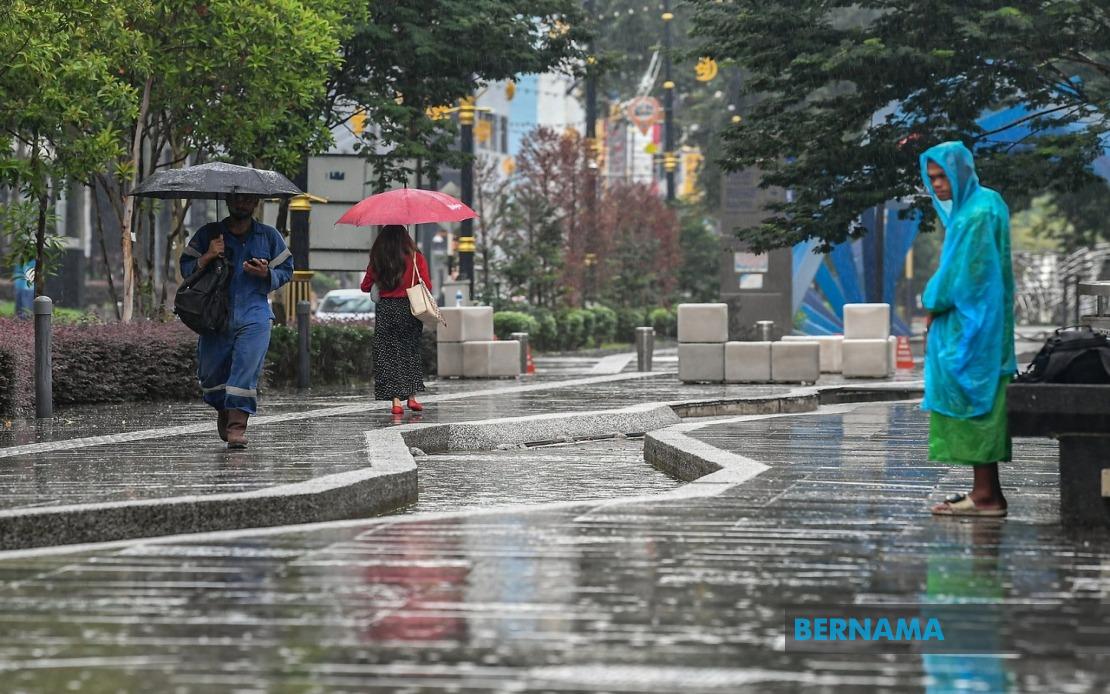
Voters and election officials in Johor should prepare for inclement weather as the state embarks on its nomination process for the upcoming legislative elections. According to the Malaysian Meteorological Department, precipitation will impact roughly 70 percent of Johor's districts on the morning of June 27, creating logistical considerations for the competing political coalitions and their supporters gathering to submit candidacy papers.
Azlai Ta'at, the Johor director of MetMalaysia, identified Johor Bahru, Muar, Batu Pahat, Kota Tinggi, Pontian, Tangkak and Kulai as zones where morning showers are anticipated. The remaining three districts—Segamat, Kluang and Mersing—are expected to remain largely dry during the morning hours, though this reprieve will be temporary. Temperature conditions across the state should remain typical for the season, with overnight lows between 24 and 25 degrees Celsius and daytime highs spanning 31 to 34 degrees Celsius, with Segamat anticipated to experience the warmest readings.
The nomination process itself will occur within a compressed two-hour window from 9 am to 10 am across 56 designated nomination centres statewide. This tight scheduling means candidates and their entourages will need to navigate wet conditions while completing their registration formalities. Election officials have been notified of the weather situation, though the weather service has urged all participants, particularly campaign volunteers and supporters, to remain vigilant for any meteorological changes that could disrupt proceedings.
The afternoon presents an even more challenging scenario, as thunderstorms are projected to sweep across a slightly different geographic pattern than the morning rain. MetMalaysia forecasts afternoon thunderstorms in Johor Bahru, Segamat, Kluang, Kota Tinggi, Pontian, Mersing and Kulai, while Batu Pahat and Tangkak face conventional rainfall and Muar is expected to experience hot, dry conditions. This timing is particularly consequential because campaigning is scheduled to commence immediately after the nomination process concludes, meaning political parties will launch their formal campaign activities directly into thunderstorm conditions.
The complexity of the competitive landscape adds another layer to the nomination day proceedings. Pakatan Harapan is presenting candidates across all 56 seats, distributing them as 20 PKR representatives, 19 from Amanah and 17 from DAP. Barisan Nasional matches this total slate with 36 UMNO candidates, 16 from MCA and four from MIC. Perikatan Nasional's participation reflects its more fragmented internal structure, with PAS contesting 11 seats, Bersatu 16, the Malaysian Indian People's Party five and Pejuang one.
Beyond these three major coalitions, Malaysia's political landscape includes several smaller formations also entering the electoral arena. The Malaysian United Democratic Alliance will field four candidates, Parti Sosialis Malaysia one, and Parti Bersama Malaysia—making its inaugural appearance in a major state election—will contest 15 seats. This multiplication of choices reflects the increasingly crowded political environment in Malaysian electoral contests, particularly in Johor, which represents a significant political prize given its size and strategic importance.
The Election Commission has structured the remainder of the electoral calendar with early voting scheduled for July 7, followed by the main polling day on July 11. This timeline provides campaigners with approximately two weeks to conduct their outreach activities, though the wet weather forecast for the opening days may hamper initial momentum-building efforts for some candidates. The compressed campaign period means that first impressions and media coverage during nomination day will carry outsized importance in shaping the initial narrative of the contest.
From an administrative perspective, the election involves substantial logistical coordination given the scale of participation. The Election Commission reports 2,727,926 registered voters across Johor, comprising 2,703,175 ordinary voters alongside 12,041 military personnel and their spouses and 12,710 police personnel and their spouses. These numbers underscore why weather conditions on nomination day matter beyond mere convenience—large gatherings of voters and candidates in wet conditions create both practical difficulties and safety considerations that election officials must manage carefully.
The Johor state election carries national implications beyond the state itself. As one of Malaysia's largest and most politically significant states, electoral outcomes here influence broader perceptions of political momentum and shift in the country's competitive dynamics. For the ruling Barisan Nasional coalition, Johor represents a crucial battleground where it has traditionally performed strongly, making this election a key test of whether the coalition can maintain its foundations in one of its traditional strongholds. For Pakatan Harapan, success in Johor would signal its ability to challenge established power structures in major state strongholds, while for Perikatan Nasional and other participants, the results will indicate whether they can consolidate support in a state where they have invested organisational resources.
The weather forecast, while seemingly a minor logistical matter, serves as a reminder of the practical complexities underlying democratic processes in Malaysia. Election officials, party machinery, voters and observers must coordinate their activities within narrow timeframes and often uncertain environmental conditions. How efficiently various stakeholders navigate June 27 may well set the tone for the campaign period that follows, influencing which parties can effectively establish momentum and which face early challenges in reaching their target voters.

