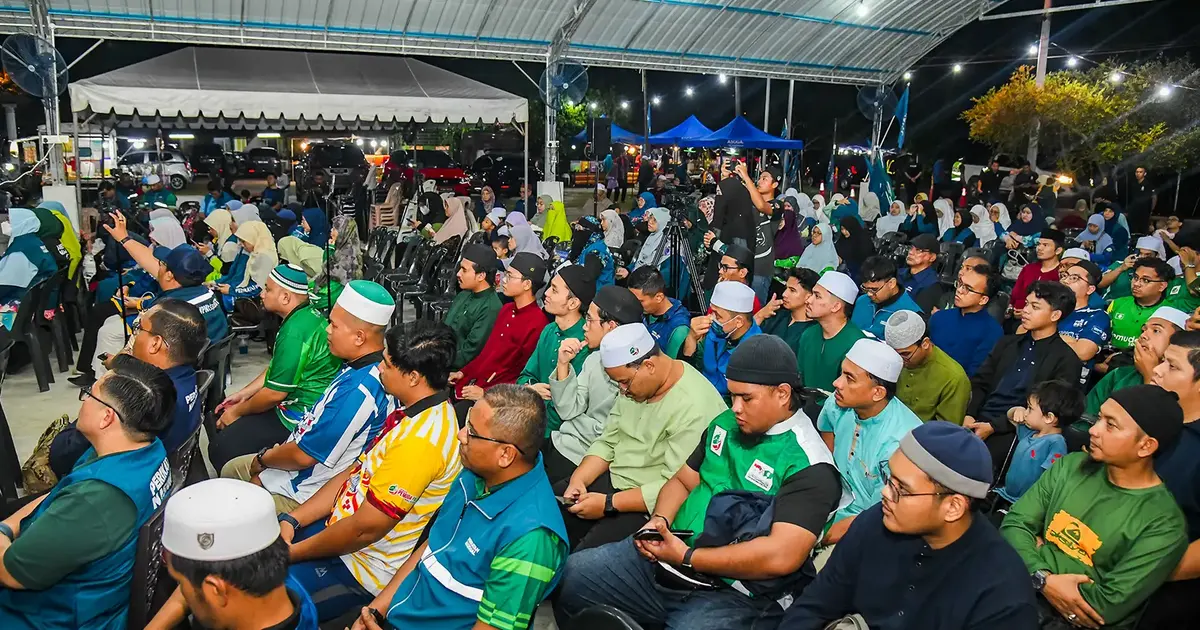
The opposition coalition Perikatan Nasional faces an uncertain future following a significant electoral setback in Johor, with political observers increasingly convinced the bloc's internal fractures will widen into an irreversible rupture. The state-level defeat represents more than a single electoral disappointment; it signals deeper structural weaknesses within an alliance built on uneasy compromises between ideologically divergent partners.
PAS and Bersatu, the two pillars anchoring Perikatan Nasional, operate from fundamentally different political foundations. The Islamic Party brings to the coalition a grassroots network rooted in religious conservatism and Malay-Muslim identity politics, whilst Bersatu draws its support from former UMNO members and those dissatisfied with the governing coalition's direction. This inherent tension between Islamic activism and secular-minded breakaway establishment figures has long simmered beneath the surface of their formal alliance.
Analysts view the Johor outcome as a catalyst that will likely test these bonds beyond their breaking point. The state carries symbolic importance as a Malay-majority stronghold where both parties should theoretically perform well, yet their combined showing fell short of expectations. This disappointment will inevitably trigger recriminations and blame-shifting within coalition leadership, accelerating the process of internal distancing that has already begun.
The timing proves particularly significant given Malaysia's political landscape has grown increasingly fluid since the 2020 general election. Multiple coalitions compete simultaneously for voter attention, while individual politicians maintain flexibility to shift allegiances when electoral winds change direction. A weakened Perikatan Nasional presents tempting opportunities for ambitious figures within both PAS and Bersatu to explore alternative political arrangements that might better serve their ambitions.
For PAS leadership, the electoral disappointment in Johor creates internal pressure to reconsider the partnership's value. The Islamic Party has invested heavily in the coalition's formation and subsequent campaigns, yet continues to see limited returns relative to its organisational strength and grassroots mobilisation capacity. Party strategists may increasingly question whether resources devoted to Perikatan Nasional would generate greater influence if redirected toward independent political positioning or different alliances.
Bersatu faces even more acute challenges within this deteriorating coalition framework. The party, despite controlling the premiership through Muhyiddin Yassin, has struggled to translate national leadership into widespread electoral support. The Johor defeat underscores this disconnect between formal power and popular legitimacy. Bersatu members may begin calculating whether remaining within a failing alliance advances or hinders their medium-term political prospects.
Regional implications extend beyond factional infighting within opposition ranks. Southeast Asian political analysts note that Malaysian coalition dynamics frequently foreshadow trends affecting broader regional stability. A rapidly fragmenting opposition bloc creates space for more consolidation around the incumbent government, potentially intensifying centralisation tendencies that observers have documented across multiple Southeast Asian democracies. This concentration of power, whilst appearing advantageous for ruling parties in the short term, historically generates resentment and competitive pressures that destabilise political systems over longer timeframes.
The Johor loss also reshapes calculations for the next general election, currently scheduled for 2025 or shortly thereafter. Opposition parties must now fundamentally reassess their strategic positioning. Continuing with an obviously deteriorating coalition risks further losses and reduced credibility, yet attempting to rebuild alternative alliances requires time and carries risks of internal party conflict. Neither option proves comfortable for Perikatan Nasional leadership.
International observation of Malaysian politics has intensified given the region's significance for regional security and economic stability. Global investors and diplomatic observers monitor coalition stability closely, as political uncertainty can affect policy consistency and governance quality. The apparent collapse of the opposition's primary organisational structure sends mixed signals regarding political maturity and institutional strength, potentially affecting external perceptions of Malaysian governance reliability.
Within the broader Southeast Asian context, Perikatan Nasional's difficulties reflect broader challenges facing opposition movements across the region. Many have struggled to maintain internal coherence whilst challenging entrenched incumbent governments that control state resources and institutional advantages. The Malaysian case demonstrates how apparently solid alliances built on shared opposition to government can rapidly unravel when electoral disappointments force previously obscured differences to the surface.
Local party analysts increasingly predict that the current Perikatan Nasional configuration will not survive intact through the next general election. Instead, expect a gradual disaggregation where PAS pursues strategies emphasising Islamic mobilisation, Bersatu attempts to rebuild its claim as the authentic voice of UMNO reformism, and smaller coalition members explore repositioning. This fragmentation will likely produce a more fractionalised opposition landscape, potentially benefiting the incumbent government by spreading opposition resources across competing rather than coordinated frameworks.
The Johor election thus represents not an isolated event but rather a critical inflection point marking the beginning of Perikatan Nasional's dissolution. Political dynamics in Malaysia have entered a new phase where electoral performance directly translates into accelerated coalition breakdown, fundamentally altering the opposition's capacity to mount effective challenges in upcoming contests.

