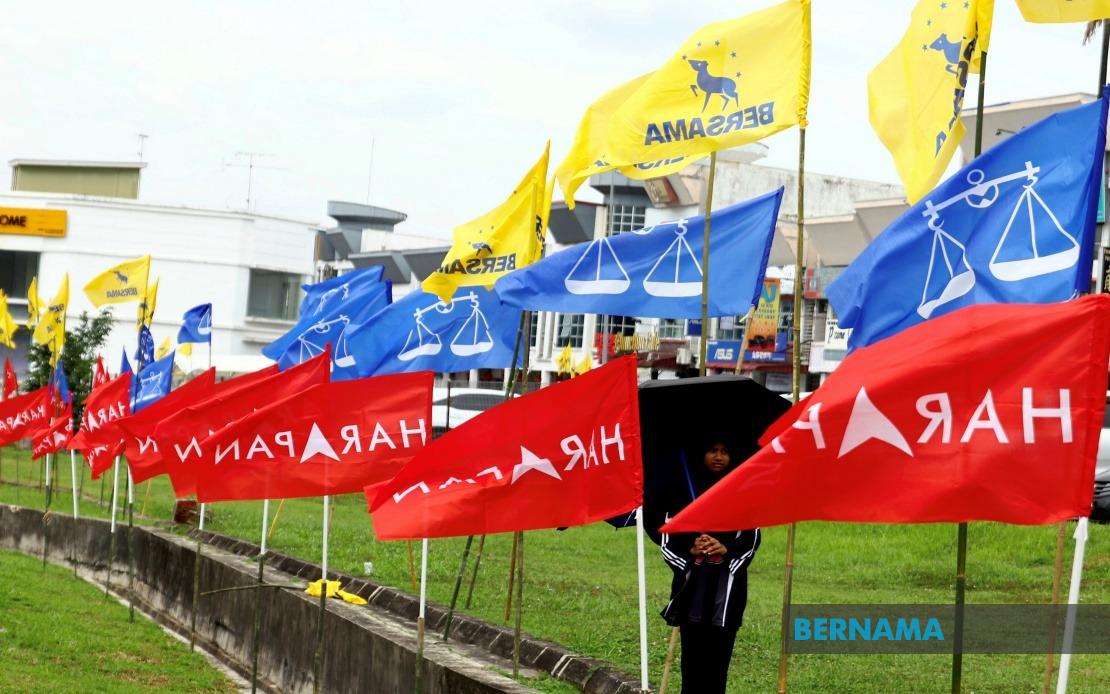
The curtains are drawing on a fortnight of intensive electioneering in Johor as all campaigning activities, whether traditional ground operations or digital outreach, must cease by 11.59 pm tonight. Come dawn tomorrow, the machinery of democracy shifts into gear, with 1,076 polling centres across the state opening their doors at 8 am to receive ballots from a potential 2.7 million eligible voters. These voters will determine which of 172 candidates secures one of 56 state assembly seats, a notably leaner field than the 239 contenders who vied in the previous election held in 2022.
The formal campaign trail commenced on June 27, giving political coalitions a two-week window to articulate their vision and policy platforms. During this period, Pakatan Harapan, Barisan Nasional, Perikatan Nasional and other parties have centred their messaging on bread-and-butter concerns that resonate most deeply with ordinary Malaysians—the rising cost of living, pathways to economic revitalisation, employment opportunities and bolstering social welfare provisions. The final rallies last night underscored the stakes, with Prime Minister Datuk Seri Anwar Ibrahim leading Pakatan Harapan's charge while Deputy Prime Minister Datuk Seri Dr Ahmad Zahid Hamidi anchored Barisan Nasional's concluding push.
Election authorities anticipate that complete results will materialise by 10 pm tomorrow evening, provided counting proceeds smoothly across the state. An earlier phase of the electoral process already concluded last Tuesday, when approximately 20,607 members of the Malaysian Armed Forces, Royal Malaysia Police, General Operations Force and their family members cast early votes—a mechanism designed to accommodate those whose duties prevent them from voting on the scheduled election day.
Political scientists have begun parsing the tea leaves of this contest, with Dr Nazreena Mohammed Yasin from Universiti Tun Hussein Onn Malaysia identifying voter turnout as perhaps the most revealing bellwether of campaign success. However, she cautions against applying uniform interpretations across the state's electoral geography. Turnout effects remain constituency-specific, influenced by local demographics and organisational capacity; an elevated turnout in one district might prove decisive for a particular coalition, whilst producing negligible impact elsewhere. Consequently, observers should regard turnout as a variable that could reshape outcomes in competitive seats rather than as a predictor of outright victory for any single political force.
The 2022 election witnessed a 54.92 per cent turnout—a figure that offers a potential benchmark against which tomorrow's participation rates might be measured. Dr Nazreena emphasises that the granular mechanics of campaign organisation will prove equally consequential, particularly where contests remain fiercely contested. Party machinery effectiveness in mobilising their base and executing polling day logistics could ultimately tip the balance in marginal constituencies where winning margins remain razor-thin. She further underscores the outsized influence of fence-sitters and undecided voters whose last-minute calculations could reverse seemingly settled races in closely-divided seats.
Beyond individual constituency results, the magnitude of victory margins themselves will supply valuable insights into the trajectory of political support. Expanded margins might signal strengthening party allegiance, whilst narrower victories could indicate erosion of previously solid support bases or voter migration between competing coalitions. These nuances matter enormously for understanding not merely who wins, but the depth and breadth of that victory.
Dr Nazreena situates electoral outcomes within a broader interpretive framework encompassing public confidence in governmental performance, candidate credibility, the stability of political institutions and each coalition's demonstrated capacity to grapple with contemporary economic pressures. These factors collectively determine whether voters view incumbent stewardship favourably or seek alternative leadership.
Associate Professor Dr Mazlan Ali from Universiti Teknologi Malaysia observes that this election cycle has witnessed both major coalitions emphasise political stability as their paramount campaign theme. Both Barisan Nasional and Pakatan Harapan have leveraged their respective track records at federal and state levels, positioning themselves within the broader Unity Government framework as evidence of their governing competence. The emphasis on stability reflects recognition that Malaysian voters increasingly evaluate parties through the prism of their actual administrative achievements rather than abstract electoral promises.
Dr Mazlan contends that whilst manifestos and pledges proliferate during campaign season, voters increasingly calibrate their choices based on historical performance and tangible delivery on prior commitments. This represents a maturation of electoral behaviour, whereby rhetoric matters less than demonstrated results. He anticipates that heightened public engagement with this particular election will translate into elevated participation rates, thereby rendering each individual vote correspondingly more influential in determining Johor's direction.
The candidate distribution across competing coalitions reveals the landscape confronting voters. Barisan Nasional and Pakatan Harapan each field 56 candidates across the 56 seats, effectively contesting every single constituency. Perikatan Nasional presents 33 candidates, whilst Parti Bersama Malaysia fields 15. Smaller players including Muda with four candidates, Parti Orang Asli Malaysia, Parti Sosialis Malaysia and six independent candidates complete the slate. Before the state assembly's dissolution on June 1, Barisan Nasional held commanding control with 40 seats, Pakatan Harapan controlled 12, Perikatan Nasional held three and Muda occupied one seat.
The compositional shift from 239 candidates in 2022 to 172 tomorrow reflects strategic recalibration by parties, potentially indicating consolidation around stronger candidacies or calculation of electability prospects. This reduction may also signal lessons learned from the previous contest regarding resource deployment and focus. For Malaysian voters and regional observers, tomorrow's result in Johor carries implications extending beyond the state's boundaries, influencing calculations about federal stability and coalition dynamics at the national level.

