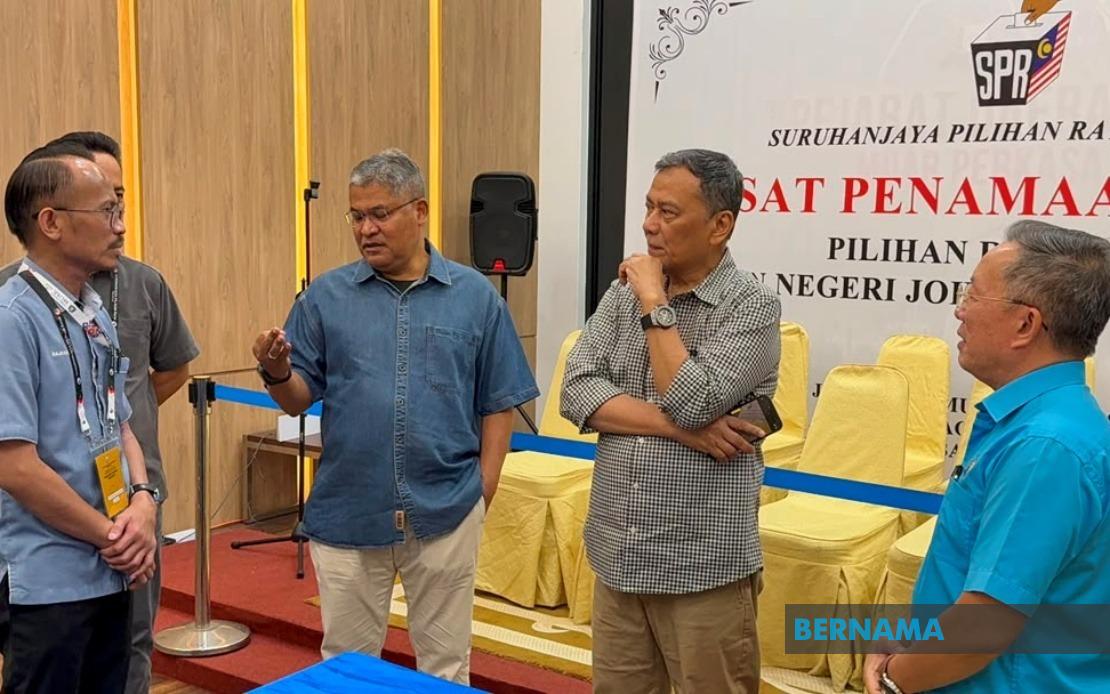
The Election Commission is in its final stages of readiness for tomorrow's nomination process in the Johor state election, with officials confirming that all 56 designated Candidate Nomination Centres across the state have undergone comprehensive checks. Recent visits to several centres reveal that technical preparations are substantially complete, with returning officers expressing confidence that the process will proceed without disruption. This follows the dissolution of the Johor State Legislative Assembly on June 1, setting in motion a carefully orchestrated electoral calendar that will culminate in polling day on July 11.
At the Perling state constituency nomination centre located at Dewan Jubli Intan Hall in Johor Bahru, returning officer Nazatul Shima Mohamad indicated that venue layouts have been finalised and simulation exercises with all participating agencies have been concluded. The level of preparation reflects the Commission's experience in managing similar exercises, though state elections remain administratively complex undertakings requiring coordination across multiple government bodies and constituencies. Mohamad's statement that preparations are "100 per cent ready" suggests confidence grounded in completed logistics rather than mere optimism, though such claims are typically made in the days preceding major electoral events.
Prospective candidates have been advised to arrive early at their designated centres, bringing the necessary documentation and deposit money to avoid delays during the nomination process scheduled between 9 and 10 am. The compressed timeframe for accepting nominations—a single two-hour window—places considerable pressure on centre staff and candidates alike, requiring efficient processing to accommodate potentially hundreds of nomination submissions. The returning officers have made clear their readiness to provide assistance, though the success of this endeavour will ultimately depend on candidate compliance and preparation prior to arrival.
Security arrangements at the Kota Iskandar nomination centre at Iskandar Puteri City Council's Main Hall in Medini illustrate the extensive groundwork required to manage the anticipated convergence of candidates, their supporters, and media personnel. Returning officer Shahrulizam Abdul Rashid outlined a comprehensive security framework that includes police cooperation, targeted road closures around the nomination venue, and carefully delineated zones for candidate supporters. A 50-metre restriction zone has been established to maintain distance between the nomination centre proper and supporter gathering areas, with temporary structures including tents and physical barriers deployed to segregate supporters of competing parties.
These security protocols reflect genuine concerns about potential confrontations during nomination processes, when competing political camps converge in confined spaces. The risk of tension escalates in hotly contested elections where multiple parties harbour realistic hopes of victory, or where closely contested constituencies generate intense grassroots enthusiasm. By establishing physical separation and implementing advance planning with law enforcement agencies, the Commission seeks to prevent incidents that could undermine public confidence in the electoral process or trigger undesirable precedents for subsequent nominations and polling day itself.
Public advisories emphasise the importance of prudent conduct among supporters attending the nomination centres. Political parties are being called upon to ensure their supporters maintain decorum and refrain from provocative behaviour toward rival camps. This appeal reflects Malaysia's experience with politically charged elections, where occasional incidents of confrontation or inflammatory conduct can spiral rapidly given the presence of multiple competing groups in close proximity. The Commission's emphasis on mutual respect and restraint suggests awareness of the delicate balance required to manage the intersection of legitimate political expression and public order.
The electoral stakes in Johor are nationally significant, as the state represents one of Malaysia's largest concentrations of registered voters. The current election involves 2,727,926 registered voters, comprising 2,703,175 ordinary voters alongside 12,041 military personnel and their spouses, and 12,710 police personnel and spouses. This voting population distributes across the state's constituencies, each of which will conduct its own nomination process simultaneously across the various designated centres. The logistical challenge of processing this volume of electors across multiple constituencies underscores why the Commission has invested substantial effort in advance preparations.
The election calendar established by the Commission provides clear staging posts for all subsequent electoral activities. Following tomorrow's nominations, the Commission will announce officially which candidates have been accepted for each seat, determine whether any constituencies will face uncontested returns, and subsequently manage early voting on July 7 before the main polling day on July 11. This compressed timeline—less than three weeks from nomination to polling—is relatively ambitious by Malaysian standards and requires near-flawless execution by electoral officials to accommodate all required procedures.
For Malaysian political observers and voters alike, the nomination process typically generates early indicators about contest dynamics. The identities of declared candidates, the emergence of unexpected or surprise nominations, and the overall competitiveness of specific seats all become apparent once the returning officers have processed all submissions and published final candidate lists. Johor's electoral significance within Malaysia's broader political landscape means that these early signals often receive substantial attention from national media and political analysts seeking to interpret shifts in voter sentiment or intra-party positioning.
The extensive coordination between the Election Commission, police, local authorities, and participating political parties evident in these final preparations demonstrates the institutionalised nature of Malaysian electoral management. Despite periodic criticism of specific policies or decisions, the Commission's logistical capacity and commitment to orderly processes commands broad respect. The readiness of nomination centre staff to assist candidates, coupled with comprehensive security planning and public advisory messaging, reflects a system that has managed numerous elections and has codified lessons learned through experience into standard operating procedures.

