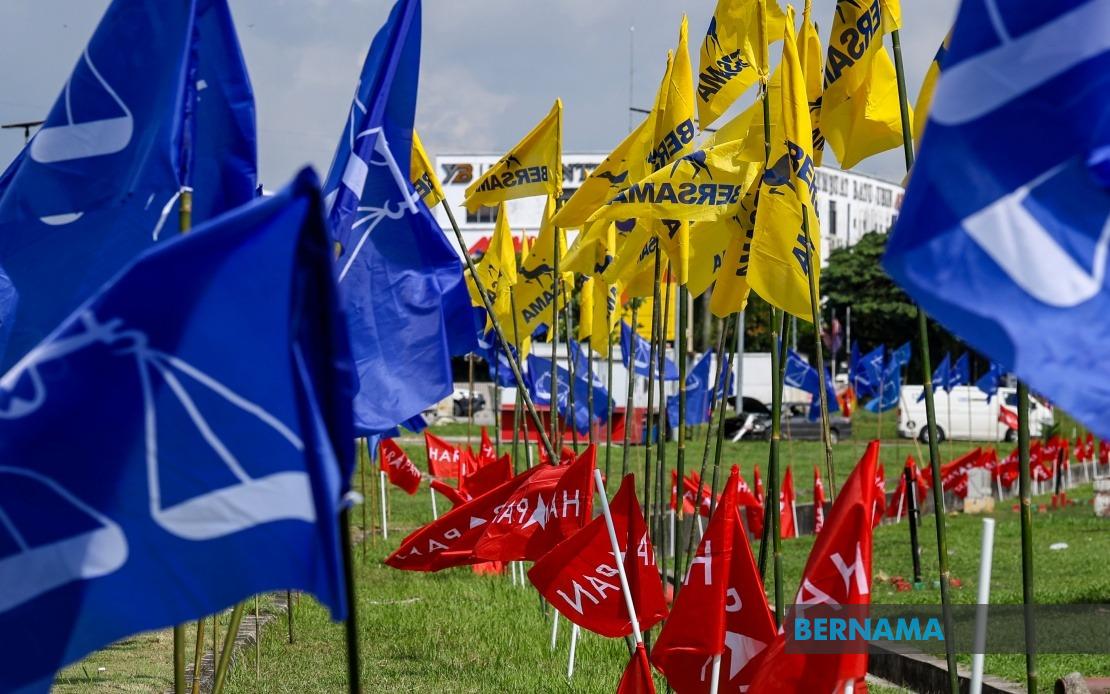
The initial phase of campaigning for Johor's 16th state election has unfolded with measured intensity, as political parties across the spectrum have deliberately chosen to prioritise direct, personalised voter engagement over the traditional spectacle of mass gatherings. This strategic recalibration reflects a fundamental shift in how modern Malaysian electoral campaigns operate, with candidates and party machinery focusing their efforts on house visits, intimate community discussions, and small-group meetings rather than the stage-dominated rallies of yesteryear.
According to political analysts assessing the campaign landscape, this methodological choice is deliberate and calculated. Prof Datuk Dr Sivamurugan Pandian, a Senior Lecturer in Political Sociology at Universiti Sains Malaysia, characterises the initial campaign week as foundational groundwork designed to establish campaign infrastructure and build personal connections with constituents. The targeted approach offers candidates tangible advantages, particularly in understanding voter concerns and strengthening party organisational capacity before the campaign enters more intensive phases. These early interactions provide invaluable intelligence about local sentiment and voter priorities that can shape subsequent messaging strategies.
The strategic wisdom underlying this approach becomes clearer when considering resource allocation and campaign momentum. Rather than expending considerable financial and logistical resources on early large rallies when voter attention may still be diffuse, parties are conserving ammunition for what analysts expect to become a more heated second campaign phase. Senior political leaders have largely remained in holding patterns during this opening week, with their deployment timed for maximum impact once the electorate's focus sharpens. The move reflects modern political sophistication—recognising that the first week's purpose is foundational rather than climactic.
Contemporary election campaigns have increasingly become data-driven exercises where demographic analysis and voter profiling guide resource deployment. Dr Azmi Hassan, a geostrategist at the Nusantara Academy for Strategic Research, observes that campaign teams now employ hybrid strategies that integrate traditional ground mobilisation with sophisticated digital targeting. The categorisation of voters into distinct groups—supporters, undecided voters, and opposition sympathisers—allows campaigns to tailor messaging with unprecedented precision. This represents a fundamental departure from earlier eras when campaigns operated on a one-size-fits-all basis, broadcasting identical messages regardless of audience composition.
Despite this refined tactical approach, campaign narratives have so far remained relatively generic across competing coalitions. Three overarching themes have dominated initial messaging: references to parties' track records in governance, promises regarding future policy delivery, and claims about which coalition can best guarantee political stability. However, according to Mujibu Abd Muis, a political science lecturer at Universiti Teknologi MARA, these narrative frameworks have not yet coalesced into a sufficiently powerful theme to fundamentally reshape the campaign environment. The distinction between what parties say and what resonates with voters remains substantial—merely articulating accomplishments or making pledges does not guarantee electoral traction.
The critical question for campaign narratives, Mujibu emphasises, centres on their capacity to connect with voters' material lived experiences. Campaign messaging only gains decisive influence when abstract promises translate into concrete concerns dominating voters' daily calculations: the spiralling cost of living, employment security, local infrastructure development, and the quality of public services. A narrative about fiscal responsibility, for instance, only becomes electorally powerful if voters perceive direct personal relevance to their household budgets. The absence of such resonance explains why—despite sustained campaign activity—no dominant narrative has emerged to fundamentally alter the electoral landscape.
Geographic patterns in initial campaign deployment reveal sophisticated strategic thinking about constituency competitiveness. Northern Johor districts including Muar, Tangkak, Segamat, portions of Batu Pahat, and Kluang have received disproportionate campaign attention during the opening week. This concentration is not arbitrary; analysts interpret it as evidence that parties are prioritising areas expected to be closely contested or potentially decisive in determining overall electoral outcomes. The presence of national party leaders in these constituencies signals their strategic significance rather than merely seeking crowd attention. Parties are essentially announcing through their resource allocation which battles they deem crucial and where electoral outcomes remain genuinely uncertain.
The broader electoral geography reflects deeper coalitional strengths and projected regional performance patterns. Pakatan Harapan is understood to maintain stronger organisational presence and voter sympathy in southern and western Johor regions, while Barisan Nasional's traditional strongholds lie in eastern coastal districts, particularly Mersing and Kota Tinggi. This geographical polarisation influences how each coalition deploys its campaign machinery, with parties concentrating resources in regions where outcomes remain genuinely competitive. Areas where one coalition possesses commanding structural advantages receive relatively less attention—a rational allocation strategy given finite campaign resources.
Associate Professor Dr Mazlan Ali, Director of the Faculty of Social Sciences and Humanities at Universiti Teknologi Malaysia, characterises Johor's electoral contest as fundamentally structured around competition between these two primary coalitions. This binary framing simplifies the campaign landscape and influences how voters perceive their choices. While smaller parties and independent candidates do contest some seats, the overarching narrative presents the election as primarily determining whether Barisan Nasional or Pakatan Harapan secures control. This perception itself shapes campaign dynamics, as parties in each coalition coordinate strategies to present unified fronts and marginalise alternative political options.
A critical variable that all political analysts emphasise is voter turnout, recognising that participation rates can substantially alter final election outcomes. The intensity and effectiveness of voter mobilisation efforts—persuading supporters to actually cast ballots on polling day—may ultimately prove more consequential than the quality of campaign messaging or the number of rallies conducted. This consideration partly explains the emphasis on direct voter contact rather than large rallies; intimate conversations with voters provide opportunities to gauge turnout commitment and identify persuasion targets. Modern campaigns thus incorporate explicitly counted turnout projections alongside traditional polling data when calculating electoral mathematics.
The 16th Johor state election will involve 172 candidates contesting 56 state assembly seats, with polling scheduled for 11 July and early voting available on 7 July. The election's timing during the middle of the year, outside the traditional monsoon or holiday periods, provides relatively standard electoral conditions. With roughly a week remaining between the campaign's opening phase and polling day, campaign intensity is expected to escalate substantially as parties deploy senior leadership and increase digital outreach targeting undecided voters. The first week's measured approach represents strategic patience—conserving energy for more intensive final campaign phases where voter attention is sharpest and persuasion efforts most likely to yield decisive electoral shifts.

