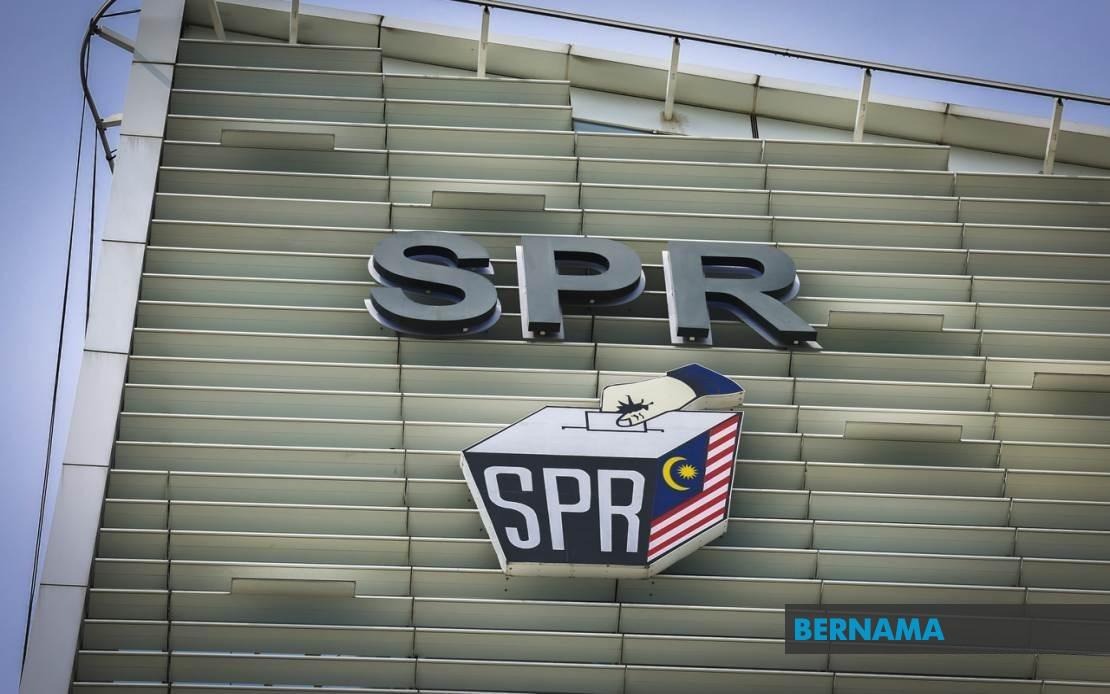
The Election Commission has documented 305 separate complaints related to campaign violations during the Johor State Election, highlighting the intensity of enforcement efforts in the run-up to the July 11 polling day. The infractions, recorded through July 2, reveal the widespread nature of minor breaches across the state, though the EC's rapid response suggests most issues are being addressed before they escalate into serious electoral irregularities.
The most prevalent violation involves campaign materials placed in restricted zones designated by local councils, accounting for 140 of the total complaints. This suggests that while political parties and candidates understand the general prohibition on campaign materials in certain areas, confusion or deliberate non-compliance regarding specific boundaries remains a significant enforcement challenge. Such restrictions typically protect residential neighbourhoods, religious institutions, and government offices from becoming saturated with election signage.
A further 90 complaints stemmed from campaign materials that obstruct drivers' sightlines or create traffic hazards. This category reveals the practical tension between candidates' desire for high-visibility placements and public safety regulations. Banners and posters affixed to traffic poles, building ledges, or road medians can genuinely impede road users' vision, and the EC's strict enforcement of this rule underscores the commission's commitment to ensuring elections do not compromise public welfare. The concentration of such violations suggests more intensive monitoring along major thoroughfares where campaign activity naturally intensifies.
Twenty-seven cases involved materials placed within the prohibited 50-metre perimeter around polling stations. This boundary is particularly sensitive during elections, as it is designed to ensure that voters can approach voting locations without encountering persuasive political messaging in the final stages of their decision-making. Breaches in this zone are treated seriously because they directly implicate the integrity of the voting environment itself. The relatively lower number of such violations indicates that most candidates and parties understand this restriction's importance.
The remaining 48 complaints encompass diverse offences under the Election Offences Act 1954, including potential infractions related to campaign finance, false advertising claims, or other regulatory breaches. These miscellaneous cases likely require more detailed investigation than simple material removal, explaining why they fall into a separate category despite being fewer in number.
The EC established 56 dedicated Election Campaign Enforcement Teams, known as PP-KPR, distributed throughout Johor to manage compliance across the state's 56 contested seats. This deployment reflects the EC's determination to maintain order during the campaign period, which runs from the June 27 nomination day through the July 10 campaign deadline. The existence of such focused enforcement machinery demonstrates that Malaysia's electoral apparatus takes campaign regulation seriously, particularly in state-level contests that determine local governance.
Coordination between multiple agencies demonstrates the integrated approach to election integrity. The Royal Malaysia Police provide physical enforcement capacity, the Malaysian Anti-Corruption Commission scrutinizes financial aspects of campaigns, and the Malaysian Communications and Multimedia Commission monitors digital and broadcast messaging. This multi-agency framework reduces the likelihood that candidates can exploit gaps between different regulatory domains. For Malaysian voters, such coordination suggests that the electoral process operates under genuine oversight rather than symbolic governance.
The Johor State Election itself represents a significant democratic exercise, with 172 candidates competing for 56 state assembly seats. Early voting on July 7 precedes general polling on July 11, providing flexibility for voters who may be unavailable on the primary election day. The state's importance within Malaysia's political landscape—Johor being the second-largest state by population and economically significant—means that strong turnout and orderly conduct reflect positively on the nation's democratic maturity.
The EC's public statement reiterating its commitment to fair, transparent, and credible elections carries particular weight given regional concerns about electoral integrity. Southeast Asia has witnessed numerous elections complicated by campaign violations, intimidation, and regulatory capture. Malaysia's relatively robust enforcement apparatus, evident in the rapid logging and processing of 305 complaints within the first two weeks of campaigning, suggests that the country's electoral institutions retain meaningful independence and investigative capacity.
The commission's emphasis on candidate and party compliance with established codes of ethics signals that elections function within frameworks understood and, in most cases, accepted by political contestants. Non-compliance complaints, rather than spawning confrontation, typically result in swift corrective action. This incremental enforcement approach often proves more effective than heavy-handed intervention, as it establishes consistent expectations without creating perceptions of bias.
For Malaysian stakeholders observing Johor's election, the complaint data offers reassurance that regulatory mechanisms are functioning. The high number of reports might initially appear concerning, but it instead indicates active monitoring and willing complaints from the public or opposing parties. In electoral contexts where enforcement is weak, violations go unrecorded and uncorrected. The EC's transparent acknowledgment of 305 complaints and its attribution of each to specific violation categories demonstrates accountability.
Moving forward into the final days of campaigning, the EC's sustained emphasis on compliance will likely continue producing complaint reports. The July 10 deadline approaches, and parties may accelerate their visibility efforts, inadvertently triggering additional enforcement responses. However, the established pattern of swift follow-up action suggests the election can proceed without major disruptions stemming from campaign regulation failures. Johor's voters will approach polling stations on July 11 amid an electoral environment shaped by functional, if occasionally imperfect, enforcement of campaign rules.

