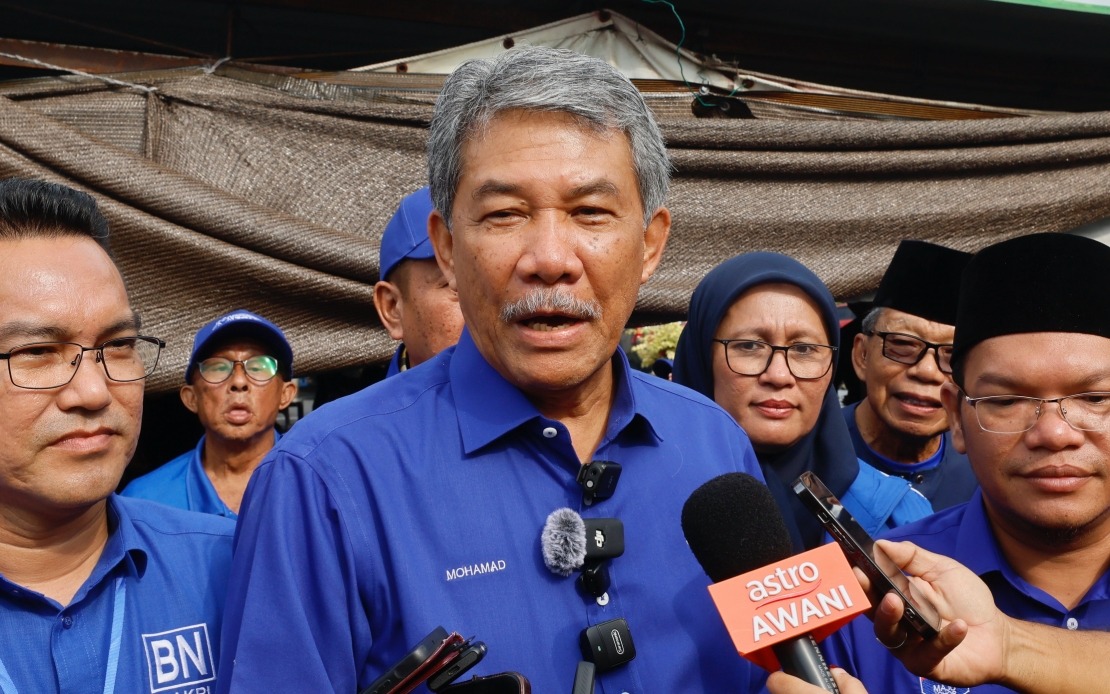
As Johor enters the final stretch of its state election campaign ahead of polling day on July 11, the country's second-largest political party is urging all contesting parties to keep their competition focused on policy rather than personal grievances. Datuk Seri Mohamad Hasan, UMNO's deputy president and Malaysia's Foreign Minister, has issued a call for restraint that reflects growing concerns about how regional electoral contests could disrupt the delicate balance of the federal Unity Government arrangement.
Mohamad's remarks, delivered during a campaign engagement with Tiram constituency voters in Johor Bahru, underscore a recurring tension in Malaysian politics: how to conduct spirited competition at state level while maintaining productive cooperation at the national government table. The Unity Government, formed following the 2022 general election, brings together parties across the political spectrum—a coalition that requires careful management to prevent electoral campaigns from becoming flashpoints that threaten the broader arrangement.
The UMNO leader drew a distinction between acceptable campaign rhetoric and what crosses the line into counterproductive personal attacks. He acknowledged that political parties naturally engage in friendly criticism and even mutual ribbing during campaigns, framing this as a normal aspect of democratic competition. However, he cautioned against allowing such exchanges to escalate into attacks that target individuals rather than ideas, arguing that such behaviour undermines the maturity expected of parties responsible for governing.
Mohamad's emphasis on preserving cooperative relations at the federal level reveals an important consideration often overlooked in analyses of state elections. While Johor's contest is primarily about forming a state government, the victory could reshape coalition dynamics in parliament, where the federal government depends on maintaining working relationships across party lines. Any campaign that badly sours relationships between coalition partners could complicate the government's legislative agenda and stability, potentially affecting policies from defence to economic management.
The Foreign Minister also directly addressed speculation linking the Johor election to efforts to secure a pardon for former Prime Minister Datuk Seri Najib Tun Razak, whose conviction for corruption remains a lightning rod in Malaysian politics. Mohamad dismissed such allegations as baseless, clarifying that no state government possesses the authority to alter Najib's legal status. He emphasised Malaysia's commitment to the rule of law and UMNO's respect for constitutional processes, particularly regarding the Yang di-Pertuan Agong's prerogative power to grant pardons.
This clarification carries weight because the Najib question has shadowed Malaysian politics since his removal from office in 2018. For critics of UMNO and its allies, any shift in the party's electoral fortunes is scrutinised for signs of a hidden agenda related to Najib's rehabilitation. By explicitly distinguishing between state-level governance and federal powers of pardon, Mohamad attempted to separate the Johor election from speculation that UMNO might use any electoral victory to advance Najib's interests through back channels.
The constitutional point Mohamad raised is worth examining further, as it reflects a broader principle of Malaysian governance. The authority to grant a pardon rests exclusively with the Yang di-Pertuan Agong, a power that cannot be delegated or undermined by any state or federal executive. This separation of powers exists precisely to prevent elected officials from using their political leverage to overturn judicial decisions, preserving the independence of the judiciary. Mohamad's insistence on respecting this principle, while perhaps obvious in theory, becomes relevant when powerful figures have political incentives to circumvent it.
The Johor state election itself represents a significant electoral test. With 172 candidates contesting 56 seats in the State Legislative Assembly, and early voting scheduled to begin immediately after Mohamad's address, the campaign has entered its critical final phase. The outcome will influence not only Johor's state administration but also the composition of Johor's delegation in parliament and the party dynamics within the Unity Government.
Mohamad's appeal for campaign propriety also reflects practical concerns about governance during election periods. Elections can distract state and federal officials from their administrative duties, and protracted disputes between coalition partners could further erode efficiency. By urging all parties to keep the campaign focused on policy platforms and development plans rather than personal controversies, the UMNO leader was implicitly advocating for a campaign that allows the government to continue functioning effectively.
For Malaysian voters and observers, Mohamad's message encapsulates a broader challenge facing coalitional government in Malaysia. The Unity Government model, while necessitated by election results, requires participating parties to balance their individual electoral interests against their collective responsibility for national governance. State elections test this balance, as parties compete vigorously for control at regional level while needing to maintain functional relationships at the federal centre.
The timing of Mohamad's intervention also matters. With polling just days away, his call for maturity serves partly as a reality check for campaign strategists who might be tempted to escalate rhetoric in pursuit of victory. It signals that UMNO, as a major coalition partner, values maintaining the Unity Government over extracting short-term campaign advantages through divisive messaging.
Looking forward, the Johor election outcome will offer insights into whether regional electoral contests can be conducted under the restraint guidelines Mohamad has articulated, or whether the pressures of competition inevitably overwhelm such appeals. The test will extend beyond July 11, as the post-election period typically sees negotiations over state government formation, presenting further opportunities for either cooperation or conflict among the contesting parties and their federal allies.

