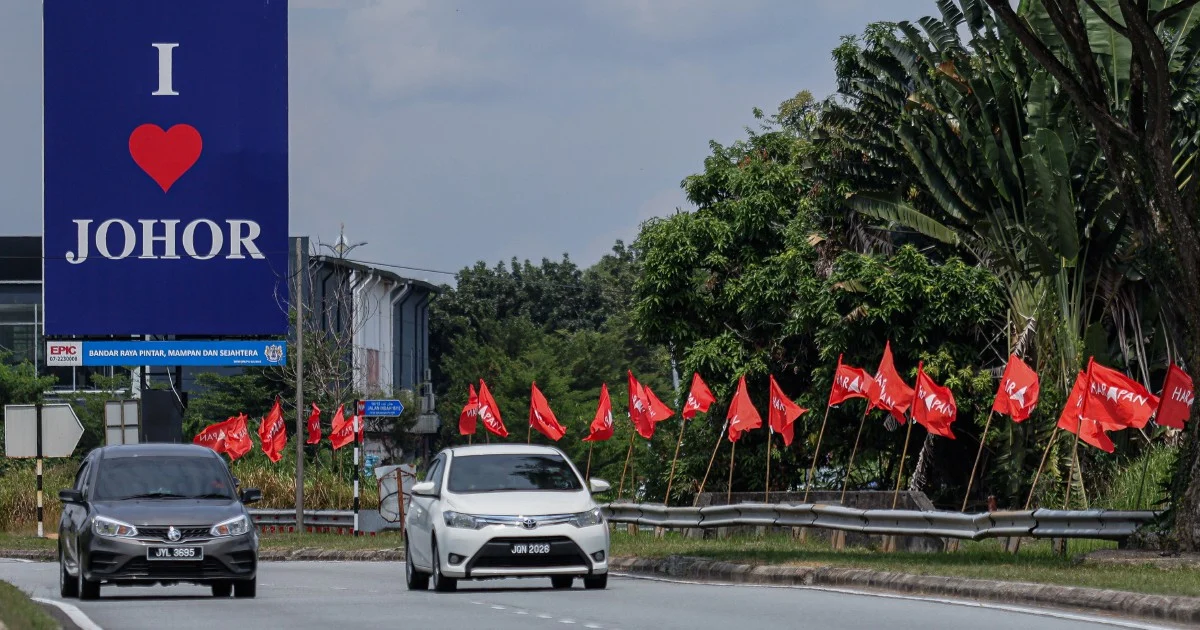
The Johor state election represents far more than a straightforward competition to determine who will occupy the menteri besar's office, according to a prominent figure in PKR's youth movement. Speaking in Johor Baru, the party representative argued that voters ought to assess the broader capabilities of political coalitions competing for control of the state, moving beyond the conventional focus on individual leadership candidates.
This perspective reflects a strategic reframing of how opposition parties hope to contest the upcoming polls. By emphasising collective performance and vision rather than personalised candidate appeal, PKR's youth wing seeks to shift the electoral narrative towards institutional competence and policy substance. The argument suggests that the election outcome should hinge on which political combination possesses superior expertise, organisational depth, and governing philosophy to propel Johor's continued advancement.
The statement carries particular significance in the Malaysian political landscape, where menteri besar elections have historically dominated public discourse. By deliberately downplaying individual candidate prominence, the PKR representative signals a departure from personality-driven politics, potentially reflecting lessons learned from previous state contests where charismatic leaders proved unable to overcome structural weaknesses in their broader team.
For Johor specifically, this framing proves strategically relevant given the state's economic importance to the nation. As Malaysia's southernmost peninsular state, Johor serves as a major industrial and commercial hub, hosting significant manufacturing, petrochemical, and logistics operations. The state's development trajectory directly influences regional growth patterns and employment creation throughout Southeast Asia's broader economic corridor, making governance competence genuinely consequential beyond partisan considerations.
The coalition-focused argument also acknowledges the complex political environment in Johor, where multiple power blocs compete for ascendancy. Rather than allowing voters to base decisions primarily on whether they prefer one personality over another, the PKR youth wing advocates evaluating which coalition demonstrates the strongest integrated team across finance, infrastructure, education, healthcare, and industrial policy portfolios. This approach implicitly acknowledges that individual menteri besar candidates rarely operate in isolation, and state development ultimately reflects their cabinet's combined capabilities.
This messaging strategy may also address latent concerns among certain voter segments regarding governance stability. By emphasising coalition strength and comprehensive planning, opposition parties aim to counter narratives suggesting they lack institutional depth or coherent policy platforms. The emphasis on team capability rather than individual appeal could potentially broaden appeal beyond core party supporters to pragmatic voters prioritising administrative competence and economic performance.
Historically, Johor state elections have demonstrated voter sophistication regarding governance issues. The electorate has previously punished administrations perceived as ineffective regardless of individual leader popularity, suggesting receptiveness to evaluations based on overall coalition performance. The PKR youth leader's framing aligns with this demonstrated voter behaviour, potentially resonating with sections of the electorate concerned primarily with outcomes rather than political theatre.
The opposition's emphasis on coalition-level planning and expertise also reflects structural realities of Malaysian state governance. Constitutional arrangements ensure that menteri besar must command majority support within the legislative assembly, meaning individual leaders cannot unilaterally determine outcomes. Consequently, voters rationally consider not merely who might assume the top position but whether the broader coalition coalition possesses sufficient talent and experience to maintain functional government. The PKR representative's remarks essentially validate this rational voter calculus.
Looking toward the election campaign itself, this rhetorical approach suggests opposition parties intend to campaign heavily on policy specifics and institutional capacity rather than relying solely on candidate charisma or negative attacks on incumbent leadership. Such campaigns demand greater intellectual rigour from both political parties and media coverage, potentially elevating public discourse beyond celebrity-politics tendencies that periodically dominate Malaysian elections.
For Johor voters, this reframing offers intellectual permission to base electoral choices on substantive considerations regarding economic management, infrastructure development, and social policy rather than personality preferences. Given the state's role in Malaysia's broader economic architecture, treatment of Johor politics as fundamentally about coalition governance capability rather than menteri besar personality genuinely serves public interest in effective administration.

