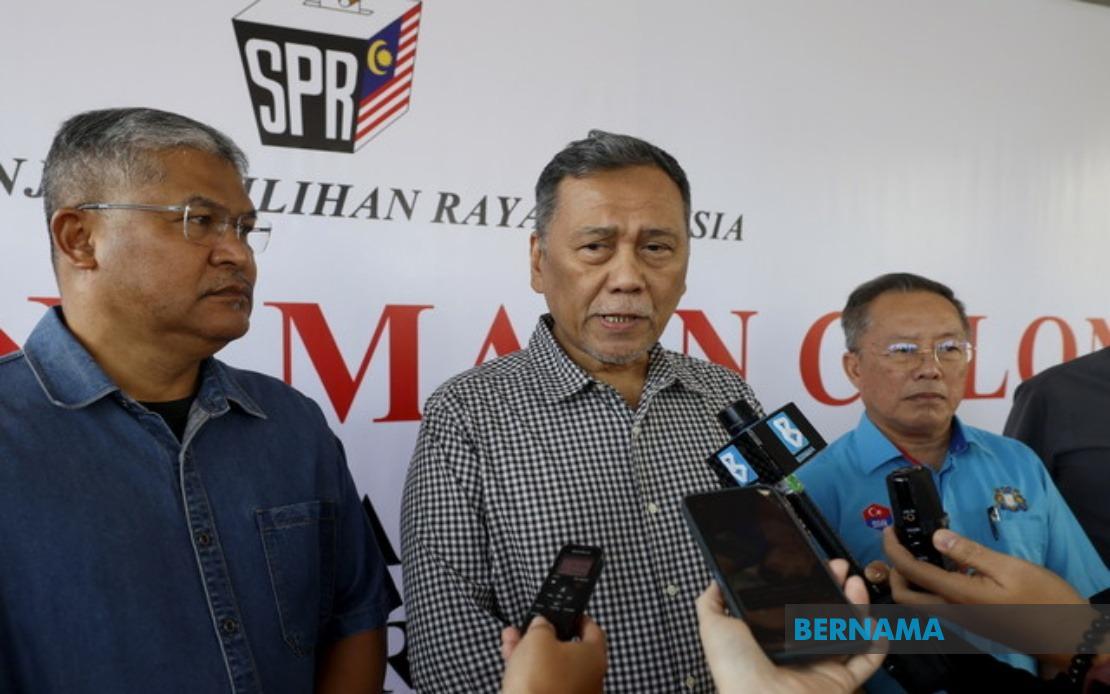
With nomination day for the Johor state election set to begin on June 27, the Election Commission reported that 593 nomination forms have been distributed across the state, though only 133 candidates had secured their places by making the mandatory deposit payment. Election Commission chairman Datuk Seri Ramlan Harun indicated that participation figures would likely climb further in the coming hours, as the nomination window remained open until the official commencement of the process the following morning. The lag between forms purchased and confirmed candidacies suggests either logistical delays in the deposit submission process or strategic waiting by potential candidates seeking clarity on their party's final endorsements before committing financially.
Ramlan's remarks after touring the Maharani nomination centre in Muar underscored the commission's confidence that infrastructure and personnel were primed for a smooth operation. The EC had conducted two consecutive days of preparatory dry runs across all 56 nomination centres dispersed throughout Johor, reflecting institutional prudence ahead of an exercise that typically attracts competing interests and heightened political activity. By emphasising that prospective candidates still had time to complete formalities, Ramlan appeared to be managing expectations while gently encouraging late registrations to accelerate their paperwork, presumably to prevent logistical congestion during the final hours before nominations closed.
Security considerations loomed large in the commission's planning. Zainal Eran, the returning officer for Maharani, outlined protocols designed to compartmentalise supporters and minimise friction between rival political factions during the nomination submission process. The restriction limiting centre access to each candidate, their proposer, and a single supporter reflected a careful calibration between democratic inclusivity and crowd management. The decision to corral additional supporters in barriered outdoor zones demonstrated an institutional acknowledgment that nomination day, while formally ceremonial, invariably carries symbolic weight for grassroots party workers and can generate spontaneous confrontations if left unstructured.
The composition of competing slates revealed the complex factional landscape of contemporary Malaysian politics. Pakatan Harapan had committed to fielding the full complement of 56 candidates, distributed among PKR, Amanah, and DAP in proportions that reflected their broader coalition dynamics. This total commitment signalled confidence and indicated that the opposition coalition viewed the contest as a genuine opportunity for territorial gains in the peninsula's economically significant southern state. Barisan Nasional similarly pledged to contest every seat, with UMNO carrying the preponderance of candidates, supplemented by longstanding coalition partners MCA and MIC in historically designated allocations.
Perikatan Nasional's strategy diverged markedly, advancing a more selective approach that distributed candidacies across its constituent parties according to perceived local strengths and factional arrangements. PAS, the Islamist party central to Perikatan's identity, would contest eleven seats, whilst Bersatu claimed sixteen positions—an allocation suggesting the coalition's confidence in particular constituencies or Bersatu's improved standing within the alliance structure. The Malaysian Indian People's Party received five slots and Pejuang, the personal vehicle of former prime minister Mahathir Mohamad, secured a single seat, reflecting its diminished but persistent presence within the broader Perikatan coalition.
Beyond the traditional three-cornered contest, fringe players sought to expand their electoral footprint. The Malaysian United Democratic Alliance announced participation in four constituencies, whilst Parti Sosialis Malaysia fielded a lone candidate—a typical gesture of symbolic presence from longstanding ideological parties lacking mass organisational capacity. Most notably, Parti Bersama Malaysia prepared for its inaugural state electoral contest by fielding fifteen candidates, suggesting either newly mobilised resources or a strategic decision to test market reception in a setting perceived as more winnable than federal contests.
The electoral timetable compressed campaign activities into a narrow window. With nomination day on June 27, early voting scheduled for July 7, and polling day fixed for July 11, candidates faced intense time constraints for grassroots mobilisation and media outreach. This accelerated calendar, typical of snap elections following legislative dissolution, advantages better-resourced parties with established ground machinery while disadvantaging smaller formations attempting to build electoral presence from scratch. For Parti Bersama Malaysia especially, the compressed timeline posed formidable challenges in building recognition among voters unfamiliar with its platform or organisational capacity.
The dissolution of the Johor State Legislative Assembly on June 1 had triggered this electoral cycle, itself reflective of shifting political alignments within the state's ruling class. Johor has traditionally served as a testing ground for broader Malaysian political trends, and this contest would provide early indicators of voter sentiment ahead of potential federal-level contests. The state's economic importance, coupled with its role as a demographic swing region, invested the election with significance extending beyond merely provincial concerns. Results could influence calculations within coalition formations at the national level regarding future partnership architectures and ministerial distributions.
For regional observers monitoring the Southeast Asian political landscape, the Johor election offered a lens through which to assess the durability of Malaysian coalition politics and voter appetite for alternatives to both major blocs. The distribution of candidacies revealed parties' confidence assessments regarding particular constituencies and their broader strategic positioning within fluid political alignments. The subsequent weeks would demonstrate whether the nomination numbers ultimately increased closer to the deadline and which smaller formations could translate candidacy announcements into genuine competitive contests rather than symbolic participatory gestures.

