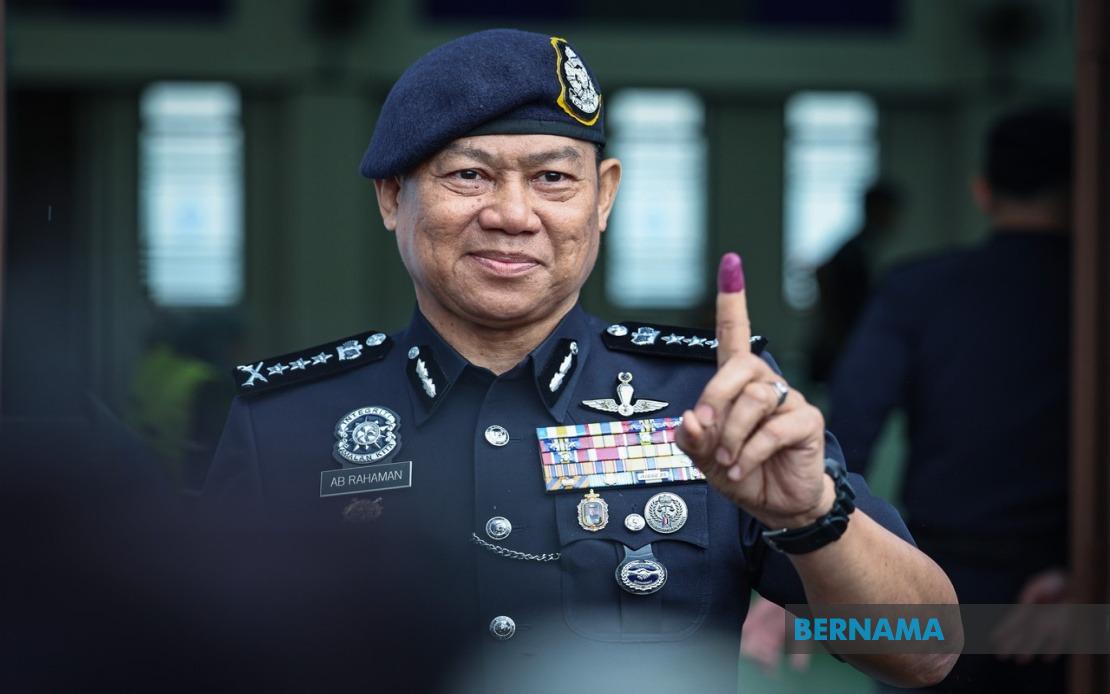
The 16th Johor state election got under way with a promising start as members of the security forces participated in an early voting exercise on July 7, with police turnout reaching 36.3 per cent by mid-morning. Across all 53 early voting centres spread throughout the state, a total of 4,257 police personnel had already submitted their ballots by 10.30 am, suggesting steady engagement with the electoral process ahead of the main polling day scheduled for Saturday. This measured participation rate among uniformed personnel reflects organisational preparations that had been put in place to facilitate voting for those who could not attend on election day itself.
Johor police chief Datuk Ab Rahaman Arsad observed the proceedings at the Johor Police Contingent Headquarters and reported that the administration of early voting remained orderly throughout the morning. Both police personnel and members of the Malaysian Armed Forces were granted the opportunity to vote at designated centres, forming part of the state's broader electoral framework. According to the Johor police chief, the process unfolded without complications, and no security concerns or procedural breaches had surfaced at any of the participating locations. He stressed that the absence of disturbances or complaints was a testament to the professionalism with which election officials and security personnel had approached their duties.
The broader context of this election cycle reveals a contest of considerable scale. A total of 172 candidates are competing for 56 state assembly seats, while the overall voter registration stands at more than 2.7 million registered electors across Johor. The staggered polling arrangement, with 64 centres opening simultaneously at 8 am, accommodated 20,607 registered early voters across the state. These figures underscore the electoral significance of Johor within Malaysia's political landscape, as the state represents a substantial share of the national voting population and has historically been a closely watched bellwether in Malaysian politics.
Polling arrangements were structured to accommodate the varying sizes and locations of early voting centres. Rather than closing uniformly, the centres would shut down in stages between noon and 6 pm depending on their geographical position and the number of voters registered to participate at each location. This tiered approach allowed for flexible logistics and ensured that administrative procedures could be completed methodically without creating bottlenecks or rushed conclusion of voting processes. The early voting component, while restricted to security personnel and others exempted under electoral law, served as a rehearsal of sorts for the machinery that would be deployed when the main election day arrived.
During the campaign period leading up to this electoral exercise, police authorities recorded various reports related to electoral conduct. Most significantly, the complaints logged involved acts of vandalism targeting campaign materials, with particular focus on damage to party flags and political billboards throughout Johor. This pattern of complaint—centring on destruction of campaign signage rather than voter intimidation or other more serious irregularities—suggests that while campaigns have been robust and competed intensely, they have remained largely within acceptable bounds. The police department noted no fundamental breaches of electoral integrity during the campaign phase.
One matter that attracted police attention concerned former Johor State Assembly Speaker Datuk Dr Mohd Puad Zarkashi, against whom a police report had been lodged. The specific complaint related to his public statements regarding alleged interference by the Johor Palace in the dissolution of the state legislative assembly. Nationally, police confirmed having received 153 reports as of the afternoon of July 7 relating to Mohd Puad's remarks, indicating that this issue had generated significant reaction beyond Johor's borders. Investigations into the matter remained ongoing at the time of the early voting exercise, with the Johor police chief declining to elaborate on the progress or expected timeline for completion of these inquiries.
The controversy surrounding palace involvement in the assembly's dissolution touches upon a constitutionally sensitive area within Malaysia's system of governance. The Johor Palace, like other state rulers, holds formal constitutional authority in the state political system, and the question of whether palace institutions had exercised undue influence over the timing or conduct of the dissolution carried implications for the separation of powers and the proper functioning of democratic institutions. The breadth of the police reports filed—153 nationwide—suggests that civil society stakeholders and political participants had felt sufficiently concerned about the allegation to lodge formal complaints, even though investigations were still underway and no conclusions had been reached.
For Malaysian election observers and political analysts, the Johor election held particular significance given the state's size, demographic diversity, and historical role in national politics. The state has consistently been a proving ground for political movements and a gauge of public sentiment across different voter demographics. The participation of military and police personnel in early voting, while administratively necessary given their deployment schedules, also reflected the structured integration of these groups into the electoral process. The overall direction of the election would become clearer only when Saturday's main polling concluded and results began arriving from the 56 contested seats.
From a regional perspective, the orderly conduct of Johor's early voting and the apparent smooth functioning of electoral machinery in this substantial Southeast Asian state reinforced confidence in Malaysia's electoral administration during a period when multiple nations across the region were conducting or preparing to conduct significant electoral exercises. The absence of reported incidents at early voting centres, combined with the relatively straightforward categorisation of campaign-period complaints as mostly relating to vandalism rather than more fundamental electoral violations, suggested that Malaysia's Election Commission and supporting authorities had maintained adequate control over the electoral process at this intermediate stage.
The full participation figures would only emerge after all polling centres had closed on July 7 and preliminary tallies could be compiled. Both the early voting participation rates and the composition of the final turnout on Saturday would provide insights into voter engagement with this particular state election. With 2.7 million registered voters and 172 candidates contesting 56 seats, Johor's 16th state election represented a significant democratic exercise that would shape the state's governance and political direction for years to come. The careful administration of early voting suggested that election authorities were committed to maintaining the legitimacy and integrity of the overall process, even as various political interests sought to influence outcomes through their campaigns and public advocacy.

