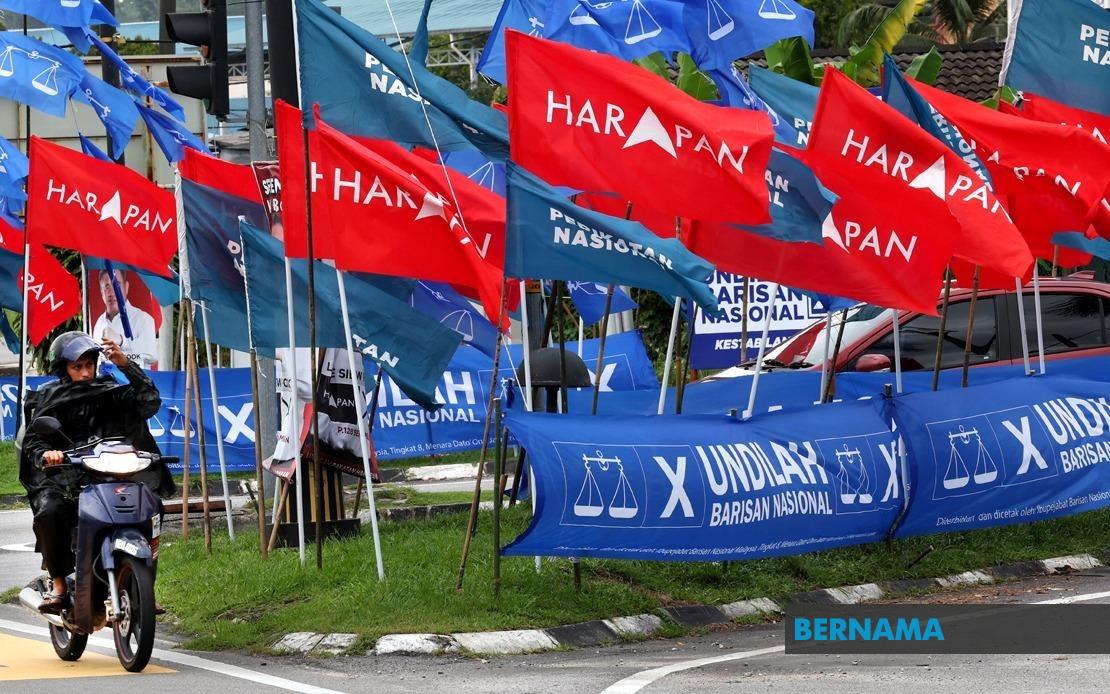
The Johor state election campaign is hurtling towards its conclusion with less than two days of official electioneering remaining before candidates must cease their public appeals. As the field stretches across 56 state constituencies with 172 candidates in the running, the final 48 hours represent a critical window for political parties to consolidate support and energise their voter bases ahead of Saturday's polling day.
Momentum has visibly accelerated across the state as candidates recognise the urgency of their window. Rather than moderating their efforts in these closing moments, the major coalitions have paradoxically intensified their campaign activities, deploying an arsenal of tactics ranging from large public rallies to intimate community engagements. The energy on the ground suggests campaigns are treating these final hours as make-or-break moments to sway uncommitted voters and reinvigorate party loyalists who might otherwise stay home on polling day.
Pakatan Harapan has capitalised on the presence of national prominence by dispatching Prime Minister Datuk Seri Anwar Ibrahim to campaign at three strategic locations on the eve of the election close, with particular focus on the hotly contested Puteri Wangsa constituency. The coalition's approach reflects a calculated strategy to leverage Anwar's national profile and the gravitational pull of senior leadership in constituencies where races remain competitive. Maszlee Malik, PH's candidate for Puteri Wangsa, has actively promoted the coalition's concluding rally, explicitly appealing to voters through social media to overcome apathy and attend the final gathering, framing attendance itself as a moment not to be missed.
Beyond the headline rallies, Pakatan Harapan's ground machinery continues operating at high intensity. Dr A. Ruban, the coalition's Paloh candidate, demonstrated personal commitment by cutting short medical leave to resume campaigning, signalling to voters that the contest warrants such sacrifice. Meanwhile, Johor PKR chairperson Datuk Seri Dr Zaliha Mustafa amplified efforts for the Kemelah seat through an unconventional motorcycle convoy involving 120 riders across Felda Redong, a tactic designed to generate visible momentum and reach voters across dispersed communities.
Barisan Nasional, facing the challenge of defending Johor after recent electoral setbacks, has mobilised its own national machinery to provide campaign momentum. Coalition chairman Datuk Seri Dr Ahmad Zahid Hamidi undertook a focused tour of Endau and Kempas constituencies to shore up candidate morale and reinvigorate party workers in areas deemed critical for the coalition's prospects. The sitting Menteri Besar and Machap BN candidate Datuk Onn Hafiz Ghazi has maintained a relentless campaign schedule whilst simultaneously leveraging his executive position to communicate the coalition's development narrative to Johoreans. In the Larkin constituency, BN's Mohd Hairi Mad Shah continued his personal engagement programme, treating direct constituent contact as essential even in these final hours.
Perikatan Nasional, seeking to establish itself as a credible force in Johor politics, orchestrated a significant rally in Endau featuring dual headliners in its chairman Datuk Seri Ir Dr Ahmad Samsuri Mokhtar alongside PAS president Tan Sri Abdul Hadi Awang, concentrating firepower behind the Endau candidate Hasnul Hakimi Hussien. This deployment of senior leadership suggests PN views the contest in this particular seat as winnable territory worth major investment. The coalition's Kahang candidate Mazlan Bujang exemplified the determination visible across smaller parties, committing to continuous voter engagement right up to the campaign closure deadline.
Emerging parties have pursued alternative campaign methodologies to gain traction despite limited resources compared to the major coalitions. Parti Bersama Malaysia deployed a mobile campaign apparatus in the form of its "Bersama Tour Truck" initiative, a strategy designed to reach voters across multiple locations within tight campaign periods. Such tactics indicate how newer political entrants are experimenting with unconventional approaches to compensate for relative lack of established machinery and national profile.
The intensity of these final campaign days reflects the genuine competitiveness of multiple races across Johor. Rather than campaigns winding down as they approach closure, the evidence points to acceleration, suggesting political operatives believe meaningful persuasion remains possible and that voter sentiment remains fluid in numerous constituencies. The deployment of senior national figures, the persistence of candidates despite fatigue or personal circumstances, and the experimentation with diverse engagement tactics all indicate campaigns are treating these closing hours as pivotal rather than merely procedural.
For Malaysian observers, the Johor election holds significance beyond the state itself. As the nation's most populous state and a traditional BN stronghold that has been contested increasingly effectively by opposition forces, Johor's election outcome will reverberate through national political calculations. A strong Pakatan Harapan performance would reinforce the federal coalition's political narrative, whilst a BN recovery would provide the traditional establishment with momentum heading into future national contests. The Perikatan Nasional's performance, meanwhile, will indicate whether the Islamist-conservative alliance can establish itself as a credible third force in Malaysia's increasingly tripolar political landscape.
With 172 candidates across all parties now in the final sprint and Saturday's voting just 48 hours away, the intensity of Johor's campaign serves as a reminder that even in established democracies with predictable structural advantages, electoral competition drives exhaustive final efforts from all participants.

