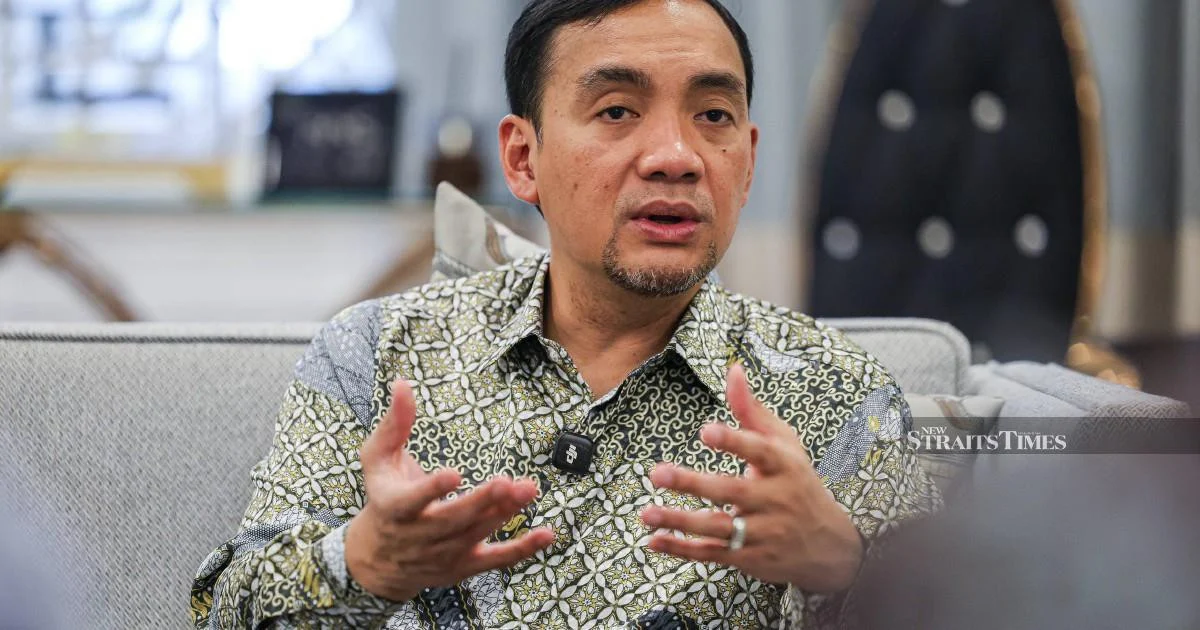
Johor Barisan Nasional is moving swiftly toward its public candidate announcement, with party officials signalling that the complete roster will be unveiled on Saturday following completion of internal selection procedures this week. The timing reflects the coalition's determination to present a unified front as the state gears up for electoral competition, with the candidacy announcement representing a pivotal moment in Johor's political calendar.
The decision to conclude deliberations by week's end and proceed with the public revelation demonstrates the Barisan Nasional machinery's operational readiness in the state. Having resolved internal consensus on its preferred candidates across constituencies, the coalition appears confident in its chosen slate and eager to begin active campaigning. This swift progression from selection to announcement underscores the coalition's intention to maintain momentum and set the agenda in the coming electoral cycle.
For Johor, the announcement carries significance beyond mere procedural formality. The state has historically served as a bellwether for national politics, with electoral outcomes often influencing broader political calculations at the federal level. A well-received candidate line-up could energise the Barisan Nasional grassroots and demonstrate the coalition's organisational capacity, particularly important given the competitive political landscape that has characterised recent Malaysian elections.
The candidate selection process itself reflects the complex negotiations required within multi-party coalitions operating across Malaysia. Balancing the interests of constituent parties—whether United Malays National Organisation (UMNO), Malaysian Chinese Association (MCA), Malaysian Indian Congress (MIC), or smaller partners—while ensuring geographic representation and incumbency considerations demands careful calibration. The successful completion of these negotiations suggests the coalition has navigated potential friction points and arrived at a formula acceptable to its leadership.
From a strategic perspective, the timing of Saturday's announcement positions Johor BN to define the narrative before opposition parties fully crystallise their own electoral strategy. Early candidate declarations can influence voter sentiment and grant the announcing party an advantage in framing policy discourse. Opposing coalitions will then face the burden of responding to Barisan Nasional's choices, rather than establishing their own independent momentum.
The Malaysian electorate, particularly in Johor, has demonstrated increasing sophistication in evaluating candidates beyond traditional party affiliations. Voters increasingly scrutinise individual track records, local engagement, and competency in addressing constituency-specific challenges. The Barisan Nasional line-up will therefore face intense public scrutiny regarding the quality and credibility of selected candidates, especially in marginal constituencies where election margins are typically narrow.
Regionally, Johor's political developments hold implications for Southeast Asian observers monitoring Malaysia's democratic processes. The state's electoral dynamics, characterised by genuine two-way competition between major coalitions, contribute to Malaysia's broader reputation as a functioning multi-party democracy. A transparent and competitive selection process, culminating in a public announcement, reinforces institutional norms around electoral participation and political accountability.
The coalition's decision to formalise and publicise its candidate selection by Saturday also suggests confidence in the legitimacy of its internal processes. Rather than allowing speculation or controversy to build around undisclosed selections, the public revelation approach demonstrates faith in the candidates' viability and the coalition's mandate to represent Johor voters. This contrasts with opaque decision-making that can generate suspicion and undermine public confidence in political institutions.
As the announcement approaches, various stakeholder groups will analyse the candidate list through multiple lenses. Business communities will assess whether selected candidates possess economic development credentials. Community leaders will evaluate representation of diverse ethnic and religious constituencies. Civil society organisations will scrutinise candidates' records on governance transparency and institutional reform. These layered evaluations collectively determine the candidate list's reception and its eventual electoral impact.
Looking ahead, Saturday's announcement marks the commencement of an intensive campaigning phase. Both Barisan Nasional and opposition coalitions will mobilise resources to promote their respective candidates, with the quality of candidates and their local connections likely proving decisive in a state where traditional support bases can no longer be taken as entirely predictable. The candidates themselves will bear the responsibility of translating their party's aspirations into ground-level support through effective constituent engagement and credible policy communication.
The finalisation of Barisan Nasional's candidate line-up also reflects the coalition's operational efficiency during a politically consequential period for Johor. Whether the announced slate effectively represents the state's demographic diversity and addresses its developmental priorities will significantly influence electoral outcomes. The coming weeks will reveal whether the coalition's selection process has achieved the optimal balance between party loyalty, candidate quality, and electoral viability across the state's constituencies.

%22%2F%3E%3C%2Fpattern%3E%3C%2Fdefs%3E%3Crect%20width%3D%22100%25%22%20height%3D%22100%25%22%20fill%3D%22url(%23ph40buhg)%22%2F%3E%3Crect%20width%3D%22100%25%22%20height%3D%22100%25%22%20fill%3D%22url(%23ph40buhp)%22%2F%3E%3Ctext%20x%3D%2250%25%22%20y%3D%2250%25%22%20text-anchor%3D%22middle%22%20dominant-baseline%3D%22central%22%20fill%3D%22rgba(255%2C255%2C255%2C0.95)%22%20font-family%3D%22Georgia%2C%20'Times%20New%20Roman'%2C%20serif%22%20font-weight%3D%22700%22%20font-size%3D%22320%22%20letter-spacing%3D%22-0.02em%22%3EGRS%3C%2Ftext%3E%3C%2Fsvg%3E)