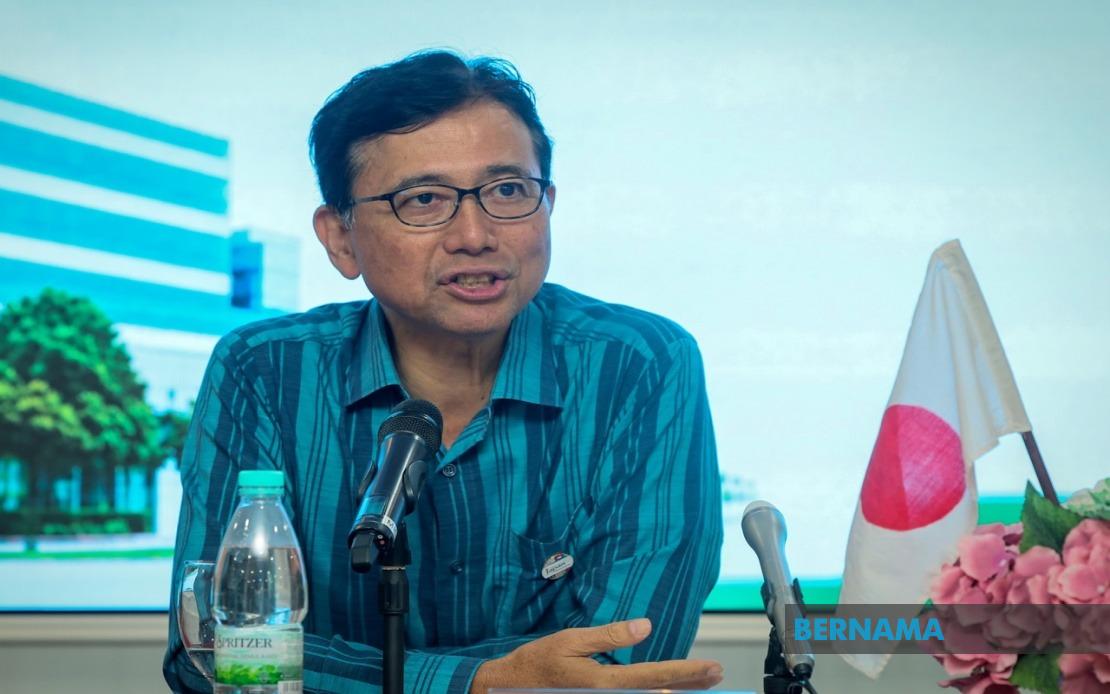
Japan's revised approach to shaping the Indo-Pacific region offers meaningful opportunities for Malaysia's transformation into a premier technology and digital innovation centre, according to Japanese Ambassador to Malaysia Noriyuki Shikata. The updated Free and Open Indo-Pacific (FOIP) framework, unveiled by Prime Minister Sanae Takaichi in May, represents a strategic evolution from Japan's original 2016 vision, shifting emphasis towards tangible economic collaboration and technological advancement across the region.
Originally introduced by former Prime Minister Shinzo Abe as a counterweight to regional geopolitical shifts, the FOIP has matured into a comprehensive strategy addressing contemporary challenges facing Indo-Pacific nations. Shikata characterises the latest iteration as a pragmatic response to emerging demands, with particular emphasis on building regional capacity in transformative technologies including artificial intelligence, data security infrastructure, undersea cable networks and satellite communication systems. This recalibration demonstrates Tokyo's recognition that sustainable regional stability depends on shared prosperity and technological progress rather than traditional power dynamics alone.
The alignment between Japan's updated framework and Malaysia's own vision becomes evident when examining the practical mechanisms driving implementation. Underpinning the initiative is a US$10 billion financial commitment channelled through the POWERR Asia initiative, which specifically targets energy security and resilience across ASEAN member states. This funding mechanism addresses critical vulnerabilities in fuel procurement, energy reserve accumulation and supply chain management for essential materials—challenges that resonate deeply with Malaysia's own development priorities and regional responsibilities.
For Malaysia specifically, the framework opens avenues for industrial transformation that extend far beyond conventional manufacturing sectors. Japanese enterprises operating within Malaysia increasingly recognise opportunities to transition from labour-intensive production towards high-value technology partnerships and knowledge-intensive industries. This shift reflects broader regional economic trends where competitive advantage derives from technological sophistication rather than cost arbitrage alone, positioning Malaysia favourably given its existing infrastructure investments and human capital development.
Malaysia's established position as a semiconductor manufacturing hub holds particular significance within this context. The nation has already attracted substantial Japanese investment in semiconductor production, and the updated FOIP framework specifically encourages deepening engagement in advanced packaging technologies, artificial intelligence infrastructure deployment and cloud computing ecosystems. These sectors represent the frontier of industrial development, offering Malaysian manufacturers pathways to higher value creation and reduced vulnerability to commodity price fluctuations that characterise traditional manufacturing.
The institutional dimension of bilateral engagement has strengthened considerably through the Comprehensive Strategic Partnership established between Japan and Malaysia in December 2023. This formal arrangement transcends the legacy Look East Policy framework, which historically emphasised Japanese manufacturing expertise and management practices. The partnership now encompasses innovation collaboration, research cooperation and strategic alignment on technology governance—reflecting both nations' recognition that shared interests extend beyond manufacturing relationships into broader technological and security domains.
Recent high-level diplomatic engagement underscores this trajectory. Malaysian Prime Minister Datuk Seri Anwar Ibrahim's recent Japan visit facilitated direct discussions with major Japanese corporate entities including Mitsubishi Corporation, ENEOS, DENSO, IBM and Marubeni. These interactions established concrete pathways for technology transfer, joint venture development and investment expansion, signalling to Malaysia's broader business community that Japan remains committed to deepening technological partnership beyond traditional sectors.
The anticipated collaboration between Japanese technological leaders and Malaysia's growing technology ecosystem extends into frontier domains including artificial intelligence and quantum computing. These sectors demand substantial research investment, specialised talent pools and cross-border cooperation—prerequisites where both nations possess comparative advantages. Japanese firms bring proven technological capabilities and global commercialisation networks, while Malaysia offers geographic positioning, emerging technical talent and government support for technology sector development.
Critical infrastructure protection and supply chain resilience feature prominently in articulated partnership objectives. Both nations confront similar vulnerabilities regarding dependence on contested supply chains for essential technological components and materials. Collaborative initiatives addressing these challenges reflect shared strategic interests in reducing external dependencies while strengthening mutual resilience—a concern that extends beyond bilateral relations to encompass broader regional security considerations affecting ASEAN members.
The broader regional context amplifies significance of this bilateral alignment. The updated FOIP demonstrates compatibility with ASEAN's own Indo-Pacific Outlook, suggesting Japan's strategic vision accommodates rather than supersedes Southeast Asian perspectives on regional order. This compatibility reduces potential tensions between external strategic frameworks and regional preferences, creating space for voluntary cooperation rather than perceived external imposition—a consideration that carries weight in Malaysian policy circles historically sensitive to external great power competition.
For Japanese business communities and expatriate populations already established in Malaysia, the framework provides enhanced predictability and operational security. Clearer policy signals regarding technology sector support, infrastructure investment priorities and regulatory environments encourage longer-term strategic commitments rather than short-term profit maximisation alone. This stability matters considerably for knowledge transfer and technology localisation processes that require sustained institutional engagement.
Looking forward, the framework's implications extend beyond immediate bilateral commercial interests. Malaysia's success in leveraging Japanese technological partnership and investment could position the nation as a credible technology hub serving broader ASEAN needs, potentially catalysing additional regional investment and talent migration. The framework thus offers Malaysia pathways towards elevated economic positioning within regional technology hierarchies, contingent upon sustained policy execution and competitive business environment maintenance.
Shikata's emphasis on Japan's enduring commitment to Malaysia reflects calculations extending beyond transactional commerce. As regional geopolitical competition intensifies and technological dependencies become increasingly consequential for national security, Japan perceives value in cultivating reliable technology partnerships with established ASEAN members. Malaysia, with its existing manufacturing base, geographic positioning and political stability, represents an attractive long-term partner for deepening Japanese technological and economic presence in Southeast Asia during an era of strategic repositioning.

%22%2F%3E%3C%2Fpattern%3E%3C%2Fdefs%3E%3Crect%20width%3D%22100%25%22%20height%3D%22100%25%22%20fill%3D%22url(%23ph40buhg)%22%2F%3E%3Crect%20width%3D%22100%25%22%20height%3D%22100%25%22%20fill%3D%22url(%23ph40buhp)%22%2F%3E%3Ctext%20x%3D%2250%25%22%20y%3D%2250%25%22%20text-anchor%3D%22middle%22%20dominant-baseline%3D%22central%22%20fill%3D%22rgba(255%2C255%2C255%2C0.95)%22%20font-family%3D%22Georgia%2C%20'Times%20New%20Roman'%2C%20serif%22%20font-weight%3D%22700%22%20font-size%3D%22320%22%20letter-spacing%3D%22-0.02em%22%3EGRS%3C%2Ftext%3E%3C%2Fsvg%3E)