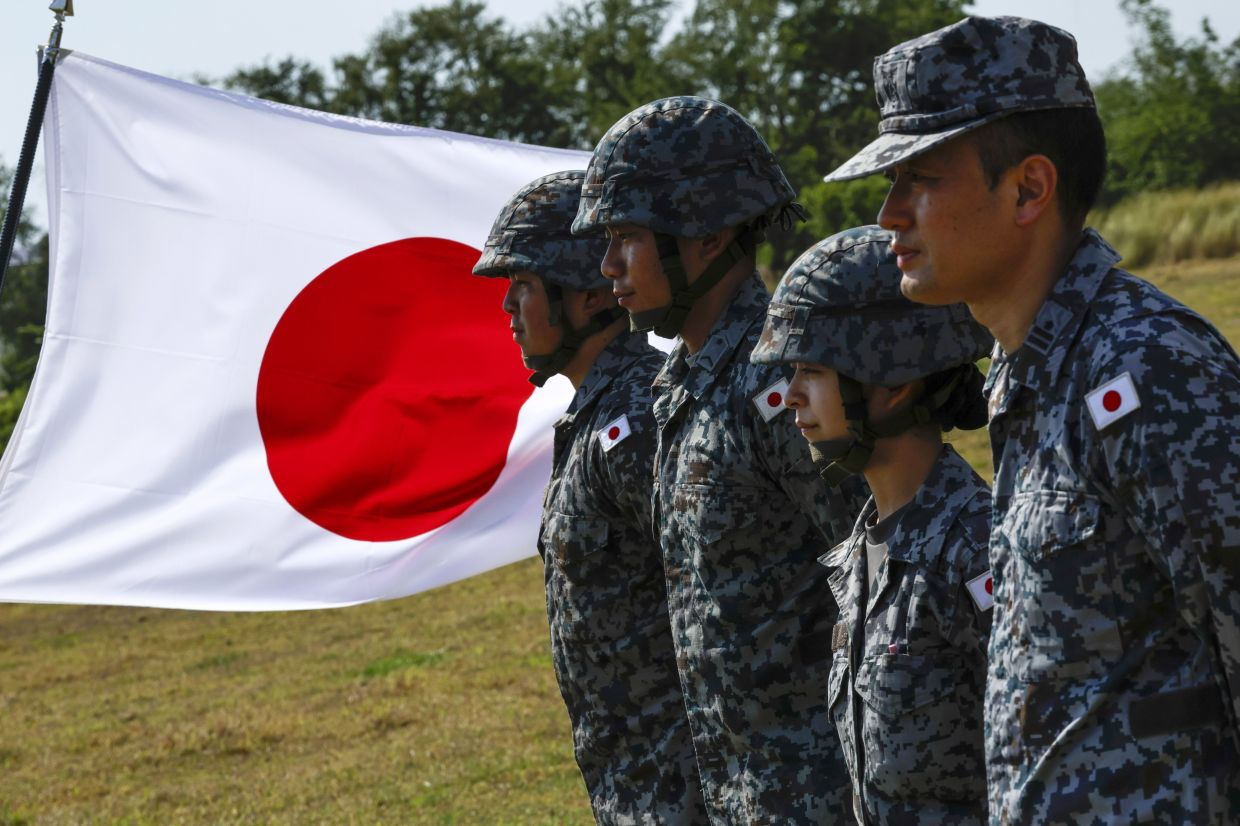
Japan's Defence Minister Koizumi signalled his country's determination to forge closer security ties across the Indo-Pacific during remarks at a major regional forum in Singapore at the end of May, positioning Tokyo as a stabilising force amid shifting great-power dynamics in Asia. The high-profile engagement highlighted Japan's growing anxiety about both Chinese military expansion and the reliability of American security commitments, prompting Tokyo to construct a diversified network of defence partnerships that extends beyond its traditional reliance on Washington. This multifaceted approach reflects a fundamental reassessment of Japan's strategic environment, where policymakers increasingly recognise that their nation must shoulder greater responsibility for regional stability while hedging against an American security umbrella that may become less dependable under changing US administrations.
The Singapore forum itself revealed the depth of Japan's strategic positioning when organisers cancelled a scheduled session that would have allowed China to present its vision for Asia-Pacific security cooperation. This move, coordinated with Japanese diplomatic efforts, underscored Tokyo's determination to shape the narrative around regional security architecture before Beijing could stake its claim. Koizumi's subsequent public meeting with US Defence Secretary Pete Hegseth served a dual purpose—reassuring Tokyo's domestic constituencies that the US alliance remains robust while simultaneously telegraphing to potential partners that Japan and America stand together. Yet beneath this unified facade lay a more uncomfortable reality: Japan's anxiety about whether Washington would maintain its historic commitment to containing Chinese influence as America's strategic attention fragments across multiple regions and domestic political upheaval creates policy uncertainty.
Japan's evolving defence posture extends well beyond diplomatic choreography. Last year, senior officials including Koizumi broached the previously unthinkable idea of Japan acquiring nuclear-powered attack submarines, a proposal that challenges the nation's carefully maintained nuclear taboo despite its pacifist constitution and the public sensitivity surrounding nuclear weapons in Japanese society. This conceptual shift signals how dramatically the regional threat perception has evolved, with Tokyo now willing to contemplate capabilities previously considered taboo if they strengthen deterrence against Beijing. The submarine initiative represents not merely a weapons procurement decision but a philosophical recalibration of what Japan considers necessary for regional peace and stability.
Tokyo's strategic response extends far beyond military hardware acquisitions. Japan has systematically expanded a network of bilateral and minilateral security partnerships throughout the Indo-Pacific, from traditional allies like Australia and South Korea to emerging relationships with Southeast Asian and Pacific Island nations. When New Zealand announced the deployment of an upgraded Japanese Mogami-class frigate to regional waters, Japan welcomed the move as validation that its defence equipment could serve as a foundation for distributed security cooperation. These interconnected partnerships are gradually forming a multilayered security architecture that provides alternatives for regional states seeking to balance between Chinese pressure and American influence without appearing to join an explicitly anti-Beijing coalition.
Experts observe that this emerging framework succeeds because it combines security assistance with economic incentives and flexible diplomatic arrangements, offering Indo-Pacific nations pathways that avoid the zero-sum choice between Washington and Beijing. Rather than asking partners to choose sides in a contest between superpowers, Japan presents itself as an equally committed regional actor invested in maintaining stability and open sea lanes. This positioning proves particularly attractive to Southeast Asian nations that depend on trade with China while harbouring security concerns about Beijing's military modernisation and expansionist tendencies in disputed maritime zones. Analysts emphasise that Japan, constrained by its limited financial resources relative to Chinese state capacity, must leverage collective action with allies to compete effectively, while scrupulously avoiding messaging that portrays the partnerships as explicitly directed against any particular power.
Japan's strategic recalibration reflects genuine concerns about American reliability as a security guarantor. President Trump's previous demands that Japan and South Korea substantially increase defence spending, combined with his administration's imposition of high tariffs on key allies including India, have created palpable uncertainty about whether Washington's commitment to Indo-Pacific stability remains unwavering. These concerns transcend partisan politics; they reflect structural questions about whether the US can sustain its postwar security role as resources become stretched thin and domestic political instability creates unpredictability in foreign policy. Japan's response has been deliberately measured: rather than explicitly denouncing American unreliability, Tokyo proceeds as if Washington's commitment is less certain than previously assumed, quietly building alternatives that would function even if the US proved unable or unwilling to maintain its traditional strategic role.
Tokyo's evolving approach to regional engagement encompasses dimensions that extend beyond conventional military cooperation. Japan recognises that many Southeast Asian and Pacific Island governments prioritise economic development and infrastructure investment alongside security concerns, if not above them. Rather than restricting its outreach to defence establishments, Japan integrates security assistance with infrastructure financing and support for energy transition initiatives. This holistic engagement strategy appeals to developing nations that require capital for ports, power plants, and telecommunications networks alongside maritime domain awareness systems and coastal security capacity. By bundling these offerings, Japan demonstrates commitment to comprehensive national development rather than narrow military balancing against China.
Prime Minister Sanae Takaichi's announcement in May of an updated Free and Open Indo-Pacific framework marked a significant evolution in Japan's strategic thinking. The recalibrated FOIP approach shifts away from the principles-focused framework that Shinzo Abe articulated in 2016, which emphasised abstract concepts like the rule of law and democratic governance. Instead, the new framework prioritises tangible tools with immediate utility: securing undersea cable infrastructure that transmits data and financial flows, establishing energy supply chain resilience against disruption, and enhancing maritime security capabilities. This pragmatic reorientation reflects Tokyo's recognition that partner nations respond more readily to concrete benefits than ideological appeals, requiring Japan to demonstrate how its strategic vision translates into improved living standards and economic security for regional populations.
Japan's Security Assistance (OSA) programme represents perhaps the clearest manifestation of Tokyo's integrated approach to regional engagement. Introduced to complement traditional Official Development Assistance channels that constitutionally restrict military support, the OSA framework enables Japan to provide direct assistance to the military and security institutions of strategic partners. Since its inception, the programme has expanded dramatically: within three years, it grew from supporting four countries with 2 billion yen in funding to encompassing 12 nations and 18.1 billion yen in annual commitments. The expanded programme now supplies advanced radar systems, drone technology, and other capabilities that smaller regional militaries could not otherwise afford. This approach addresses a critical vulnerability in the regional security architecture, where many Southeast Asian nations lack adequate capital to modernise their defence establishments, creating potential power vacuums that China could exploit through its own military assistance programmes.
The OSA framework succeeds partly because infrastructure financing proves more politically palatable to recipient governments than direct military aid. When Japan finances port construction or airport upgrades, these projects deliver visible developmental benefits to civilian populations while simultaneously creating infrastructure that can support coast guard operations and military logistics. Analysts note that Japan deliberately structures these investments to accomplish dual objectives: advancing genuine economic development while strategically enabling more robust defence capabilities. This integration of development and security assistance reflects sophisticated understanding of how regional governments navigate the politically sensitive terrain of accepting foreign military support without appearing to align against any particular neighbour.
Beyond strengthening regional partners, Japan's defence assistance programmes serve the interests of Tokyo's own defence industrial base. By supplying equipment to multiple countries throughout the Indo-Pacific, Japanese firms gain valuable experience deploying systems in varied operational environments and climates, generating data that improves product performance. The programmes provide a vital proving ground where Japanese defence manufacturers can demonstrate equipment reliability and superiority relative to competitors. This export-oriented dimension allows Japan to expand its role in the international defence market while simultaneously strengthening strategic partnerships, creating a virtuous cycle where security cooperation and industrial development reinforce each other. Japan's April decision to lift its ban on lethal weapons exports further accelerated this trajectory, enabling Tokyo to sell defence equipment to 17 countries, including six ASEAN nations: the Philippines, Malaysia, Indonesia, Vietnam, Thailand, and Singapore.
Tokyo moved swiftly to capitalise on its revised export posture. In June, Japan and Indonesia initiated discussions regarding potential sales of Asagiri-class destroyers, a transaction that would represent a significant deepening of defence industrial cooperation between Southeast Asia's largest economy and Japan. Such arrangements demonstrate how security partnerships translate into concrete procurement decisions that benefit Japanese manufacturers while enhancing Indonesian maritime capabilities. The emerging pattern suggests that Japan's defence strategy increasingly encompasses commercial dimensions alongside strategic considerations, with Tokyo viewing defence exports as legitimate instruments of both security policy and economic statecraft. This approach parallels practices long employed by established defence exporters, positioning Japan as a major player in regional armaments markets.
Japan's broader strategic pivot includes the Power Asia initiative launched in April, a US$10 billion programme designed to help regional partners secure emergency energy supplies and build long-term resilience amid vulnerabilities in global energy markets, particularly regarding the critical chokepoint represented by the Strait of Hormuz. This initiative recognises that regional stability depends not merely on military deterrence but on economic resilience and access to reliable energy sources. By positioning itself as a guarantor of energy security, Japan addresses a fundamental concern of regional governments whose development trajectories depend on stable, affordable energy imports. The programme reflects evolved understanding that contemporary strategic competition encompasses economic and energy dimensions alongside traditional military rivalry, requiring multifaceted responses that address the full spectrum of national security concerns.

