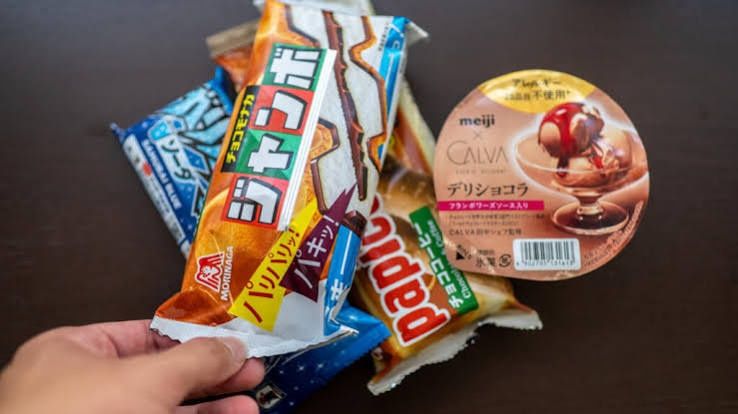
Japan's antitrust enforcement arm has intensified scrutiny of the nation's ice cream industry, launching simultaneous raids on six major manufacturers suspected of operating a pricing cartel at the threshold of the busy summer season. The Japan Fair Trade Commission (JFTC) descended on the headquarters of Meiji Co., Morinaga Milk Industry Co., Lotte Co., Ezaki Glico Co., Morinaga & Co., and Akagi Nyugyo Co. on Tuesday, marking an unusually aggressive enforcement action targeting a sector that had just recorded its most lucrative year on record.
The investigation centres on allegations that senior executives and company officials engaged in sustained coordination to manipulate consumer prices across the competitive ice cream market. According to sources briefed on the matter, the suspected collusion involved regular communication through electronic correspondence and in-person meetings conducted over several years, with participants allegedly agreeing on the precise timing and magnitude of retail price increases. This systematic approach to price setting would constitute a clear violation of Japanese competition law, which prohibits firms from jointly determining commercial terms that restrict consumer choice and inflate prices.
The pattern of suspicious behaviour became apparent when independent observers noted that the six companies had implemented price increases at strikingly similar intervals since approximately 2022, creating an unusually synchronised pricing landscape across supermarket shelves and convenience store freezers throughout Japan. The temporal clustering of these hikes—occurring year after year at nearly identical moments—raised red flags among competition authorities, who scrutinised whether such coordination could plausibly occur through pure market coincidence or reflected deliberate collusion among competitors who would normally be expected to undercut one another to gain market share.
Investigators are also examining whether the firms exploited inflationary conditions as convenient cover for price increases that substantially exceeded the underlying surge in raw material costs. This dimension of the inquiry proves particularly significant, as it would suggest the companies weaponised legitimate economic pressures to justify anti-competitive conduct. While ingredient costs did rise globally during the period in question, the JFTC is probing whether the magnitude of retail price increases bore reasonable relationship to documented cost increases or instead reflected opportunistic pricing enabled by their alleged cartel arrangement.
The ice cream sector holds particular economic importance in Japan, where summer consumption patterns generate concentrated demand during a distinct seasonal peak. The previous fiscal year, ending in March, witnessed record-breaking sales exceeding 660 billion yen—a milestone partly attributable to Japan's exceptionally hot summer in 2023, marking the warmest conditions recorded since systematic temperature measurement began in 1989. This robust market backdrop makes the industry both economically significant and strategically important to Japanese consumers during peak summer months, intensifying the competitive stakes and the potential consumer impact of any successful cartel operation.
All six companies moved swiftly to acknowledge the JFTC's investigative activities, with five issuing formal statements confirming that their facilities had undergone on-site inspections and pledging complete cooperation with authorities. Natsuyo Suzuki, representing Akagi Nyugyo, similarly confirmed the company's commitment to full transparency and collaboration throughout the investigative process. This rapid public acknowledgement and apparent willingness to engage with investigators suggests the companies recognise the seriousness of antitrust violations and the futility of defensive posturing against evidence-gathering operations.
The enforcement action reflects broader international trends toward vigilant competition policy in food and beverage sectors, where coordinated pricing has repeatedly triggered major investigations and penalties across developed economies. Japan's JFTC, like competition authorities in Europe, North America, and increasingly throughout Asia, has intensified focus on digital communication channels and pricing coordination mechanisms that enable cartels to function with minimal physical evidence of explicit agreements. The prevalence of email correspondence and online communication platforms has paradoxically made cartel detection more straightforward for authorities while simultaneously lowering barriers to entry for would-be conspirators.
If the JFTC's investigation substantiates cartel allegations, the regulatory consequences could prove substantial. The commission possesses authority to impose cease-and-desist orders requiring firms to modify their business practices and implementation of compliance procedures designed to prevent future violations. Beyond operational mandates, the JFTC can assess financial penalties calibrated to the severity and duration of the violation, potentially reaching into hundreds of millions of yen given the scale of the ice cream market and the alleged duration of the collusion spanning multiple years.
For Malaysian and Southeast Asian observers, this investigation carries instructive implications regarding competition enforcement priorities and investigative methodologies in developed Asian economies. Japan's willingness to pursue aggressive antitrust action against established consumer-facing companies demonstrates that market dominance and industry prestige offer no immunity from enforcement scrutiny. As competition authorities throughout the region gradually strengthen enforcement frameworks, similar price-fixing investigations in food manufacturing and distribution sectors appear increasingly probable, particularly where coordinated price movements and suspicious temporal clustering provide investigators with clear targeting signals.

%22%2F%3E%3C%2Fpattern%3E%3C%2Fdefs%3E%3Crect%20width%3D%22100%25%22%20height%3D%22100%25%22%20fill%3D%22url(%23ph40buhg)%22%2F%3E%3Crect%20width%3D%22100%25%22%20height%3D%22100%25%22%20fill%3D%22url(%23ph40buhp)%22%2F%3E%3Ctext%20x%3D%2250%25%22%20y%3D%2250%25%22%20text-anchor%3D%22middle%22%20dominant-baseline%3D%22central%22%20fill%3D%22rgba(255%2C255%2C255%2C0.95)%22%20font-family%3D%22Georgia%2C%20'Times%20New%20Roman'%2C%20serif%22%20font-weight%3D%22700%22%20font-size%3D%22320%22%20letter-spacing%3D%22-0.02em%22%3EGRS%3C%2Ftext%3E%3C%2Fsvg%3E)