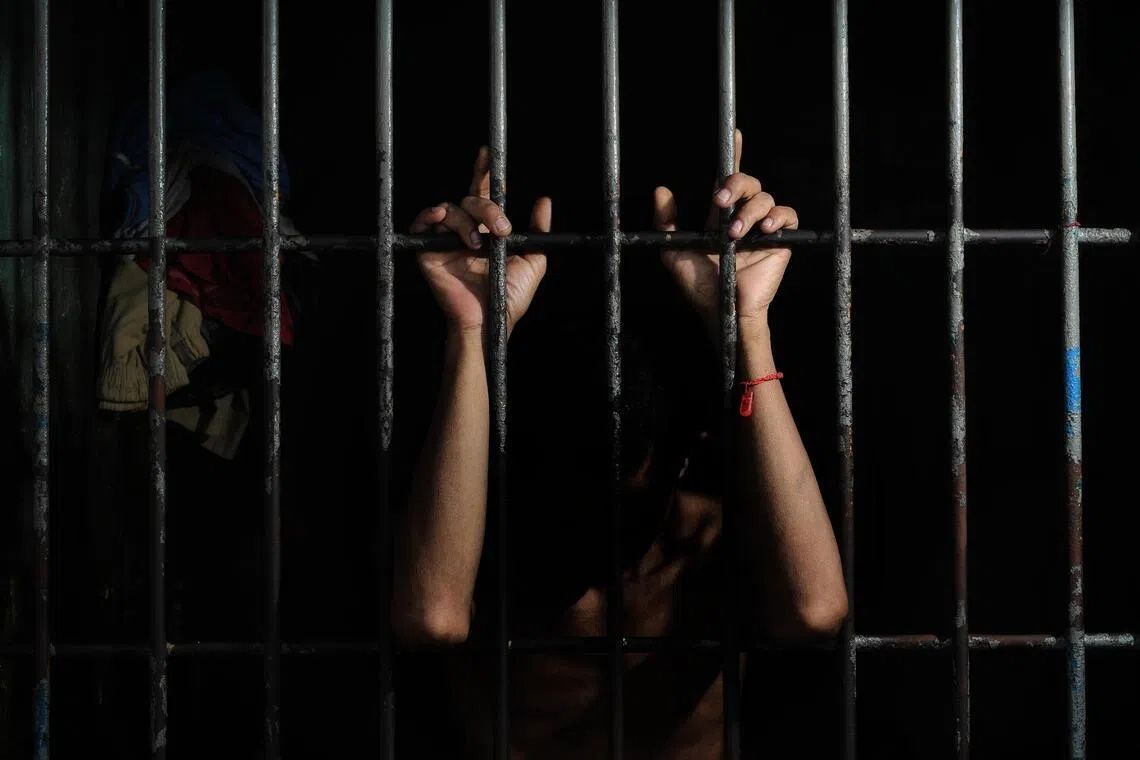
A compensation lawsuit filed at Kobe District Court this week underscores the human cost of Japan's contentious criminal justice practices, with a grieving mother seeking redress following the death of her teenage daughter in what campaigners describe as a stark example of systemic coercion. The case involves Runa, a pseudonym used in court documents to protect the minor's identity, who was arrested in June last year while working at a care facility for people with disabilities in Hyogo prefecture. What began as a routine custody matter evolved into a tragedy that has reignited international scrutiny of interrogation practices in one of Asia's most developed democracies.
The circumstances surrounding Runa's detention reveal troubling patterns within Japan's approach to criminal procedure. She was held for 18 days following accusations that she assaulted a resident at the facility during a Valentine's Day celebration, though her account consistently maintained that she had merely attempted to prevent the patient from biting another person by gently pressing her hand against their chin. Throughout her ordeal, Runa was denied meaningful contact with her family, permitted only to speak with her legal representatives, while facing sustained pressure to admit guilt. The arrest warrant itself proved controversial, with her attorney Masahiro Sasaki subsequently questioning whether detention was justified given the minor nature of the alleged incident and Runa's status as a young person with no prior history of delinquent behaviour.
The interrogation process inflicted severe psychological and physical trauma on the teenager. According to statements made at a news conference, investigators repeatedly employed coercive tactics, threatening her with placement in a reformatory and suggesting she would lose contact with her mother unless she confessed to the charges. Quoted from a journal Runa maintained while detained, one interrogator allegedly told her directly: "You did it, weren't you? Just tell the truth." These confrontational methods, coupled with the isolation and uncertainty of her situation, triggered acute stress disorder, eating disorders, and post-traumatic stress syndrome. The psychological impact manifested visibly after her release, when her weight plummeted to just 20 kilograms within five months, ultimately contributing to her death in December.
Runa's mother expressed her anguish at the loss during Wednesday's news conference, stating that her daughter was virtually unrecognizable by the time she died. The emotional weight of her statement—"I want to know what happened to her, and why she was arrested, detained and had to die"—captured the profound failure of a system ostensibly designed to protect citizens. The compensation claim seeks 100 million yen, equivalent to approximately US$623,000, recognising both the material losses and the immeasurable suffering endured by the family. The lawsuit represents not merely a personal tragedy but a formal indictment of procedures that allowed such harm to occur.
Japan's criminal justice system has long relied heavily on confessions as the evidentiary linchpin of prosecution, creating structural incentives that discourage the presumption of innocence. Critics and international observers characterise this approach as "hostage justice," a system wherein suspects are effectively held hostage until they abandon their constitutional right to silence and provide confessions that prosecutors can use to secure convictions. The term reflects the reality that maintaining innocence or exercising the right to deny charges frequently results in prolonged pre-trial detention, as was demonstrated in Runa's case when prosecutors twice requested extension of her detention while her attorney's appeals to the judge for release were simultaneously blocked. This dynamic transforms the detention process from a neutral investigative tool into a coercive mechanism that fundamentally undermines due process protections.
The legal and procedural failures that enabled Runa's situation were multiple and compounding. Sasaki argued that there existed no genuine probable cause for her arrest, particularly given the absence of any previous delinquency record or reasonable concern that she would flee or destroy evidence. Yet these factors did not prevent authorities from securing an initial detention order. Even more troubling, prosecutors at least twice succeeded in extending her confinement despite the trifling nature of the alleged offence and despite her status as a minor, for whom detention is supposed to be contemplated only when absolutely necessary. Her release ultimately came not through judicial determination of her innocence or through successful legal argument, but only after she vomited, collapsed, and required emergency hospital treatment—a point at which continuing to hold her became indefensible even by the system's own standards.
The trajectory of Runa's case illustrates how Japan's prosecutorial discretion can operate with minimal meaningful judicial oversight. The Kobe District Public Prosecutors Office declined to offer substantive comment to international media, stating only that they had not yet formally received notice of the complaint. This institutional silence, while perhaps standard protocol, reflects a broader absence of accountability mechanisms that might constrain how aggressively authorities pursue minor cases or how persistently they apply coercive interrogation techniques. Without effective external checks, individual prosecutors retain enormous power to decide when detention is justified and when confessions should be demanded, often with minimal resistance from judges who might otherwise serve as neutral arbiters.
International human rights bodies have repeatedly condemned Japanese "hostage justice" practices, and recent high-profile cases have amplified this criticism. The case of Iwao Hakamada exemplifies these concerns with particular force—he spent decades on death row before his convictions were finally quashed in 2024, with Japan's Supreme Court specifically finding that his confessions had been extracted through "inhumane" interrogations. Hakamada's exoneration, achieved only through extraordinary legal persistence, demonstrated that the system's failings extend beyond minor assault cases to capital crimes where the stakes for innocent individuals are literally life and death. The pattern suggests that coercive confession-seeking is not an isolated aberration but rather a systemic feature embedded within prosecutorial culture and courtroom dynamics.
For Malaysian and broader Southeast Asian observers, Runa's case serves as a cautionary illustration of how even technologically advanced and nominally democratic legal systems can harbour deeply troubling practices that harm vulnerable individuals. The Japanese experience suggests that procedural safeguards on paper do not automatically translate into protection for those caught in the machinery of criminal justice, particularly when institutional practices prioritise confession-extraction over factual investigation. The case also underscores how systemic problems can accumulate in tragic ways—the initial questionable arrest decision, the sustained detention despite weak probable cause, the coercive interrogations, the blocking of defence motions, and finally the health crisis that forced release. Each individual decision might seem defensible in isolation, yet their cumulative effect was catastrophic for a teenager who had committed no crime.
The broader implications extend to questions about what criminal justice systems should prioritise and how they should balance efficiency with fairness. Runa's case demonstrates that extracting confessions through psychological and emotional pressure inevitably produces not just injustice but also profound human suffering. The psychological trauma she experienced was sufficiently severe that it contributed directly to her death, transforming what might have been a minor administrative matter into a tragedy. Her mother's lawsuit, while unlikely to undo the harm, may contribute to gradual cultural and legal shifts within Japan's justice system by bringing this previously hidden category of cases into public and judicial view.
As the lawsuit progresses through Kobe District Court, it will likely attract attention from criminal justice reformers and human rights advocates across Asia. The case encapsulates not merely a failure of individual officials but rather systemic deficiencies in how Japan's prosecutors and courts balance investigative interests against constitutional protections for the accused. The compensation Runa's mother seeks functions as both personal redress and a statement that such practices carry institutional and financial costs. Whether Japanese courts will hold their own government accountable for these failures, and whether doing so might catalyse broader reforms to reduce reliance on confessions and increase protections for vulnerable suspects, remains an open question with implications extending well beyond one family's grief.


%22%2F%3E%3C%2Fpattern%3E%3C%2Fdefs%3E%3Crect%20width%3D%22100%25%22%20height%3D%22100%25%22%20fill%3D%22url(%23ph40buhg)%22%2F%3E%3Crect%20width%3D%22100%25%22%20height%3D%22100%25%22%20fill%3D%22url(%23ph40buhp)%22%2F%3E%3Ctext%20x%3D%2250%25%22%20y%3D%2250%25%22%20text-anchor%3D%22middle%22%20dominant-baseline%3D%22central%22%20fill%3D%22rgba(255%2C255%2C255%2C0.95)%22%20font-family%3D%22Georgia%2C%20'Times%20New%20Roman'%2C%20serif%22%20font-weight%3D%22700%22%20font-size%3D%22320%22%20letter-spacing%3D%22-0.02em%22%3EGRS%3C%2Ftext%3E%3C%2Fsvg%3E)