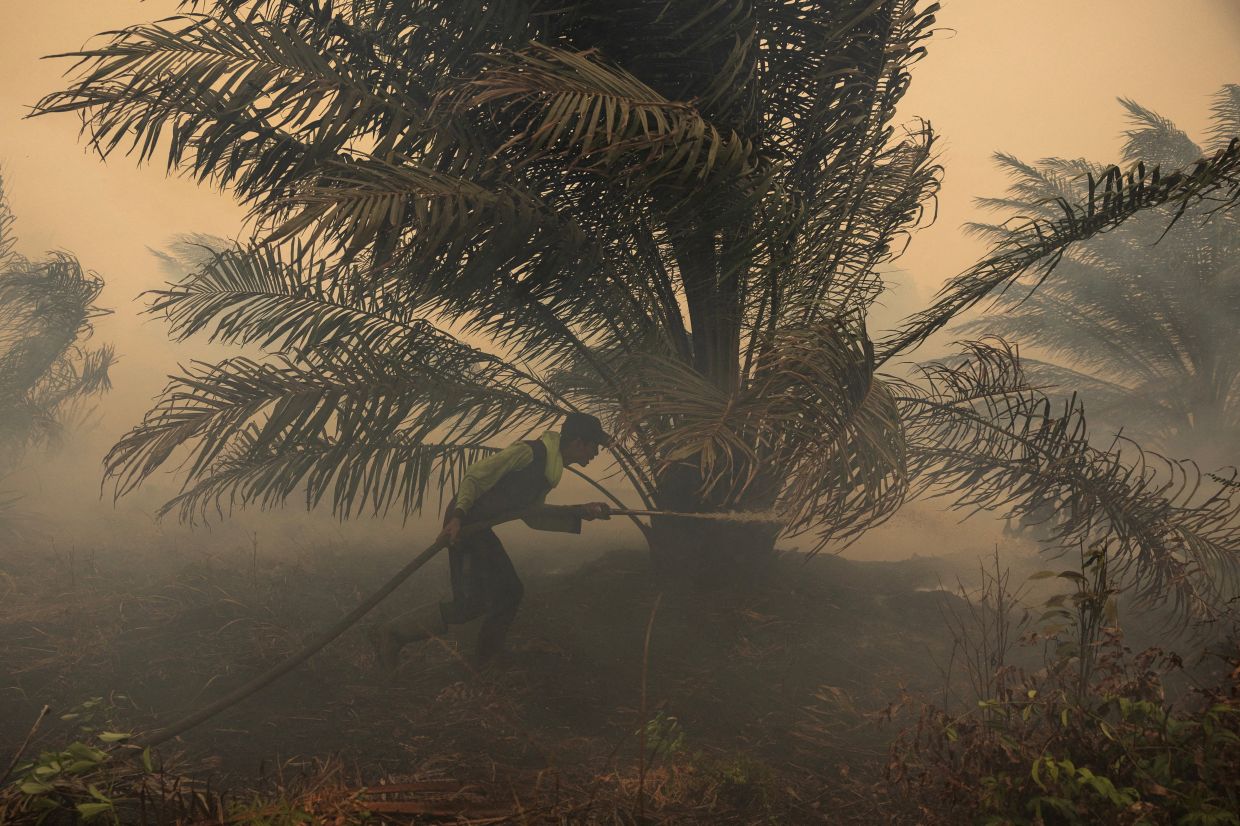
Facing an intensifying air quality crisis, Indonesia has accepted emergency assistance from Japan to tackle rampant forest and land fires ravaging Kalimantan. The Japanese government is deploying three helicopters, including a heavy-lift Chinook, to support water-bombing operations that are scheduled to commence on September 10. The deployment marks a significant escalation in international cooperation as the region grapples with pollution levels that have breached the hazardous threshold, prompting authorities to seek external reinforcement for their existing domestic firefighting capacity.
Berton Panjaitan, Acting Head of the Data, Information and Disaster Communication Centre at Indonesia's National Disaster Mitigation Agency (BNPB), disclosed the arrangement during an online press briefing on Saturday, August 29. He emphasised that preparations were advancing methodically, with site surveys underway and ongoing consultations between Indonesian and Japanese officials centred on the technical and operational details required for effective water-bombing missions across Kalimantan's vast and challenging terrain. The collaborative approach reflects recognition that the scale of the current crisis demands resources beyond what Indonesia alone can readily mobilise.
The air quality deterioration has reached alarming proportions across multiple population centres. Environment Ministry measurements recorded an Air Pollutant Standard Index (ISPU) reading of 1,108 at Jekan Raya in Palangka Raya, Central Kalimantan, by late Saturday afternoon, while the South-East Pontianak area of West Kalimantan registered 1,075. Both measurements fall into the hazardous category, signalling conditions that pose severe health risks to residents and can trigger respiratory complications even among previously healthy individuals. These extraordinary readings underscore how dramatically fire activity has escalated in recent weeks.
The geographic distribution of active fire sources reveals a troubling pattern. The BNPB documented 9,242 hotspots across West, Central, and South Kalimantan combined, with all three provinces experiencing upward trends. West Kalimantan experienced the most dramatic spike, recording an additional 1,629 hotspots that brought the provincial total to 3,371. Concurrently, field teams identified 171 active fire spots across the three provinces, demonstrating the distinction between satellite-detected thermal anomalies and ground-confirmed fires. This expanding hotspot network suggests that without immediate intervention, air quality will likely deteriorate further across the region.
Weather modification efforts have provided some relief in other parts of Indonesia, though progress remains uneven. Panjaitan noted that cloud-seeding operations have successfully induced rainfall across several Sumatran provinces, including portions of Riau, South Sumatra, Jambi, and Lampung. However, similar interventions remain unfeasible in Central and South Kalimantan due to insufficient cloud formations, a meteorological constraint that severely limits available tools for combating fires in those critical zones. This disparity highlights how environmental conditions beyond human control can impede even well-planned mitigation strategies.
Indonesia's existing firefighting infrastructure, while substantial, has proven insufficient to contain the current crisis. The BNPB currently operates 52 aircraft dedicated to fire suppression and monitoring across affected regions. This fleet comprises 38 aircraft equipped for water-bombing missions and 14 dedicated to aerial reconnaissance and weather modification support. Despite this aerial armada, ground crews have managed to deploy only approximately 3.5 million litres of water across six priority provinces, a figure that pales against the scale of active fires and the geographic expanse requiring coverage.
The Japanese intervention addresses a critical capacity gap at a decisive moment. The Chinook helicopter represents a significant asset, given its substantial payload capacity and ability to operate in challenging terrain where conventional firefighting infrastructure may be unavailable. The timing of the deployment, commencing early September, aligns with what Indonesian meteorologists anticipate could be the peak intensity period for fire activity, as accumulated vegetation and depleted soil moisture create optimal conditions for rapid fire spread. Japanese expertise in rapid-deployment disaster relief operations also brings institutional knowledge that may enhance operational efficiency.
For Malaysia and other Southeast Asian nations, this escalating crisis carries troubling implications. Transboundary haze originating from Indonesian fires has historically imposed significant costs on regional neighbours through degraded air quality, health system pressures, and economic disruptions affecting aviation, commerce, and tourism. The current severity suggests that Malaysian and other regional air quality monitoring stations may soon register elevated readings as atmospheric transport carries pollutants across maritime boundaries. Policymakers in the region should anticipate potential health advisories and prepare public health responses.
The underlying drivers of Kalimantan's fire crisis extend beyond immediate seasonal factors. Land conversion pressures, agricultural expansion, and sometimes deliberate clearing practices have rendered vast tracts particularly susceptible to burning once dry conditions materialise. The recurring nature of these crises indicates that seasonal firefighting responses, while necessary, cannot substitute for longer-term land management and forest protection strategies. Indonesia's government has committed to various fire prevention and forest management initiatives, yet implementation gaps persist across archipelago-wide operations.
International responses like Japan's deployment offer vital short-term relief but also highlight systemic vulnerabilities in Indonesia's disaster response architecture. The reliance on foreign air assets for water-bombing operations reflects both Indonesia's geographic scale—which demands extraordinary firefighting resources—and persistent capacity constraints within national agencies. Sustainable solutions require concurrent investment in ground-based fire prevention infrastructure, community-level fire management education, and enforcement of regulations governing land clearing practices. The immediate Japanese assistance buys time for emergency response while structural improvements take effect over longer timeframes.

