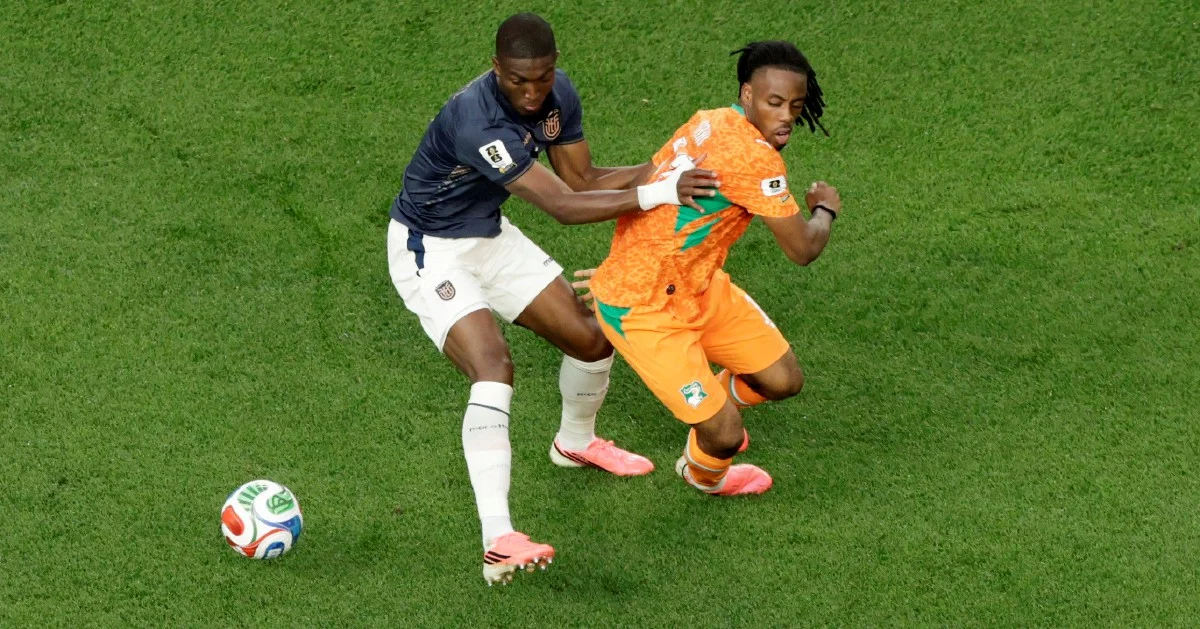
The Ivorian Football Federation announced on Thursday that forward Elye Wahi will be unavailable for Saturday's World Cup encounter with Germany in Canada, just one day after his name surfaced in connection with a widening investigation into alleged match-fixing within French professional football. The decision to exclude the player from international duty marks an unusual intervention by a national federation in response to an active corruption inquiry, underscoring the gravity with which sports authorities are treating the allegations.
Wahi, who plies his trade in France's top flight, found himself at the centre of scrutiny following an examination into suspected irregularities during a Ligue 1 contest. The precise nature of the allegations and their scope remain under investigation by French sports authorities, who have been increasingly vigilant about protecting the integrity of domestic competitions. The timing of the announcement, coming mere hours before squad confirmation for the Canada fixture, suggests that the FIF acted swiftly to distance the national team from any potential complications arising from the corruption inquiry.
The suspension from international competition represents a significant setback for Wahi's career during the World Cup season, a period when domestic players typically aim to showcase their form on the global stage. For the Ivorian squad preparing for the Germany match, the absence of the forward necessitates tactical adjustments and places additional pressure on remaining attacking options to deliver results in a fixture already considered challenging given their opponents' calibre.
Match-fixing allegations within major European football leagues carry substantial implications for the sport's credibility and regulatory frameworks. When such investigations reach the level where they trigger international federation action, they signal that governing bodies are prepared to enforce consequences extending beyond domestic jurisdiction. The FIF's decision reflects a broader commitment among football authorities to maintain standards of competition integrity, even when it means sacrificing player availability during critical matches.
French football has confronted periodic corruption scandals in recent years, prompting Ligue 1 and related authorities to implement enhanced monitoring systems and investigative protocols. The current inquiry into alleged irregularities demonstrates the ongoing nature of these efforts. For supporters and stakeholders across the sport, such investigations, while necessary, also highlight vulnerabilities in how matches and outcomes might be influenced by actors with vested financial interests outside the contest itself.
The implications for Ivory Coast's World Cup campaign warrant consideration. Germany represents a formidable opponent, and the loss of attacking depth against such quality could influence both tactical approach and overall performance prospects. The squad's ability to compensate for Wahi's unavailability will be closely observed by analysts assessing how the team navigates the tournament's demands without one of its established attacking options.
For French football specifically, the timing of such an investigation during major international tournaments creates awkward circumstances for affected clubs and national federations alike. Players linked to corruption inquiries often face institutional pressure and public scrutiny that extends beyond the formal investigation, affecting their standing within their clubs and international settings. This broader reputational dimension sometimes encourages federations to make precautionary decisions, as the FIF has done, to avoid complications.
The investigation's broader scope within Ligue 1 remains unclear from current reporting, but the fact that a World Cup player has been implicated suggests that the alleged irregularities may be more systematic or widespread than initially suspected. French sports authorities will presumably continue their examination in parallel with international tournament schedules, adding complexity to their investigative timeline.
Wahi's situation also highlights an emerging tension in global football: the competing priorities of domestic corruption prevention and international squad integrity. Players facing serious allegations during tournament periods occupy an uncomfortable position, and the precedent set by the FIF's decision may influence how other national federations respond to similar circumstances in the future. The principle that integrity concerns supersede short-term competitive advantage appears to be taking firmer hold across the sport.
As the investigation proceeds, stakeholders including FIFA, Ligue 1 authorities, and affiliated organisations will presumably coordinate to determine whether additional consequences are warranted. The World Cup match between Ivory Coast and Germany will proceed without Wahi, but the broader question of how modern football can prevent and respond to corruption will continue to occupy significant attention among regulators and observers across Africa, Europe, and beyond.

%22%2F%3E%3C%2Fpattern%3E%3C%2Fdefs%3E%3Crect%20width%3D%22100%25%22%20height%3D%22100%25%22%20fill%3D%22url(%23ph40buhg)%22%2F%3E%3Crect%20width%3D%22100%25%22%20height%3D%22100%25%22%20fill%3D%22url(%23ph40buhp)%22%2F%3E%3Ctext%20x%3D%2250%25%22%20y%3D%2250%25%22%20text-anchor%3D%22middle%22%20dominant-baseline%3D%22central%22%20fill%3D%22rgba(255%2C255%2C255%2C0.95)%22%20font-family%3D%22Georgia%2C%20'Times%20New%20Roman'%2C%20serif%22%20font-weight%3D%22700%22%20font-size%3D%22320%22%20letter-spacing%3D%22-0.02em%22%3EGRS%3C%2Ftext%3E%3C%2Fsvg%3E)