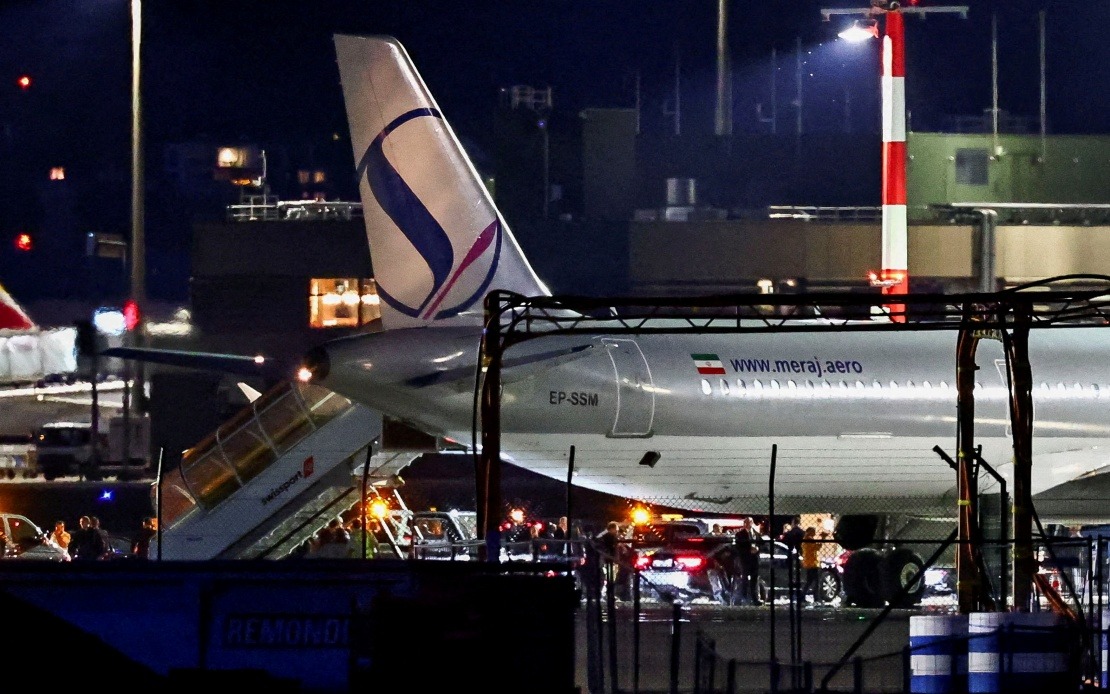
Negotiations between Iran and the United States in Switzerland will centre on fulfilling existing commitments rather than forging new ground, according to statements from Tehran's Foreign Ministry. Iranian Foreign Ministry spokesman Ismail Baghaei clarified on Sunday that discussions will prioritise the practical implementation of a memorandum of understanding signed between the two nations, particularly provisions addressing military hostilities, economic restrictions, and frozen assets.
The memorandum framework establishes a clear sequencing for diplomatic progress. Under Article 13, advancement towards a comprehensive final agreement depends entirely on first satisfying the terms outlined in Articles 1, 4, 5, 10, and 11. This structural requirement means that without demonstrable movement on foundational issues—particularly the cessation of armed conflict—neither side can legitimately expect to move forward with broader negotiations. Baghaei emphasised that this staged approach represents a non-negotiable principle for Iran's negotiating position.
Article 1 represents the most politically sensitive element of this precondition framework. It mandates an end to all fighting across every theatre, with specific reference to hostilities in Lebanon. For Iran, this clause carries particular weight given the interconnections between its own security concerns and the broader regional conflict architecture. The insistence on including Lebanon alongside other fronts reflects Tehran's view that comprehensive regional peace must address multiple simultaneous tensions rather than treating them as separate issues.
The economic dimensions embedded in Articles 10 and 11 address Iran's most pressing grievances regarding international sanctions regimes. Article 10 envisions American waivers that would permit Iranian oil exports and enable the financial services transactions necessary to facilitate such commerce. For an economy heavily dependent on hydrocarbon revenues, the ability to export crude oil represents an existential economic interest. Article 11 complements this by addressing the hundreds of billions of dollars in Iranian state assets frozen in foreign accounts, particularly following the reimposition of sanctions in recent years.
Articles 4 and 5 together sketch the military security architecture that Iran seeks. These provisions establish principles of mutual non-aggression, mandate the lifting of the American naval blockade that constrains Iranian maritime access, and envision the withdrawal of United States military forces deployed near Iranian territory. The restoration of safe passage through the Strait of Hormuz—one of the world's most critical energy transit chokepoints—appears alongside these security measures, positioning it as a shared regional interest rather than an American security guarantee.
For Malaysian and Southeast Asian observers, this negotiation sequence carries significance that extends beyond bilateral Iranian-American relations. The Strait of Hormuz remains essential to regional energy security; approximately one-third of globally traded crude oil transits these waters, and disruptions would immediately cascade through Asian energy markets and raise regional fuel prices. Malaysia's energy-dependent manufacturing sector and transportation industries would face immediate inflationary pressures from any sustained instability in this corridor.
Baghaei's statement indicates that current talks focus primarily on validating whether preliminary commitments can be operationalised. The emphasis on Article 1 suggests that Iran views the cessation of regional armed conflict as the legitimacy prerequisite for all subsequent economic negotiations. Without tangible evidence that military hostilities are genuinely ending—particularly regarding Lebanese theatres where Iranian-aligned forces maintain significant presence—Tehran apparently views discussions about sanctions relief as premature and potentially worthless.
The unfreezing of Iranian assets carries particular weight in this sequencing. Sanctions relief operates through American administrative mechanisms that can be reversed; conversely, returning billions in frozen state assets represents an irreversible transfer requiring formal international mechanisms and American executive authority. Iran's insistence on treating this as a precondition rather than a final-stage outcome reflects justified scepticism about whether preliminary agreements will hold without establishing credible economic commitments beforehand.
The memorandum framework itself appears to represent earlier breakthrough negotiations that both sides have accepted in principle. The current Swiss discussions therefore focus on implementation mechanics rather than renegotiating fundamental terms. This distinction matters significantly because it suggests less fundamental disagreement exists than public rhetoric might suggest—both parties apparently recognise the general contours of a possible settlement, but remain in a verification phase regarding concrete compliance.
For regional observers including Malaysia, the trajectory of these talks will determine medium-term geopolitical stability and energy market conditions. If implementation proceeds methodically through the sequenced articles, the region could gradually move toward de-escalation. However, if either party perceives bad faith in implementation—particularly regarding ceasefire provisions or sanctions relief—the negotiation structure could rapidly collapse into renewed confrontation.
The explicit focus on Article 1 and Lebanese dimensions reveals that Iran interprets this negotiation as fundamentally about establishing durable regional peace architecture rather than merely extracting sanctions relief. Whether American negotiators share this comprehensive view or prefer compartmentalised discussions around economic measures alone will likely determine whether these Swiss talks advance toward implementation or stall at the precondition phase.

%22%2F%3E%3C%2Fpattern%3E%3C%2Fdefs%3E%3Crect%20width%3D%22100%25%22%20height%3D%22100%25%22%20fill%3D%22url(%23ph5ljdug)%22%2F%3E%3Crect%20width%3D%22100%25%22%20height%3D%22100%25%22%20fill%3D%22url(%23ph5ljdup)%22%2F%3E%3Ctext%20x%3D%2250%25%22%20y%3D%2250%25%22%20text-anchor%3D%22middle%22%20dominant-baseline%3D%22central%22%20fill%3D%22rgba(255%2C255%2C255%2C0.95)%22%20font-family%3D%22Georgia%2C%20'Times%20New%20Roman'%2C%20serif%22%20font-weight%3D%22700%22%20font-size%3D%22151%22%20letter-spacing%3D%22-0.02em%22%3EMalaysian%3C%2Ftext%3E%3C%2Fsvg%3E)