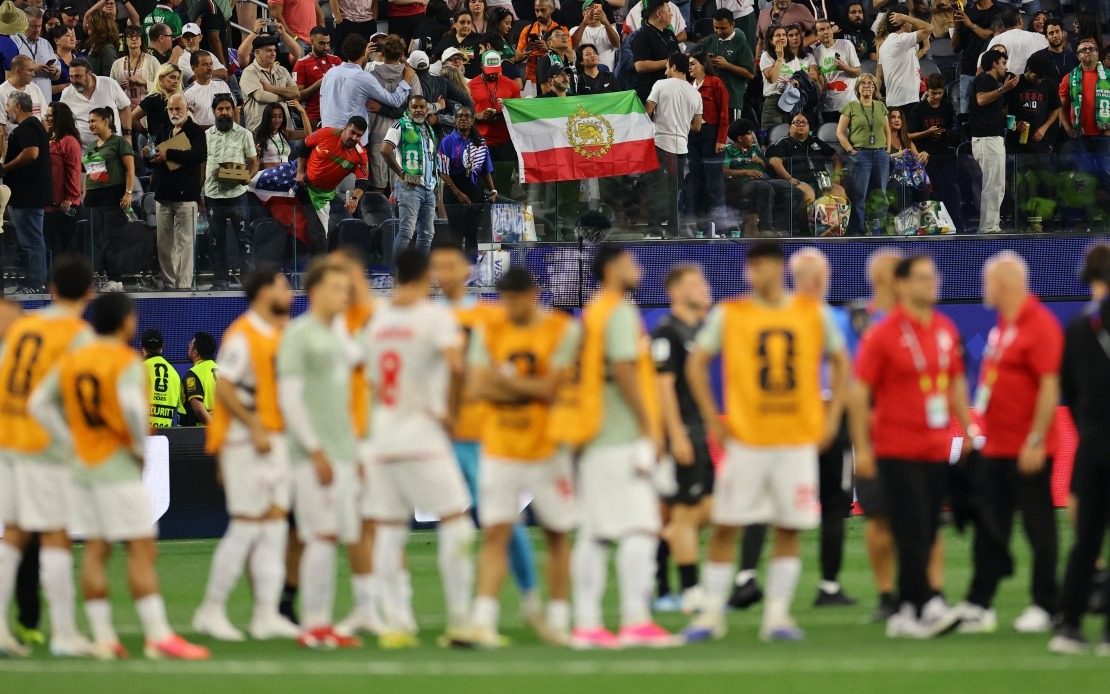
Iran's national football manager Amir Ghalenoei has levelled criticism at what he describes as extraordinary travel restrictions imposed on his squad during the World Cup campaign, claiming the team was ordered to depart Los Angeles immediately after their opening fixture against New Zealand on Monday evening rather than remaining overnight as initially planned. Speaking through an interpreter to American sports media, Ghalenoei characterised his players as operating under constraints unmatched by any other participating nation in the tournament, describing them as the "most repressed team in the whole World Cup."
The unexpected directive to relocate came as a significant logistical disruption to Iran's preparations. The coaching staff had anticipated remaining in the California city to conduct recovery and rehabilitation sessions the following day, a standard practice in professional football designed to minimise injury risk and optimise physical conditioning during the tournament's demanding schedule. Instead, the team faced an immediate turnaround, boarding flights to their training facility in Mexico shortly after the final whistle sounded at the Estadio Azteca. Ghalenoei emphasised the cumulative toll of excessive travel, noting that the extended periods in transit left players without adequate opportunity to recuperate between matches.
While Ghalenoei refrained from explicitly identifying which authority issued the departure order, Iran's captain Mehdi Taremi offered a cryptic reference suggesting involvement by FIFA President Gianni Infantino, who reportedly visited the team's locker room immediately following Monday's contest. Taremi's subsequent remarks veered into the geopolitical dimension underlying the situation, alluding to the longstanding diplomatic friction between the United States and Iran. His comment that "everyone knows it" and "I don't need to mention that because you know where we are" pointed implicitly toward this bilateral tension, despite the broader international peace negotiations reportedly set to conclude a major military conflict between the two nations within the week.
The timing of Taremi's remarks adds interpretive complexity to what might otherwise appear as a straightforward scheduling matter. The decision to expel Iran's contingent from American territory, if imposed by FIFA or US authorities, carries undertones that transcend conventional tournament logistics. The captain's carefully measured language—acknowledging Infantino's ostensible intent to assist whilst simultaneously hinting at undisclosed pressures—suggests that Iran's athletes perceived their treatment as reflecting broader geopolitical dynamics rather than purely operational considerations. This interpretation resonates with longstanding Southeast Asian experience of how major international sporting events sometimes intersect with diplomatic relations and state interests.
Iran's original preparation strategy had included establishing a training camp in Tucson, Arizona, positioning the squad within the continental United States for the tournament's duration. However, logistical complications and visa-related obstacles forced a reassessment in late May, prompting relocation to Tijuana in Mexico's Baja California region. This initial displacement already suggested complications in Iran's World Cup preparations, though the subsequent order to vacate Los Angeles compounds what appears to be a pattern of operational difficulties encountered by the Iranian delegation.
For Malaysian and Southeast Asian observers, this situation illuminates how international football tournaments remain embedded within broader state relations and geopolitical calculations. While the World Cup nominally operates as a neutral sporting competition governed by universal rules, the experience of nations facing international isolation or sanctions often diverges markedly from that of other participants. Iran's predicament—subjected to sudden logistical disruptions that other squads would likely never encounter—mirrors experiences of other politically marginalised nations navigating major international sporting events. The restrictions imposed appear disproportionate and deliberately designed to inconvenience the Iranian team, potentially affecting their competitive performance.
The physical and psychological implications of Ghalenoei's complaints warrant serious consideration. Modern professional football depends heavily on systematic recovery protocols, optimal training schedules, and psychological stability to perform at peak efficiency during tournament play. Forcing a team to undertake unnecessary long-distance travel immediately after competition violates established sports science principles and creates competitive disadvantage. If Iran's allegations prove accurate, such treatment would constitute an undisclosed form of tournament sabotage masked within ostensible administrative procedures.
Infantino's reported visit to the Iranian locker room introduces an additional interpretive layer. The FIFA President's presence suggests institutional awareness of tensions surrounding the Iranian delegation, though whether his visit intended to facilitate assistance or communicate restrictions remains ambiguous. The fact that Iranian leadership perceived his intervention with suspicion, viewing it as potentially communicating external pressure rather than offering support, indicates the deep erosion of trust characterising Iran's relationship with international football governance during this tournament.
The broader context involves understanding why Iran's participation in major international competitions frequently encounters structural obstacles beyond those faced by other nations. International sanctions regimes, diplomatic isolation, and sports-related restrictions imposed through various institutional channels create compounding disadvantages that extend far beyond the match itself. Iran's athletes must navigate not only competing against other nations' teams but also managing systemic pressures designed to undermine their organisational capacity and competitive readiness.
For Southeast Asian nations, this episode serves as a cautionary illustration of how major sporting events can become vehicles for expressing geopolitical preference and enforcing power asymmetries. While football unions across the region have generally maintained more consistent access to international competition than Iran, the underlying principle—that state relations fundamentally shape sporting opportunities—remains universally relevant. The episode also highlights FIFA's apparent inability or unwillingness to maintain strict neutrality when powerful nations' interests intersect with tournament administration, a concerning development for all participants lacking significant geopolitical influence.
Ghalenoei's public complaints represent a rare instance of direct resistance to what Iranian officials perceive as institutional discrimination within the supposedly apolitical realm of international sport. By characterising his team as the "most repressed" in the tournament, he seeks to document and publicise constraints that might otherwise remain unexamined, ensuring that Iran's competitive disadvantages become part of the tournament's historical record. Whether such testimony will prompt FIFA to reconsider its conduct toward Iranian participants remains uncertain, but the statement itself constitutes an important assertion that athletic competition cannot be entirely separated from the political contexts within which it occurs.

%22%2F%3E%3C%2Fpattern%3E%3C%2Fdefs%3E%3Crect%20width%3D%22100%25%22%20height%3D%22100%25%22%20fill%3D%22url(%23ph40buhg)%22%2F%3E%3Crect%20width%3D%22100%25%22%20height%3D%22100%25%22%20fill%3D%22url(%23ph40buhp)%22%2F%3E%3Ctext%20x%3D%2250%25%22%20y%3D%2250%25%22%20text-anchor%3D%22middle%22%20dominant-baseline%3D%22central%22%20fill%3D%22rgba(255%2C255%2C255%2C0.95)%22%20font-family%3D%22Georgia%2C%20'Times%20New%20Roman'%2C%20serif%22%20font-weight%3D%22700%22%20font-size%3D%22320%22%20letter-spacing%3D%22-0.02em%22%3EGRS%3C%2Ftext%3E%3C%2Fsvg%3E)