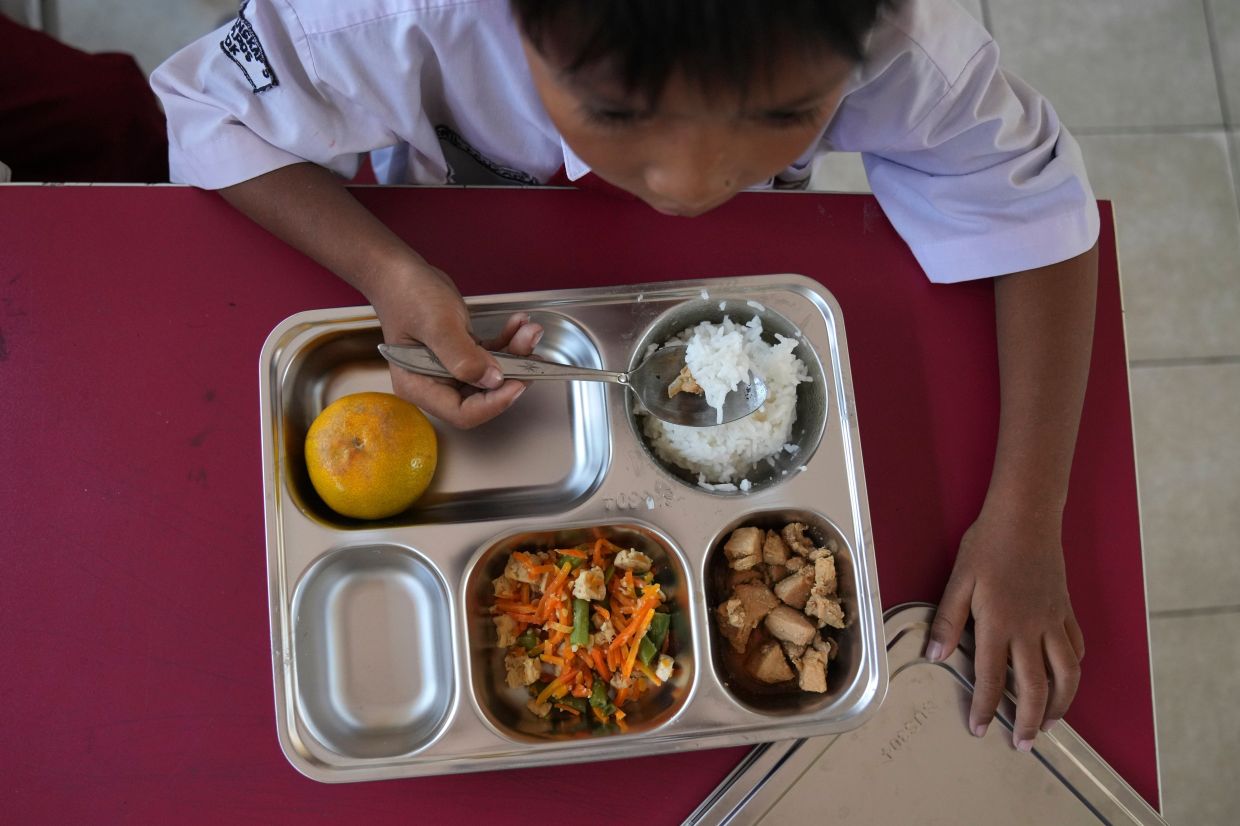
Indonesia Corruption Watch is pushing authorities to suspend President Prabowo Subianto's flagship free meals initiative and conduct a far-reaching investigation into alleged graft within the scheme, which serves more than 60 million recipients across the archipelago. The advocacy group, which first exposed irregularities in the programme, contends that the National Nutrition Agency (BGN) should be dismantled entirely, marking a significant escalation in scrutiny of one of the new administration's centrepiece policies.
The corruption probe intensified this month following the sudden removal of Dadan Hindayana as head of BGN, the body overseeing a roughly US$15 billion nationwide initiative intended to combat malnutrition and poverty. Four other individuals, including two former deputies of Hindayana, have since been detained as the Attorney-General's office investigates the scheme. Wana Alamsyah, head of Indonesia Corruption Watch's law and investigation division, argues that authorities must cast a far wider net, examining all parties who benefited from the programme's structural weaknesses rather than focusing narrowly on senior officials.
According to Wana, the investigation should extend beyond the agency's leadership to encompass vendors, procurement committee members, and others involved in implementing what was hastily conceived and rapidly deployed. The programme was created less than two years ago yet now delivers meals across the nation, a scale of expansion that critics argue invited mismanagement and graft. Indonesia Corruption Watch has previously documented extensive political connections among the 102 foundations running kitchens across 38 provinces, revealing links to politicians, military figures, law enforcement officials and business networks—patterns suggesting the vulnerability of the scheme to patronage networks.
The new leadership of BGN, under Nanik S. Deyang, has acknowledged fundamental problems with implementation and is attempting damage control through a recalibrated approach. The agency now aims to spend considerably less than the 268 trillion rupiah (US$14.9 billion) originally budgeted for the current year, redirecting resources toward remote and underserved regions rather than pursuing blanket coverage. Deyang has pledged to prioritise nutritional quality and healthier food options over the ambitious target of reaching 82.9 million recipients, effectively admitting that the original rollout prioritised scale over substance.
Yet Wana's comments reveal deeper frustration with governmental inaction and suggest that Indonesia Corruption Watch views the current investigation less as a genuine anti-corruption effort and more as a belated response to mounting political pressure and fiscal constraints. Multiple reports had documented problems throughout 2025, including food poisoning incidents, complaints about substandard meals, and questions about the prioritisation of universal coverage over targeted assistance to genuinely impoverished regions. Indonesia Corruption Watch argues that the government ignored social media criticism and grassroots concerns rather than initiating formal investigations, only acting once formal complaints forced action.
The economic dimension of the controversy cannot be separated from the graft allegations. Indonesia's budget faces considerable strain as international oil price pressures inflate fuel subsidies, particularly given geopolitical tensions in the Middle East. Investors have grown nervous about the sustainability of government spending, and some economists and research institutions question whether the programme's promised employment, health and economic benefits justify its enormous price tag. The timing of the corruption probe may reflect a government attempt to recalibrate fiscal commitments rather than a purely principled anti-corruption stance, according to Wana's assessment.
President Prabowo has publicly vowed zero tolerance for corruption within the programme, declaring emphatically that the people's money will not be stolen. This statement, delivered to thousands of officials and programme partners hours after Hindayana's detention, represents an attempt to salvage the initiative's credibility even as fundamental governance problems become undeniable. However, such rhetoric rings hollow to critics who observe that systemic vulnerabilities persisted without official acknowledgement for months, suggesting that warnings were deprioritised until reputational and fiscal pressure mounted.
Public discontent has manifested in sustained protests. On June 12, police clashed with students demonstrating against Prabowo's spending priorities and demanding the programme's outright cancellation. Subsequent protests erupted in multiple major cities, prompting authorities to deploy more than 6,000 police and military personnel in Jakarta alone—a response that underscores the political sensitivity surrounding what was intended as a popular social welfare measure. The deployment suggests that state anxiety about the programme's viability and legitimacy runs deeper than official statements indicate.
Research institutions have raised methodological questions about the programme's design and implementation that extend beyond corruption allegations. The Centre of Economic and Law Studies in Jakarta found that nearly 79 percent of surveyed respondents recognised potential conflicts of interest in the direct vendor appointment process. Earlier studies warned that the scheme risked uneven distribution of benefits, questionable food quality standards, and budget inefficiencies—concerns that suggest structural problems inherent in the architecture of the programme rather than merely individual misdeeds.
Deyang's recent announcement of a moratorium on new kitchen construction and her commitment to tightening screening processes represent an implicit admission that expansion outpaced institutional capacity and governance frameworks. The pivot toward utilising existing school canteens rather than building new facilities indicates a recognition that the original model was unsustainable. Yet these adjustments, while necessary, do not address Indonesia Corruption Watch's core demand for comprehensive institutional reform or the broader questions about whether such an expansive centralised programme can be effectively governed in an environment with documented patronage networks.
The free meals controversy illuminates persistent challenges facing the Prabowo administration as it attempts to balance ambition with feasibility. The scandal reflects fundamental tensions between the government's desire to implement transformative social programmes and the institutional, fiscal and governance constraints that prevent successful realisation of such initiatives at scale. For Malaysia and other Southeast Asian nations observing Indonesia's experience, the episode offers instructive lessons about the risks of rapid policy rollout without adequate institutional preparation, procurement safeguards and decentralised accountability mechanisms.
Moving forward, the trajectory of both the corruption investigation and the programme itself will test Prabowo's commitment to institutional integrity. Should the probe remain confined to mid-level officials while systemic vulnerabilities persist, critics will interpret this as performative rather than substantive reform. Conversely, if investigations penetrate the political networks that have benefited from the scheme's vulnerabilities, it could signal a genuine effort to rebuild institutional credibility—though such an outcome appears unlikely given the entrenched interests at stake.

%22%2F%3E%3C%2Fpattern%3E%3C%2Fdefs%3E%3Crect%20width%3D%22100%25%22%20height%3D%22100%25%22%20fill%3D%22url(%23ph40buhg)%22%2F%3E%3Crect%20width%3D%22100%25%22%20height%3D%22100%25%22%20fill%3D%22url(%23ph40buhp)%22%2F%3E%3Ctext%20x%3D%2250%25%22%20y%3D%2250%25%22%20text-anchor%3D%22middle%22%20dominant-baseline%3D%22central%22%20fill%3D%22rgba(255%2C255%2C255%2C0.95)%22%20font-family%3D%22Georgia%2C%20'Times%20New%20Roman'%2C%20serif%22%20font-weight%3D%22700%22%20font-size%3D%22320%22%20letter-spacing%3D%22-0.02em%22%3EGRS%3C%2Ftext%3E%3C%2Fsvg%3E)